Short answer: The City of Fort Lauderdale names marine, tourism, technology, finance, manufacturing, aerospace and creative industries as key sectors, and Port Everglades, a Broward County port, reports more than $48.3 billion in annual economic activity. The Fort Lauderdale-Pompano Beach-Deerfield Beach labor market had a 4.4 percent unemployment rate in August 2026 (BLS, preliminary). Most businesses need both a city and a Broward County Business Tax Receipt, and since October 1, 2026 a Certificate of Use comes first.
Last verified: October 16, 2026, against the sources listed at the end of this page.
What drives the Fort Lauderdale economy today?
The city says Fort Lauderdale, once known strictly as a tourism-based economy, now supports industries including marine, manufacturing, finance, insurance, real estate, high technology, avionics and aerospace, and film and television production (City of Fort Lauderdale).
The City of Fort Lauderdale Economic Development Division names marine, tourism, technology, finance, manufacturing, aerospace and creative industries as key sectors and points to the city's proximity to Port Everglades and Fort Lauderdale-Hollywood International Airport (City of Fort Lauderdale). Downtown Fort Lauderdale also holds Broward College, Florida Atlantic University, the Broward County Main Library and federal, county and school district offices (City of Fort Lauderdale).
Census figures describe the jobs held by employed Fort Lauderdale residents. In ACS 2020-2024, the largest share of employed Fort Lauderdale residents, 19.7 percent, work in professional, scientific, management and administrative services (U.S. Census Bureau, ACS 2020-2024). Education, health care and social assistance follow at 15.6 percent, then arts, entertainment, recreation, accommodation and food services at 11.3 percent and retail at 10.9 percent (U.S. Census Bureau, ACS 2020-2024). Finance, insurance and real estate together employ 9.4 percent (U.S. Census Bureau, ACS 2020-2024). By occupation, 40.7 percent of employed residents hold management, business, science and arts jobs (U.S. Census Bureau, ACS 2020-2024).
How much do Port Everglades and the airports matter to Fort Lauderdale jobs?
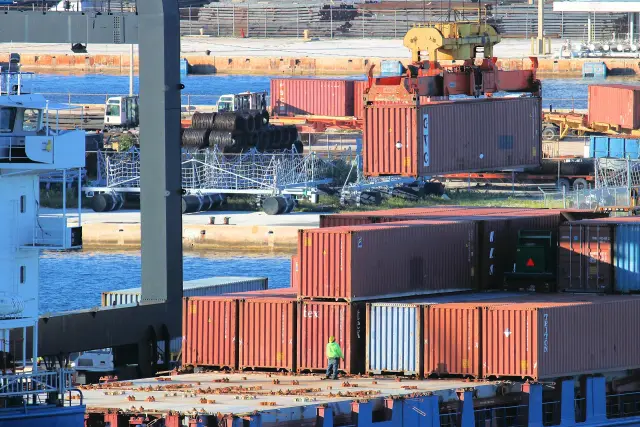
Port Everglades, a Broward County government port, reports more than $48.3 billion in annual economic activity in a commissioned study for Fiscal Year 2025 (Port Everglades).
The port says that study found its economic impact up 72 percent, and 44 percent more jobs supported statewide, compared with the previous Fiscal Year 2024 report (Port Everglades statistics). Port Everglades calls itself one of the busiest cruise ports in the world, a leading container port in Florida and South Florida's main seaport for receiving petroleum products such as gasoline and jet fuel (Port Everglades). It runs as a self-supporting enterprise fund of Broward County government and does not rely on local tax dollars for operations or capital improvements (Port Everglades).
Fort Lauderdale Executive Airport (FXE) is classed by the FAA as a general aviation airport, with no commercial airline flights, serving corporate aircraft, private owners and charter operators (City of Fort Lauderdale). The airport hosts Foreign-Trade Zone 241, and its air traffic control tower is at 5550 NW 23 Ave. (City of Fort Lauderdale). One figure on the FXE page is dated: it says total traffic at Executive Airport fell 34 percent from 2000 to 2019, and the page gives no later figure (City of Fort Lauderdale). The Fort Lauderdale airport (FLL) guide covers Fort Lauderdale-Hollywood International Airport.
What is the unemployment rate in the Fort Lauderdale area?
The Fort Lauderdale-Pompano Beach-Deerfield Beach labor market had an unemployment rate of 4.4 percent in August 2026, a preliminary figure from the U.S. Bureau of Labor Statistics (U.S. Bureau of Labor Statistics).
BLS titles this page Fort Lauderdale-Pompano Beach-Deerfield Beach, FL and also labels the area Fort Lauderdale-Pompano Beach-Sunrise, FL; under either name it reaches beyond the city, so it is not a city-only figure. In August 2026 (preliminary) it counted a civilian labor force of 1,071,300 and 914,500 nonfarm jobs, with nonfarm employment down 0.1 percent from a year earlier (U.S. Bureau of Labor Statistics). The rate rose from 4.2 percent in March 2026 to 4.6 percent in July 2026 before the preliminary August reading of 4.4 percent (U.S. Bureau of Labor Statistics).
Sector by sector, the Fort Lauderdale area's biggest employer group in August 2026 (preliminary) was trade, transportation and utilities with 196,400 jobs, followed by professional and business services with 171,400 (U.S. Bureau of Labor Statistics). Professional and business services were down 1.7 percent over the year, while education and health services grew 2.6 percent to 126,400 jobs (U.S. Bureau of Labor Statistics). Leisure and hospitality held 97,200 jobs (U.S. Bureau of Labor Statistics). For comparison, the ACS 2020-2024 5-year unemployment rate for Fort Lauderdale city residents is 5.3 percent (U.S. Census Bureau, ACS 2020-2024).
| Sector | Jobs | 12-month change |
|---|---|---|
| Trade, transportation and utilities | 196,400 | -1.4% |
| Professional and business services | 171,400 | -1.7% |
| Education and health services | 126,400 | +2.6% |
| Government | 110,300 | +1.1% |
| Leisure and hospitality | 97,200 | +0.5% |
| Financial activities | 71,200 | 0.0% |
| Construction | 55,100 | +0.9% |
What do Fort Lauderdale residents earn?
The median Fort Lauderdale household income is $83,130 in 2024 inflation-adjusted dollars, and per capita income is $59,629, in the ACS 2020-2024 5-year estimates (U.S. Census Bureau, ACS 2020-2024).
Labor force participation among Fort Lauderdale residents 16 and over is 64.2 percent (U.S. Census Bureau, ACS 2020-2024). In the same survey, 19.0 percent of workers worked from home in ACS 2020-2024 (U.S. Census Bureau, ACS 2020-2024). The Fort Lauderdale demographics hub covers poverty, rent burden and household make-up in more detail.
How does a business get licensed to operate in Fort Lauderdale?
Most businesses in Fort Lauderdale need a City Business Tax Receipt and a separate Broward County Local Business Tax Receipt, and from October 1, 2026 the city requires zoning approval through a Certificate of Use before a Business Tax Receipt application (City of Fort Lauderdale).
The order of steps in Fort Lauderdale is: confirm the use is allowed at the location with the Urban Design and Planning Division at (954) 828-6520 (City of Fort Lauderdale); obtain the Certificate of Use through the LauderBuild portal, with zoning questions at 954-828-4295 or 954-828-6721 (City of Fort Lauderdale); apply for the City Business Tax Receipt; and, separately, obtain the Broward County business license, with questions to the Broward County Tax Collector at (954) 357-4829 (City of Fort Lauderdale). A Business Tax Receipt must be renewed every year, and renewal season runs from July 1 through September 30 (City of Fort Lauderdale).
The Business Tax office is at 101 NE 3rd Avenue, Suite 100, Fort Lauderdale, phone 954-828-5207 option 1, with in-person help Monday to Thursday from 9:00 a.m. to 1:00 p.m. and paid parking in the City Hall garage (City of Fort Lauderdale). The Economic Development Division shares that address and answers at 954-828-6350 (City of Fort Lauderdale). Last verified: October 15, 2026, on the City of Fort Lauderdale Business Tax and Economic Development pages.
Which Fort Lauderdale guides go deeper on employers and industries?
The Fort Lauderdale major employers guide is the one deep page in the economy section, and five industry guides on the airport, cruise tourism, finance, health care and the marine industry cover the sectors this hub summarizes.
| Question | Key fact | Guide that goes deeper |
|---|---|---|
| Who are the largest employers? | 914,500 nonfarm jobs in the area, August 2026 (p) | Fort Lauderdale major employers guide |
| How big is the cruise and cargo business? | $48.3 billion port economic activity, FY2025 | Fort Lauderdale cruise tourism guide |
| How do the airports fit in? | FXE is general aviation with Foreign-Trade Zone 241 | Fort Lauderdale airport (FLL) guide |
| How large is the marine industry? | Marine is a key city sector | Fort Lauderdale marine and yachting guide |
| Is finance a major employer? | 9.4% of employed residents in finance, insurance and real estate | Fort Lauderdale finance and wealth guide |
| How big is health care? | Education and health services up 2.6% over 12 months, August 2026 (p) | Broward health care industry guide |
| What do homes cost workers? | $83,130 median household income | Fort Lauderdale market trends guide (real estate section) |
Frequently asked questions
What is the unemployment rate in Fort Lauderdale?
The Fort Lauderdale-Pompano Beach-Deerfield Beach area had a 4.4 percent unemployment rate in August 2026, a preliminary U.S. Bureau of Labor Statistics figure. The rate was 4.2 percent in March 2026 and 4.6 percent in July 2026.
What are the main industries in Fort Lauderdale?
The City of Fort Lauderdale lists marine, manufacturing, finance, insurance, real estate, high technology, avionics and aerospace, and film and television production, alongside tourism. Its Economic Development Division also points to the city's proximity to Port Everglades and Fort Lauderdale-Hollywood International Airport.
How much does Port Everglades contribute to the economy?
Port Everglades says it generates more than $48.3 billion in economic activity annually, according to a commissioned study for Fiscal Year 2025. The port is a Broward County enterprise fund that does not rely on local tax dollars.
Does a Fort Lauderdale business need a city and a county license?
Usually yes. The City of Fort Lauderdale says its Business Tax Receipt is separate from the Broward County Local Business Tax Receipt and most businesses must keep both. Since October 1, 2026, a Certificate of Use comes first.
When is the Fort Lauderdale business tax renewal deadline?
Fort Lauderdale Business Tax Receipt renewal season runs from July 1 through September 30 each year, according to the City of Fort Lauderdale Business Tax page. The receipt must be renewed annually.
Sources
- City of Fort Lauderdale, About Fort Lauderdale https://www.fortlauderdale.gov/government/about-fort-lauderdale Used for: shift from a tourism-based economy, industry list, downtown institutions
- City of Fort Lauderdale, Economic Development https://www.fortlauderdale.gov/government/departments-a-h/community-services/economic-development Used for: key sectors, Economic Development Division contact, zoning check, Broward County license and Tax Collector phone
- City of Fort Lauderdale, Business Tax https://www.fortlauderdale.gov/Government/Departments/Community-Services/Business-Tax Used for: Business Tax Receipt rules, Certificate of Use requirement from Oct 1, 2026, renewal season, office address, phone and hours
- City of Fort Lauderdale, Fort Lauderdale Executive Airport https://www.fortlauderdale.gov/business/fort-lauderdale-executive-airport Used for: general aviation classification, Foreign-Trade Zone 241, traffic trend 2000 to 2019, control tower address
- U.S. Bureau of Labor Statistics, Economy at a Glance: Fort Lauderdale-Pompano Beach-Deerfield Beach, FL https://www.bls.gov/eag/eag.fl_fortlauderdale_md.htm Used for: August 2026 preliminary labor force, unemployment rate and nonfarm jobs by sector
- Port Everglades, Statistics https://www.porteverglades.net/about-us/statistics/ Used for: FY2025 economic impact of $48.3 billion, change versus FY2024
- Port Everglades, About Us https://www.porteverglades.net/about-us/ Used for: Broward County enterprise fund, cruise, container and petroleum roles
- U.S. Census Bureau, ACS 2020-2024 5-year Data Profile DP03, Fort Lauderdale city https://data.census.gov/api/access/data/table?id=ACSDP5Y2024.DP03&g=160XX00US1224000 Used for: resident industries and occupations, income, work from home
How this page was made
Digital Towns uses AI assistance to research and write its guides, and every page is only as good as the sources it cites. Our goal is the most accurate, useful local information possible.
This page was fact-checked twice before publishing.
If you see an error, or anything you can show is false, tell us right away and we will take a third look.
Report an error
Thank you. We'll take a third look and correct the page if it's wrong.