Short answer: The Great Fire of 1901 began shortly after noon on May 3, 1901, when a spark ignited drying Spanish moss at a downtown Jacksonville fiber and mattress factory. Pushed by strong winds to the St. Johns River, it destroyed 2,368 buildings on 146 blocks by 8:30 p.m., left 10,000 people homeless and killed seven. Governor William Jennings declared martial law, municipal authority did not resume until May 17, and architect Henry John Klutho designed many of the buildings in the decade of rebuilding that followed.
Last verified: October 15, 2026, against the sources listed at the end of this page.
When and where did the Great Fire of 1901 start in Jacksonville?
The Great Fire started on May 3, 1901, when a spark ignited piles of drying Spanish moss at a mattress factory, and it soon spread to most of downtown Jacksonville (Florida Memory).
The Jacksonville Fire and Rescue Department history puts the time at 12:30 p.m., when a cinder from a nearby chimney landed on moss and fiber drying in the sun at the Cleaveland Fiber Factory at Union and Davis streets (JFRD history). Spanish moss was cured there for use as mattress stuffing, according to the Jacksonville Historical Society. Florida Memory, the State Archives of Florida exhibit, describes the same spark as coming from a kitchen fire at lunchtime (Florida Memory).
Jacksonville was then Florida's largest city, with about 28,000 people, and the weather had been hot and dry for weeks (Jacksonville Historical Society). The Historical Society account says the factory's moss watchman had gone to lunch, and a bucket of water could not stop the blaze once the wind rose. Fire Chief Thomas W. Haney, who earned twice the mayor's salary, took charge at the factory and then saw burning moss landing on roofs to the east.
Strong westerly winds carried the fire through downtown Jacksonville, and it did not stop until it reached the St. Johns River (JFRD history). The burned path ran nearly two miles west to east and one mile north to south, the Jacksonville Historical Society says.
How much of Jacksonville burned on May 3, 1901?
By 8:30 p.m. the fire had destroyed 2,368 buildings across 146 city blocks of Jacksonville, left 10,000 people homeless and killed seven residents (Florida Memory).
The Jacksonville Historical Society measures the burned district at 466 acres and says every public building in the city was lost except the U.S. Post Office (Jacksonville Historical Society). It ranks the Jacksonville fire as the third largest metropolitan fire in U.S. history, after San Francisco and Chicago, while Florida Memory calls it the largest metropolitan fire in the American South. Florida Memory adds that smoke could be seen as far north as Savannah, Georgia.
| Measure | Figure | Source |
|---|---|---|
| Date and start time | May 3, 1901, 12:30 p.m. | JFRD |
| Brought under control | 8:30 p.m. | Florida Memory |
| Buildings destroyed | 2,368 | Florida Memory |
| City blocks destroyed | 146 | Florida Memory |
| Area burned | 466 acres | Jacksonville Historical Society |
| People left homeless | 10,000 | Florida Memory |
| Deaths | 7 | Florida Memory |
| Fire stations lost | 3 of 5 | JFRD |
| Property damage | $15 million | JFRD |
The city's own firefighters lost ground with everyone else: the fire destroyed three of Jacksonville's five fire stations, and property damage totaled $15 million (JFRD history).
How did Jacksonville respond in the days after the fire?
Governor William Jennings declared martial law in Jacksonville and sent in the state militia, and civil government did not resume until May 17, 1901 (Florida Memory).
Relief began before the flames were out. The federal government rushed thousands of tents to Jacksonville while the city still burned, and committees run by the city government, the Board of Trade, the churches and the women of the city fed, clothed, employed and moved the people burned out (Jacksonville Historical Society). Jacksonville smoldered for days, and the Historical Society reports that newspapers described the glow being visible in Savannah.
The size of the relief job shows in the 125th anniversary article the Jacksonville Historical Society published on May 4, 2026, which says more than 10,000 people were left homeless and points to a book by editor and publisher Walter S. Wagstaff in the Jacksonville History Center research library that lists the public buildings, churches, schools, banks, hotels and homes destroyed (Jacksonville Historical Society, 2026). That list of sufferers is a starting point for Jacksonville family research.
Who rebuilt downtown Jacksonville after the 1901 fire?
Jacksonville spent the next decade rebuilding its downtown, and architect Henry John Klutho designed many of the new buildings (Florida Memory).
Klutho came to Jacksonville from New York in 1901 after learning that the fire had destroyed most of the city on the north side of the St. Johns River (National Park Service nomination). The Florida State College at Jacksonville library guide says he read about the fire in the New York Times and that his high rises were the first built of reinforced concrete in the South (FSCJ Library). His best known Jacksonville designs included the City Hall, Courthouse and Board of Trade, all since demolished, and the Public Library, YMCA and St. James Building, according to the National Register nomination.
Hotels and stores came back one by one. After the 1901 fire the Windsor was the only large Jacksonville hotel rebuilt, on its old block west of Hemming Park, in 1902; the St. James Hotel, destroyed in the fire, was not rebuilt (NPS nomination). The Cohen Brothers department store, burned out on Bay Street, set up a temporary store at 303 West Bay Street and then built the St. James Building with Klutho on the old hotel block. Completed in 1912, it is built of reinforced concrete with terra cotta ornament of Klutho's design.
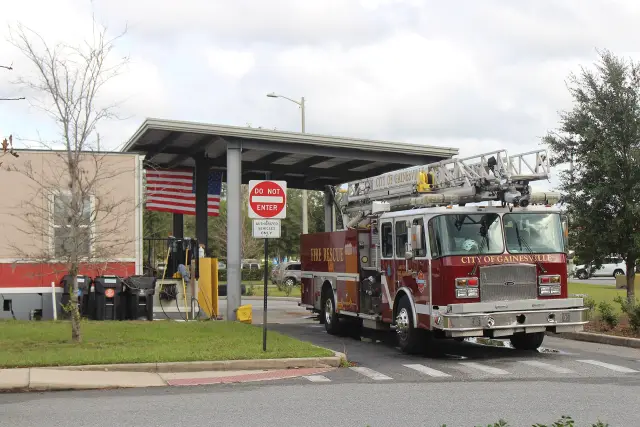
The St. James Building now serves as Jacksonville City Hall (Florida Memory). The fire department rebuilt too: in 1912 it placed its first motorized apparatus in service, two engines and a 65 foot ladder truck (JFRD history).
Where can the history of the Great Fire be seen in Jacksonville today?
Klutho's St. James Building, completed after the fire on the block facing the park now named James Weldon Johnson Park, serves today as Jacksonville City Hall (Florida Memory).
The park, formerly Hemming Park, was set aside as a public square in 1857 by Isaiah Hart and is the oldest park in Jacksonville, according to the City of Jacksonville, which notes it has survived disasters (City of Jacksonville). Florida Memory notes that the Confederate monument then standing in Hemming Park was one of the few city landmarks to survive the 1901 fire.
Klutho Park at 204 W. Third Street, originally called Springfield Park, was created mostly between 1899 and 1901 on land donated by the Springfield Company, a local developer (FSCJ Library). The Jacksonville Fire Museum opened in the old Station 3 on October 3, 1982 (JFRD history).
For records, the Jacksonville Historical Society, which keeps the Jacksonville History Center research library and the James E. Merrill House Museum, lists its address as 314 Palmetto Street, phone (904) 665-0064, and recommends the book The Great Fire of 1901 by Bill Foley and Wayne Wood (Jacksonville Historical Society).
Which details of the 1901 Jacksonville fire do sources disagree on?
The state archives, the Jacksonville fire department and the Jacksonville Historical Society agree on the date, the 2,368 buildings and the 146 blocks, but they differ on the spark, the street corner, the factory name and the wind (JFRD history).
Florida Memory places the mattress factory at Davis and Beaver streets (Florida Memory), while the Jacksonville Fire and Rescue Department gives Union and Davis streets, as does the Jacksonville Historical Society passage quoted in the FSCJ library guide (FSCJ Library). JFRD and the Historical Society spell the business Cleaveland Fibre or Fiber Factory; the FSCJ guide spells it Cleveland. JFRD blames a cinder from a nearby chimney, Florida Memory a spark from a kitchen fire at lunchtime, and the Historical Society passage in the FSCJ guide a spark from a small wood-burning cook stove.
On the wind, JFRD describes strong westerly winds driving the fire to the St. Johns River, while a 2016 Jacksonville Historical Society article describes an easterly wind blowing in unexpectedly at the factory (Jacksonville Historical Society). The older Historical Society passage quoted in the FSCJ guide, however, credits a strong westerly wind. Florida Memory also calls the rebuilt landmark the St. James Hotel and says it opened in 1911; the National Register nomination shows the St. James Hotel burned in 1901 and dates completion of the St. James Building, the department store on its block, to 1912 (NPS nomination).
Frequently asked questions
What caused the Great Fire of 1901 in Jacksonville?
A cinder from a nearby chimney, or a kitchen fire at lunchtime, ignited Spanish moss drying at a fiber and mattress factory on May 3, 1901. Strong winds, westerly by the fire department's account, then carried burning moss across downtown Jacksonville roofs until the fire reached the St. Johns River.
How many people died in the Jacksonville fire of 1901?
Florida Memory, the State Archives of Florida exhibit, records seven residents dead. The same source counts 2,368 buildings destroyed across 146 city blocks and 10,000 people left homeless when the fire was brought under control at 8:30 p.m. on May 3, 1901.
How long did the Great Fire of 1901 burn?
It burned for about eight hours. The fire started shortly after noon, at 12:30 p.m. by the fire department's account, and was brought under control by 8:30 p.m., although the Jacksonville Historical Society says the ruins smoldered for days.
Which Jacksonville buildings were built after the 1901 fire?
Architect Henry John Klutho designed many of the replacements, including the St. James Building, completed in 1912 and now Jacksonville City Hall, plus a public library and YMCA. The Windsor Hotel was rebuilt on its old site west of Hemming Park in 1902.
Is the Great Fire of 1901 the largest fire in Florida history?
Florida Memory calls it the largest metropolitan fire in the American South, and the Jacksonville Historical Society ranks it third among U.S. metropolitan fires, behind San Francisco and Chicago. It burned 466 acres of Jacksonville in about eight hours.
Sources
- Florida Memory, State Library and Archives of Florida: Great Jacksonville Fire of 1901 photo exhibit https://www.floridamemory.com/learn/exhibits/photo_exhibits/jacksonvillefire/ Used for: start on May 3, 1901, moss at a mattress factory at Davis and Beaver streets, 8:30 p.m. control, 2,368 buildings, 10,000 homeless, seven dead, 146 blocks, martial law, May 17, decade of rebuilding, Klutho, St. James building as City Hall, smoke seen in Savannah
- Jacksonville Fire and Rescue Department: Our Story, History https://www.myjfrd.com/our-story/history Used for: 12:30 p.m. start at the Cleaveland Fiber Factory at Union and Davis streets, westerly winds, fire stopped at the St. Johns River, three of five fire stations lost, $15 million damage, 1886 paid department, 1912 motorized apparatus, 1982 fire museum
- National Park Service, National Register of Historic Places nomination: St. James Building, Jacksonville https://npgallery.nps.gov/GetAsset/f0e01e11-8181-46a4-a5ec-7dc970500349 Used for: St. James Hotel destroyed, Windsor Hotel rebuilt in 1902, Cohen Brothers temporary store at 303 West Bay Street, Klutho arrival in 1901 and his best known buildings, reinforced concrete St. James Building
- Florida State College at Jacksonville Library: Great Fire of 1901 + Klutho research guide https://guides.fscj.edu/HistoryFlorida/GreatFire1901JacksonvilleFL Used for: Klutho moved south after reading of the fire, reinforced concrete high rises, Klutho Park at 204 W. Third Street
- City of Jacksonville: James Weldon Johnson Park (formerly Hemming Park) celebrates 152nd birthday https://www.jacksonville.gov/categories/explore-jax/james-weldon-johnson-park-(formerly-hemming-park)-celebrates-152nd-birthday Used for: park established as a public square in 1857, oldest city park
- Jacksonville Historical Society: The Day the Town Burned Down (May 3, 2016) https://jaxhistory.org/day-town-burned-115-years-ago-today/ Used for: population 28,000, 466 acres, burned path size, every public building but the U.S. Post Office, federal tents, third largest metropolitan fire, relief committees, Fire Chief Thomas W. Haney
- Jacksonville Historical Society: From a Pile of Debris, a New Jacksonville was Built (May 4, 2026) https://jaxhistory.org/from-a-pile-of-debris-a-new-jacksonville-was-built/ Used for: 125th anniversary, more than 10,000 homeless, Jacksonville History Center research library and address, Merrill House Museum
How this page was made
Digital Towns uses AI assistance to research and write its guides, and every page is only as good as the sources it cites. Our goal is the most accurate, useful local information possible.
This page was fact-checked twice before publishing.
If you see an error, or anything you can show is false, tell us right away and we will take a third look.
Report an error
Thank you. We'll take a third look and correct the page if it's wrong.