Short answer: Orlando began as Jernigan, a settlement around Fort Gatlin, built in 1838, took the Orlando name six years after getting a post office in 1850 and was incorporated as a town in 1875 with 85 inhabitants. The South Florida Railroad arrived on October 1, 1880, and by 1884 the town had 1,666 people. Disney's Florida land buying became public in 1965, and Walt Disney World Resort opened on October 1, 1971. Today the city protects 51 landmarks and six historic districts.
Last verified: October 16, 2026, against the sources listed at the end of this page.
When was Orlando founded, and where does the name come from?
Orlando grew from a settlement called Jernigan around Fort Gatlin, built in 1838, took the name Orlando six years after its 1850 post office opened, and was incorporated as a town in 1875 with 85 inhabitants.
The City of Orlando dates its story to the Seminole Wars, when the U.S. Army built Fort Gatlin south of today's Orlando city limits; by 1840 a community named for the Jernigan family had formed around the fort, and Jernigan got a post office on May 30, 1850 (City of Orlando history). Orange County gives the fort's start as November 9, 1838 and names it for Army Assistant Surgeon John S. Gatlin (Orange County timeline).
Aaron Jernigan arrived from Georgia in 1843 and settled on the northwest shore of Lake Holden, according to the Orange County 200th anniversary timeline. Six years after the post office opened, with the settlement expanding northward, the community officially changed its name to Orlando, and the U.S. Post Office adopted the change in 1857. The Town of Orlando was incorporated in 1875 with 85 inhabitants, 22 of them qualified voters (City of Orlando). The county timeline puts that incorporation on July 31, 1875 and says Orlando became a city in 1885.
Nobody knows for sure where the Orlando name came from, and the city itself tells four stories: Judge James Speer naming the town for a man who once worked for him, a character from a Shakespeare play, a Mr. Orlando who fell ill, died and was buried on his way to Tampa, and the sentinel Orlando Reeves, said to be buried on the south side of Lake Eola (City of Orlando history page). The Orlando early settlement and Jernigan guide and the Orlando founding and pioneer era guide in this section go deeper on these years.
How did Orange County begin, and how is it tied to Orlando?
Orange County began as Mosquito County on December 29, 1824, took the Orange County name at statehood in 1845, and Orange County says Orlando was and still is its county seat.
Mosquito County once covered much of eastern Florida, and land now in Volusia, Brevard, Osceola, Seminole and Orange counties was part of it (Orange County 200th anniversary). Orange County says the 1845 name came from the citrus groves in the area, and its earliest records count 466 people in 1850.
Fort Gatlin was used by the state militia until 1849, and in 1856 the community around it became the Orange County seat. Aaron Jernigan was elected the county's first representative to the state legislature after Orange County was created in 1845 (Orange County timeline). The county's 1892 red brick courthouse stood on East Central Boulevard, now Heritage Park, and the courthouse built in 1927 is the current site of the Orange County Regional History Center.
The county timeline also covers other Orange County cities, such as Bay Lake and the City of Reedy Creek, both incorporated in 1967, with Reedy Creek renamed Lake Buena Vista in 1969 (Orange County).
When did the railroad reach Orlando, and what did it change?
The South Florida Railroad's 23-mile line from Sanford opened to Orlando on October 1, 1880, and within four years the town grew from around 200 people to 1,666.
Groundbreaking was held in Sanford on January 10, 1880, with former President Ulysses S. Grant turning the first spadeful (UCF RICHES depot history). When the first wooden Orlando station went up in 1880, the town had around 200 inhabitants and four buildings; by 1884 it had 1,666 people and 41 mercantile establishments.
The brick depot at West Church Street, known as the Old Orlando Railroad Depot and later Church Street Station, was built in 1889 for the South Florida Railroad. Passenger service moved in 1926 to a new station one mile south, and in 1974 the old depot became Rosie O'Grady's, which closed in 2001 (Orange County timeline).
The Atlantic Coast Line built that newer Spanish Mission-style station at 1400 Sligh Boulevard in 1926 for $500,000 and opened it on January 11, 1927 (UCF RICHES station history). SunRail has served the station since 2014, and work on the $2.1 million restoration of the historic building that the City of Orlando announced in 2014 was completed on June 29, 2015. The Orlando 1880 railroad guide in this section tells the full story of the line.
How did Walt Disney's 1965 decision change Orlando?
Walt Disney's Florida Project, made public in 1965, bought more than 27,440 acres in Central Florida and opened as Walt Disney World Resort on October 1, 1971.
The land was bought under the code name Project X at an average of less than $200 an acre, and the buyer stayed secret until the Orlando Sentinel published an article on October 24, 1965 (The Walt Disney Company). Walt and Roy Disney then appeared with Florida Governor Haydon Burns at a 1965 press conference, and the purchases took 18 months in all.
Walt Disney World Resort opened on October 1, 1971 (Orange County timeline). Orange County lists Magic Kingdom, EPCOT, Hollywood Studios and Animal Kingdom within the City of Bay Lake, incorporated in 1967. The City of Orlando sums up the shift as a move from the hub of Florida's citrus industry in the 19th century to a center of tourism in the 20th (City of Orlando). The Walt Disney 1965 Orlando decision guide in this section follows the announcement and what came after.
Where can Orlando history be seen today?
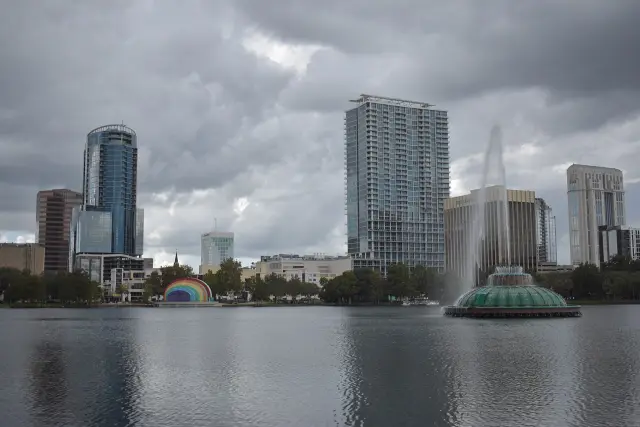
Orlando history is easiest to see in the Downtown Historic District, the city's 51 protected landmarks and Lake Eola Park, a city park since 1888.
The Downtown Historic District, designated in 1980 as Orlando's first local historic district, covers eight square blocks with about 80 buildings from the 1880s to the early 1940s, between East Jefferson Street, Gertrude Avenue, Church Street and Rosalind Avenue (City of Orlando historic districts). Look for the Elijah Hand Building (1905) at 15-17 West Pine Street, the Angebilt Hotel (1923-24) at 37 North Orange Avenue and the Art Deco Kress Building (1935) at 15-17 West Church Street.
| Orlando district | Year designated |
|---|---|
| Downtown | 1980 |
| Lake Cherokee | 1981 |
| Lake Copeland | 1984 |
| Lake Eola Heights | 1989 |
| Lake Lawsona | 1994 |
| Colonialtown South | 2000 |
Orlando lists 51 historic buildings, sites, structures and objects as local landmarks, and 12 of them are also on the National Register of Historic Places (City of Orlando landmarks list). The list includes the Old Orlando Railroad Depot, the Atlantic Coastline Station, the Wells' Built Hotel, the Dr. William Monroe Wells House, Tinker Field and the Marsh House in Lake Eola Park; for more information the city lists 407.246.3350.
Lake Eola began as a sinkhole on land Jacob Summerlin bought in 1873, was known to the public as Sandy Beach; the Summerlin family donated a strip of land around it for public use in 1883, and it became a City of Orlando park in 1888 (Lake Eola history). For major or minor changes to a historic property, the Historic Preservation Board offers guidance on getting a Certificate of Appropriateness and the necessary permits (City of Orlando Historic Preservation), and the Orlando Locator on the districts page shows whether an address falls inside one.
Which Orlando history guide answers which question?
Each Orlando history question has its own guide, and the Orange County Regional History Center guide in the landmarks section covers the museum in the 1927 courthouse.
| Question | Key fact | Orlando guide |
|---|---|---|
| Who settled Orlando first? | Aaron Jernigan arrived in 1843; Fort Gatlin dates to 1838 | Early settlement and Jernigan guide |
| When did Orlando become a town? | Incorporated July 31, 1875 with 85 people; a city in 1885 | Founding and pioneer era guide |
| When did the railroad arrive? | Line from Sanford opened October 1, 1880 | 1880 railroad guide |
| When did Disney's Florida land buying become public? | Project X land, more than 27,440 acres, revealed October 24, 1965 | Walt Disney 1965 decision guide |
| Where is Orlando history on display? | 1927 courthouse, with Heritage Park in front | Orange County Regional History Center guide |
The 1892 red brick Orange County courthouse stood on East Central Boulevard where Heritage Park is now, in front of the Orange County Regional History Center, and the new courthouse built in 1927 is the current site of the History Center (Orange County timeline). Orlando readers checking a family or property story can start with the city landmark list, then the county timeline for anything outside city limits.
Frequently asked questions
When was Orlando founded?
Orlando grew from Jernigan, a community that had formed around Fort Gatlin by 1840. It took the Orlando name six years after its 1850 post office opened, and the Town of Orlando was incorporated on July 31, 1875 with 85 people. Orange County records Orlando becoming a city in 1885.
Why is Orlando called Orlando?
No single answer exists. The City of Orlando tells four stories: a man who worked for Judge James Speer, a character from a Shakespeare play, a Mr. Orlando who died and was buried on his way to Tampa, and the sentinel Orlando Reeves, said to be buried beside Lake Eola.
Who was the first settler of Orlando?
Orange County counts Aaron Jernigan, who came from Georgia in 1843 and settled on the northwest shore of Lake Holden, as the first white settler of what became Orlando. The early community around Fort Gatlin carried the Jernigan name until it became Orlando.
When did Disney come to Orlando?
Disney's purchase of more than 27,440 acres under the code name Project X became public in October 1965. Walt Disney World Resort opened on October 1, 1971, and Orange County lists its four major theme parks within the City of Bay Lake, incorporated in 1967.
How many historic districts does Orlando have?
Orlando has six historic preservation districts: Downtown (1980), Lake Cherokee (1981), Lake Copeland (1984), Lake Eola Heights (1989), Lake Lawsona (1994) and Colonialtown South (2000). The Historic Preservation Board offers guidance on Certificates of Appropriateness for changes to historic properties.
Sources
- Orlando History, City of Orlando https://www.orlando.gov/Our-Government/History Used for: Fort Gatlin, Jernigan, name change, 1875 incorporation, name stories, economy
- Orange County 200th Anniversary, Orange County Government https://www.ocfl.net/boardofcommissioners/mayor/200thanniversary.aspx Used for: Mosquito County, 1845 rename, county seat, Jernigan, city status, Church Street Station, courthouses, Disney-area cities, 1971
- Historic Preservation Districts, City of Orlando https://www.orlando.gov/Our-Government/News-and-Information/History/Historic-Preservation-Districts Used for: six districts, Downtown Historic District
- Find Historic Landmarks, City of Orlando https://www.orlando.gov/Our-Government/News-and-Information/History/Find-Historic-Landmarks Used for: 51 landmarks, 12 on the National Register, phone
- Historic Preservation, City of Orlando https://www.orlando.gov/Our-Government/Departments-Offices/Economic-Development/City-Planning/Historic-Preservation Used for: Historic Preservation Board, Certificate of Appropriateness
- Lake Eola History, City of Orlando https://www.orlando.gov/Parks-the-Environment/Directory/Lake-Eola-Park/Lake-Eola-History Used for: Summerlin, Lake Eola park 1888
- Church Street Station/Old Orlando Railroad Depot, UCF RICHES https://richesmi.cah.ucf.edu/omeka/exhibits/show/railroaddepots/oldorlando Used for: 1880 railroad and growth
- Orlando Health/Amtrak Station, UCF RICHES https://richesmi.cah.ucf.edu/omeka/exhibits/show/railroaddepots/orlandoamtrak Used for: 1926 station, SunRail, restoration
- The Florida Project Press Conference, The Walt Disney Company https://thewaltdisneycompany.com/origins-disney-parks-expansion-florida-project-press-conference/ Used for: Project X, 1965 announcement, acreage
How this page was made
Digital Towns uses AI assistance to research and write its guides, and every page is only as good as the sources it cites. Our goal is the most accurate, useful local information possible.
This page was fact-checked twice before publishing.
If you see an error, or anything you can show is false, tell us right away and we will take a third look.
Report an error
Thank you. We'll take a third look and correct the page if it's wrong.