Short answer: Vero Beach sits between the Atlantic beach and the Indian River Lagoon, a 156-mile estuary that city stormwater reaches usually without treatment. Indian River County finished rebuilding the 2.6-mile Sector 5 beach through the city in March 2026 with 115,901 cubic yards of sand, sea turtles nest from March 1 to October 31, and two state aquatic preserves cover the lagoon at Vero Beach.
Last verified: October 15, 2026, against the sources listed at the end of this page.
Which Vero Beach environment guide answers which question?
The Vero Beach environment section has two deep guides, one on Central Beach sand replenishment and one on city stormwater and the Indian River Lagoon, and the table below lists the other environmental questions this hub answers with the agency that holds the facts.
| Question | Key fact (source) | Where it is covered |
|---|---|---|
| Was the Vero Beach beach rebuilt after the 2022 storms? | Sector 5 project finished March 2026 with 115,901 cubic yards of sand (Indian River County) | Central Beach sand replenishment guide |
| Where does Vero Beach rainwater go? | Street runoff usually gets no treatment and flows to the river (City of Vero Beach) | Vero Beach stormwater and lagoon guide |
| When do sea turtles nest on Vero Beach beaches? | March 1 through October 31 (Indian River County) | This hub |
| How large is the lagoon preserve off Vero Beach? | About 11,000 acres, established 1969 (Florida DEP) | This hub |
| When is fertilizer banned in Indian River County? | June 1 to September 30 in unincorporated areas (Indian River County) | This hub |
| What is the county doing for the lagoon? | Lagoon Management Plan adopted September 26, 2023 (Indian River County) | Vero Beach stormwater and lagoon guide |
The two Vero Beach guides go deeper than this hub: the sand replenishment guide follows the Sector 5 projects through the Central Beach and Humiston area in 2020 and 2026, and the stormwater guide covers the City of Vero Beach stormwater utility debate and its lagoon projects. Beach work is run by Indian River County, while storm drains inside the city limits belong to the City of Vero Beach Public Works Department, so the right office depends on the question.
What is the Indian River Lagoon, and how does Vero Beach runoff reach it?
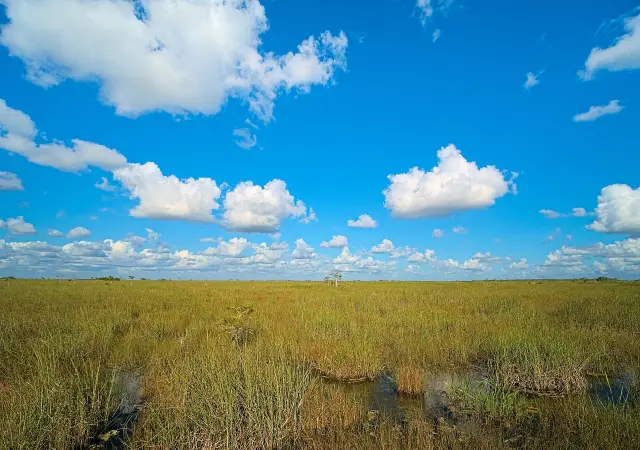
The Indian River Lagoon is a 156-mile estuary between the mainland and the barrier island, and rain that runs off Vero Beach streets, roofs and lawns reaches it through storm sewers usually without treatment.
Indian River County describes the lagoon as a bar-built estuary covering 40 percent of the state's east coast, linked to the Atlantic by five inlets, with the county in its central reach between the Sebastian Inlet to the north and the Fort Pierce Inlet to the south (Indian River County Lagoon Division). More than 4,300 species depend on it for part of their life cycle, 50 of them listed as endangered or threatened, and it was designated an estuary of national significance in 1990.
The City of Vero Beach Stormwater and Drainage Division builds and maintains the storm sewers, ditches, swales and drainage structures inside the city, and its own page states that stormwater is not clean and usually receives no treatment, so what runs off lawns, streets and parking lots flows directly into the river (City of Vero Beach Stormwater and Drainage Division). The city lists sediment, phosphorus and toxic chemicals such as motor oil and zinc from roof drains and tires among the pollutants it carries. Its Clean Lagoon page warns that used motor oil poured into a Vero Beach storm drain goes directly to the Indian River Lagoon (City of Vero Beach Clean Lagoon).
The volumes are larger than they look. The city's watershed page notes that 27,200 gallons of water fall on a one-acre yard during a one-inch rainfall, and that a one-acre parking lot produces 16 times the runoff of a one-acre meadow (City of Vero Beach Watershed). The same page notes that a single quart of motor oil dumped down a storm sewer creates a two-acre oil slick. Treating runoff before it reaches the lagoon is the focus of the Vero Beach stormwater and lagoon guide.
Is the beach at Vero Beach being restored, and what comes next?
Yes: Indian River County finished the Sector 5 beach restoration through Vero Beach in March 2026, placing 115,901 cubic yards of sand and 117,500 native dune plants to replace dunes lost in the 2022 storms.
The county named the work the Sector 5 Hurricane Ian and Nicole Beach Restoration Project, and Tracking Station Beach Park at 800 46th Place was one of its main construction access points (Indian River County Beach Program). Sector 5 runs 2.6 miles through the City of Vero Beach, from about half a mile north of Tracking Station Beach Park to about a quarter mile south of the Riomar Beach Access near the Riomar Golf Course, and the county plan recommends renourishing it every 5 to 7 years, subject to funding (Indian River County beach management sectors).
South of it, Sector 6 runs 2.0 miles from the Riomar Beach Access to Treasure Cove Lane, and because that shoreline is growing, the county only monitors it with twice-yearly beach profile surveys. The county also lists a 3.1-mile critically eroded segment along the northern section of Vero Beach where critical erosion has led to seawalls along part of the shore (Indian River County beach management sectors).
What is changing now: the Board of County Commissioners adopted the Beach Preservation Plan 2026 Update on October 6, 2026, the long-term plan for the county's 22.4 miles of Atlantic coastline (Indian River County Beach Preservation Plan). The county describes the plan as how it monitors the areas most vulnerable to erosion, secures sand and prioritizes beach and dune nourishment, so the update is the document to read before the next renourishment cycle; beach park closures during projects are announced by the county Natural Resources Department. The Central Beach sand replenishment guide covers the earlier 2020 project and the costs.
When is sea turtle nesting season on Vero Beach beaches?
Sea turtle nesting season on Indian River County beaches, including Vero Beach, runs from March 1 through October 31 each year.
Loggerhead, green and leatherback turtles lay thousands of nests on Indian River County beaches each year, and all three species are listed as imperiled by the Florida Fish and Wildlife Conservation Commission and the U.S. Fish and Wildlife Service (Indian River County Sea Turtle Conservation Program). Since 2005 the county has kept a Habitat Conservation Plan that coordinates nest monitoring across 22.4 miles of sandy shoreline, which takes in the Vero Beach city beaches. Florida law prohibits taking, disturbing or harassing marine turtles, their nests or eggs.
Anyone on a Vero Beach beach who sees a violation, an injured or stranded turtle, or disoriented hatchlings should call the Florida Fish and Wildlife Conservation Commission toll-free at 1-888-404-3922, the number the county lists (Indian River County). Vero Beach beach projects carry county pre- and post-construction monitoring so that nesting activity is not harmed by sand placement (Indian River County Beach Program).
What protected waters surround Vero Beach?
Two state aquatic preserves cover the Indian River Lagoon at Vero Beach: the Indian River-Vero Beach to Fort Pierce Aquatic Preserve to the south and the Indian River-Malabar to Vero Beach Aquatic Preserve to the north.
The southern preserve was established in 1969, covers about 11,000 acres in Indian River and St. Lucie counties, and takes in shallow estuary, barrier island and spoil islands, open around the clock through public access points run by other agencies (Florida DEP, Indian River-Vero Beach to Fort Pierce Aquatic Preserve). DEP's own pages differ on that date: the Malabar to Vero Beach preserve page says both preserves were designated by the Board of Trustees in 1970 (Florida DEP). The northern preserve was established in 1970 and covers about 28,000 acres of lagoon estuary in Brevard and Indian River counties between Malabar and Vero Beach (Florida DEP, Indian River-Malabar to Vero Beach Aquatic Preserve).
Pelican Island in the Indian River Lagoon became the nation's first national wildlife refuge in 1903 by executive order of President Theodore Roosevelt; the island was 5.5 acres in 1903 and is now roughly 3 acres after years of boat-induced wave action and sea-level rise (U.S. Fish and Wildlife Service, Pelican Island NWR). The City of Vero Beach lists the Ocean Research and Conservation Association, the Marine Resources Council and the Environmental Learning Center on its Indian River Lagoon Conservation page (City of Vero Beach Indian River Lagoon Conservation).
What lawn and household rules protect the lagoon around Vero Beach?
In unincorporated Indian River County, fertilizer containing nitrogen or phosphorus may not be applied between June 1 and September 30, and the City of Vero Beach asks residents to keep oil, clippings and chemicals out of storm drains.
The county fertilizer ordinance, approved August 20, 2013 as Ordinance 2013-012 and amended by Ordinance 2013-014, also bars fertilizing saturated soil or applying it when a flood, tropical storm or hurricane watch or warning is in effect, and requires that nitrogen fertilizer contain at least 50 percent slow-release nitrogen (Indian River County Fertilizer Ordinance). The county page states that these rules apply in the unincorporated areas of the county, so neighborhoods with a Vero Beach mailing address outside the city limits are covered; owners of lots inside the city limits should confirm the city rule with City of Vero Beach Public Works.
The City of Vero Beach Clean Lagoon page asks residents to compost leaves and grass clippings rather than raking them into roadways or storm drains, to skip lawn chemicals when rain is forecast, and to keep toxic products in their original closed containers (City of Vero Beach Clean Lagoon). Storm drain pollution in the city is reported to the Public Works and Engineering Department (City of Vero Beach), and City Hall is at 1053 20th Place, phone 772-978-5151.
At the county level, the Lagoon Division works from a Lagoon Management Plan adopted September 26, 2023; it removed two derelict vessels from the lagoon in winter 2026, is launching a pump-out vessel program in 2026, and has installed 21 Living Docks with the Florida Institute of Technology (Indian River County Lagoon Division). Last verified: October 15, 2026, on the Indian River County and City of Vero Beach websites.
Frequently asked questions
When is sea turtle nesting season in Vero Beach?
Sea turtle nesting season on Indian River County beaches, including Vero Beach, runs from March 1 through October 31. Loggerhead, green and leatherback turtles nest here. Report injured turtles, disoriented hatchlings or nest disturbance to the Florida Fish and Wildlife Conservation Commission at 1-888-404-3922.
When was the Vero Beach beach last renourished?
Indian River County completed the Sector 5 Hurricane Ian and Nicole Beach Restoration Project through Vero Beach in March 2026, placing 115,901 cubic yards of sand and 117,500 native dune plants. The county plan calls for Sector 5 renourishment every 5 to 7 years, subject to funding.
Is there a fertilizer ban in Indian River County?
Yes. The county fertilizer ordinance bars applying nitrogen or phosphorus fertilizer between June 1 and September 30 and during storm watches or warnings in unincorporated Indian River County. Nitrogen fertilizer must be at least 50 percent slow release. Residents inside Vero Beach city limits should check the city rule.
Does Vero Beach stormwater get treated before reaching the lagoon?
Usually not. The City of Vero Beach states that stormwater is not clean and usually receives no treatment, so runoff from lawns, streets and parking lots flows directly into the Indian River Lagoon. The Vero Beach stormwater and lagoon guide covers the city projects that treat it.
What aquatic preserves are near Vero Beach?
Two state aquatic preserves cover the Indian River Lagoon at Vero Beach. The Indian River-Vero Beach to Fort Pierce Aquatic Preserve, established in 1969, covers about 11,000 acres, and the Indian River-Malabar to Vero Beach Aquatic Preserve, established in 1970, covers about 28,000 acres.
Sources
- Indian River Lagoon, Indian River County Natural Resources https://www.indianriver.gov/services/natural_resources/indian_river_lagoon/index.php Used for: lagoon length, inlets, species, 1990 designation, Lagoon Management Plan, derelict vessels, pump-out program, Living Docks
- Beach Restoration Projects, Indian River County Coastal Engineering https://indianriver.gov/services/natural_resources/coastal_engineering/beach_program/restoration_projects.php Used for: Sector 5 completion March 2026, sand volume, dune plants, Tracking Station Beach Park access, monitoring
- Beach Management Sectors, Indian River County Coastal Engineering https://www.indianriver.gov/services/natural_resources/coastal_engineering/beach_program/beach_management_sectors.php Used for: Sector 5 and Sector 6 extent and strategy, critically eroded northern Vero Beach segment
- Beach Preservation Plan, Indian River County Coastal Engineering https://www.indianriver.gov/services/natural_resources/coastal_engineering/beach_program/beach_preservation_plan.php Used for: 22.4 miles of coastline, 2026 Update adopted October 6, 2026
- Sea Turtle Conservation Program, Indian River County Coastal Engineering https://www.indianriver.gov/services/natural_resources/coastal_engineering/sea_turtle_conservation_program.php Used for: nesting season, species, 2005 HCP, FWC phone
- Fertilizer Ordinance, Indian River County Stormwater https://indianriver.gov/services/natural_resources/stormwater/fertilizer_ordinance.php Used for: June 1 to September 30 ban, storm watch rule, slow-release rule, unincorporated applicability
- Stormwater and Drainage Division, City of Vero Beach Public Works https://www.covb.org/310/Stormwater-Drainage-Division Used for: division mission, untreated runoff, pollutants, reporting storm drain pollution
- Clean Lagoon, City of Vero Beach Public Works https://www.covb.org/312/Clean-Lagoon Used for: motor oil to the lagoon, household tips, City Hall address and phone
- Watershed, City of Vero Beach Public Works https://www.covb.org/326/Watershed Used for: rainfall volume and parking lot runoff facts
- Indian River Lagoon Conservation, City of Vero Beach Public Works https://www.covb.org/289/Indian-River-Lagoon-Conservation Used for: lagoon partner organizations
- Indian River-Vero Beach to Fort Pierce Aquatic Preserve, Florida Department of Environmental Protection https://floridadep.gov/rcp/aquatic-preserve/locations/indian-river-vero-beach-fort-pierce-aquatic-preserve Used for: established 1969, 11,000 acres, counties, access
- Indian River-Malabar to Vero Beach Aquatic Preserve, Florida Department of Environmental Protection https://floridadep.gov/rcp/aquatic-preserve/locations/indian-river-malabar-vero-beach-aquatic-preserve Used for: established 1970, 28,000 acres, counties
- About Pelican Island National Wildlife Refuge, U.S. Fish and Wildlife Service https://www.fws.gov/refuge/pelican-island/about-us Used for: 1903 designation as first national wildlife refuge, island size
How this page was made
Digital Towns uses AI assistance to research and write its guides, and every page is only as good as the sources it cites. Our goal is the most accurate, useful local information possible.
This page was fact-checked twice before publishing.
If you see an error, or anything you can show is false, tell us right away and we will take a third look.
Report an error
Thank you. We'll take a third look and correct the page if it's wrong.