Short answer: January is the coldest month in South Brevard. On NOAA 1991 to 2020 normals, January afternoons average 72.9 degrees and mornings 49.0 at the Palm Bay co-op station, against 71.8 and 51.7 at Melbourne International Airport, and each site gets about 2.6 inches of rain. The airport averages 1.2 freezing nights in January, and its record low, 19 degrees, came on January 20, 1977.
Last verified: October 18, 2026, against the sources listed at the end of this page.
How cold is January in Palm Bay, Malabar and Melbourne?
January is the coldest month in South Brevard, with 1991 to 2020 normals of 72.9 degrees by day and 49.0 at dawn at the Palm Bay co-op site and 71.8 over 51.7 at Melbourne International Airport.
The Palm Bay figures come from cooperative station USC00086761, whose January normal low of 49.0 is the lowest of any month; December averages 52.3 and February 51.5 at the same site (ACIS normals, Palm Bay co-op). Airport normals for KMLB are published in the same NOAA set (ACIS normals, KMLB), and KMLB is the observation that appears on the official forecast page for Palm Bay (Palm Bay point forecast).
| Station | Normal high, F | Normal low, F | Normal rain, inches |
|---|---|---|---|
| Palm Bay co-op (USC00086761) | 72.9 | 49.0 | 2.64 |
| Melbourne International Airport (KMLB) | 71.8 | 51.7 | 2.63 |
| Vero Beach airport, south of Micco (USW00012843) | 73.3 | 52.2 | 2.74 |
The inland co-op gauge in Palm Bay runs warmer in the afternoon and colder before sunrise than the airport, a spread of 23.9 degrees between its normal high and low against 20.1 at KMLB (72.9 minus 49.0, and 71.8 minus 51.7). For Micco and Barefoot Bay, the Vero Beach airport normals of 73.3 and 52.2 are the closest official benchmark (ACIS normals, Vero Beach).
Cool air arrives well before January. NWS Melbourne puts the median date of the first reading below 50 degrees at November 10 for Melbourne and November 13 for Vero Beach (NWS Melbourne season onset dates), so by January a run of chilly mornings in Palm Bay is normal rather than a surprise. Heating demand peaks too: the Melbourne climate report lists 162 heating degree days as the January normal, and January 2025 needed 244 (KMLB January 2026 climate report).
How often does it freeze in South Brevard in January?
Melbourne International Airport averages 1.2 January nights at or below 32 degrees, which is about two thirds of the 1.8 freezing nights the airport records in a normal year.
The January count appears in the normal column of the KMLB monthly climate report (NWS Melbourne January 2026 report), and the yearly figure of 1.8 in the 2025 annual report (KMLB annual climate report for 2025); 1.2 divided by 1.8 is 0.67. That share is why January is the month when frost cloth and covered irrigation lines matter most in the yards and nurseries of Palm Bay, Malabar and Grant-Valkaria.
An average is not a promise. January 2026 brought two nights at or below freezing to KMLB, with a lowest reading of 32 degrees on January 29, while January 2025 had none (KMLB January 2026 figures). January 2024 also passed without a freeze at the airport, its coldest morning reaching 40 on January 21, and the lowest reading of January 2023 was 34 (KMLB January 2024 report).
The co-op site is the better guide for inland Palm Bay. Its normal January low of 49.0 sits 2.7 degrees below the airport's 51.7 (51.7 minus 49.0), so a forecast low in the middle 30s at Melbourne International Airport leaves little margin for the open ground of Grant-Valkaria and western Palm Bay. The figures on this page are averages and records, not a forecast.
What are the coldest and warmest January temperatures on record at Melbourne?
The coldest January reading at Melbourne International Airport is 19 degrees on January 20, 1977, and the warmest is 88 degrees, reached on January 26, 1965, January 31, 1991 and January 4, 2020.
Those records cover 1939 to 2026 at KMLB (KMLB January records). The 19 degree reading of 1977 is not only a January record: the 2025 annual report lists it as the lowest temperature in the whole KMLB record, against an all-time high of 102 on July 14, 1980 (KMLB all-time extremes).
The 1977 cold came with a statewide arctic outbreak. NWS Melbourne's event log for January 18 to 21, 1977 records snow at Miami Beach and Palm Beach, reported as far south as Homestead, the most southerly snow in Florida history, with an unusually heavy frost that reached the immediate coast (NWS Melbourne January event log, 1977). A later outbreak on January 28, 1986 brought 26 degrees to both Melbourne and Orlando (NWS Melbourne January event log, 1986).
Whole months swing just as widely at KMLB. The warmest January on record averaged 71.2 degrees in 1974 and the coldest 52.2 in 1981 (KMLB monthly January records), a spread of 19.0 degrees (71.2 minus 52.2) between the mildest and the harshest Januaries the Melbourne airport has measured.
How much rain falls in January in Palm Bay and Barefoot Bay?
January is part of the dry season in South Brevard, with a normal 2.64 inches at the Palm Bay co-op site, 2.63 at Melbourne International Airport and 2.74 at the Vero Beach airport near Barefoot Bay.
Rain falls on few days. The KMLB normal is 7.0 January days with at least 0.01 inch and 4.0 with a tenth of an inch or more (KMLB January rain normals), most of it from cold fronts crossing Palm Bay and Malabar rather than afternoon storms. Range is wide: the wettest January at the airport brought 8.17 inches in 1979 and the driest only a trace in 2012.
A single front can bring most of a month's rain to Melbourne. The KMLB daily rainfall record for January is 4.70 inches on January 12, 1979 (KMLB January daily record), more than the 2.63 inch normal for the whole month.
January 2026 went the other way. The airport measured 0.31 inch against a 2.63 normal, with measurable rain on only 3 days (KMLB January 2026 rain), and NWS Melbourne ranked it the 7th driest January on record for Melbourne (NWS Melbourne January 2026 rainfall summary). Dry Januaries matter for fire: the Florida Forest Service notes that wildfire activity begins increasing in January and peaks in May and June (Florida Forest Service drought index notes), so a rainless month leaves the scrub around Palm Bay and Grant-Valkaria drier going into spring.
What were the last four Januaries like at Melbourne International Airport?
The last four Januaries at Melbourne International Airport ranged from a cold January 2025 that averaged 57.4 degrees to a mild January 2023 at 64.6, and from 0.31 inch of rain in 2026 to 5.52 inches in 2024.
| January | Mean, F | Average high, F | Average low, F | Rain, inches |
|---|---|---|---|---|
| 2023 | 64.6 | 75.3 | 54.0 | 0.43 |
| 2024 | 62.7 | 71.2 | 54.2 | 5.52 |
| 2025 | 57.4 | 67.5 | 47.3 | 1.59 |
| 2026 | 61.0 | 72.6 | 49.5 | 0.31 |
| Normal, 1991 to 2020 | 61.7 | 71.8 | 51.7 | 2.63 |
The 2023 and 2024 rows come from the KMLB report issued February 1, 2024 (KMLB January 2024 report), the 2025 and 2026 rows from the report issued February 1, 2026 (KMLB January 2026 report). January 2025 ran 4.3 degrees colder than normal at the airport (61.7 minus 57.4), and only January 2024 topped the 2.63 inch normal, at more than double it with 5.52 inches.
January 2026 was two months in one. NWS Melbourne described a warm first half, then multiple strong cold fronts in the second half of the month with strong, gusty winds and much colder weather (NWS Melbourne January 2026 summary). Melbourne set a daily record low of 33 for January 16, replacing 34 from 1983, then a daily record high of 86 on January 25, beating 85 from 2023, and tied the record cool high of 59 for January 31, set in 1984 (NWS Melbourne January 2026 records). The strongest gust at KMLB, 57 mph, came on January 18, and fog formed on 15 days of the month.
What January storms and sea conditions has South Brevard seen?
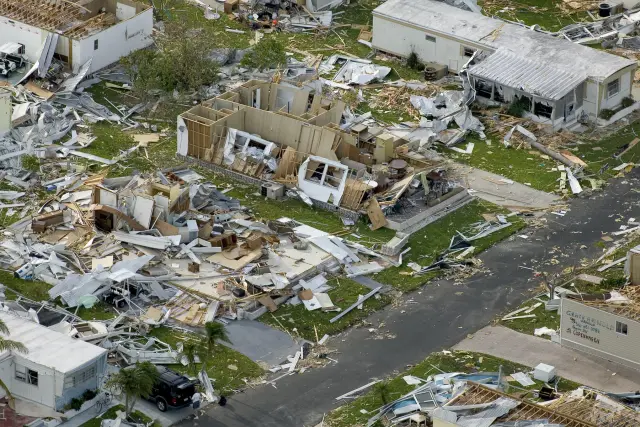
January storms in South Brevard come with cold fronts and coastal gales rather than tropical systems, and NWS Melbourne's event log records a tornado in Melbourne, a coastal gale and frontal tornadoes in Brevard.
On January 1, 1996 a small F0 tornado touched down in the Eau Gallie area of Melbourne near U.S. Highway 1, travelled about half a mile and lifted near the Indian River Lagoon, with damage put at 40 thousand dollars (NWS Melbourne January event log, 1996). On January 28, 1973 tornadoes touched down in Polk, Orange, Osceola and Brevard Counties, and one tore the beacon tower off the Titusville Airport (NWS Melbourne January event log, 1973).
The log also records a January gale. On January 21 and 22, 1989, a low with subtropical storm traits formed off Canaveral and brought Brevard and Indian River Counties sustained winds of 40 to 50 mph, gusts near 75 mph, moderate beach erosion and 4 to 6 inches of rain (NWS Melbourne January event log, 1989); the counties named include the whole South Brevard coast from Melbourne Beach to Micco.
The ocean off South Brevard is at its coolest. The Trident Pier gauge at Port Canaveral averages 66.8 degrees in January, its lowest month, while the buoy 20 nautical miles east of Cape Canaveral averages 72.9 (NOAA water temperature table). In January the shore water at Port Canaveral is 6.1 degrees cooler than the open Atlantic buoy (72.9 minus 66.8), a reminder for anyone planning a swim off Melbourne Beach or the barrier island east of Malabar.
Frequently asked questions
What is the coldest temperature ever recorded in Melbourne, Florida?
The lowest reading at Melbourne International Airport is 19 degrees on January 20, 1977, during a statewide arctic outbreak that brought snow as far south as Homestead. It is both the January record and the all-time low for the airport.
Does it freeze in Palm Bay in January?
Sometimes. Melbourne International Airport averages 1.2 January nights at or below 32 degrees, and the Palm Bay co-op site normally runs colder at dawn. January 2026 had two freezing nights at the airport, while January 2023, 2024 and 2025 had none there.
What is the average January temperature in Palm Bay?
At the Palm Bay co-op station a normal January day runs from 49.0 degrees at dawn to 72.9 in the afternoon, by the 1991 to 2020 normals. Melbourne International Airport is milder at night, at 51.7 and 71.8, for a monthly mean of 61.7.
Is January a rainy month in South Brevard?
No. January falls in the dry season, with about 2.6 inches in Palm Bay and at the Melbourne airport, spread over roughly seven days. January 2026 brought only 0.31 inch to Melbourne, its 7th driest January on record.
Sources
- NOAA Regional Climate Centers ACIS, 1991-2020 monthly normals, Palm Bay cooperative station (USC00086761) https://data.rcc-acis.org/StnData?params=%7B%22sid%22%3A%22086761%22%2C%22sdate%22%3A%222020-01%22%2C%22edate%22%3A%222020-12%22%2C%22elems%22%3A%5B%7B%22name%22%3A%22maxt%22%2C%22interval%22%3A%22mly%22%2C%22duration%22%3A%22mly%22%2C%22reduce%22%3A%22mean%22%2C%22normal%22%3A%2291%22%7D%2C%7B%22name%22%3A%22mint%22%2C%22interval%22%3A%22mly%22%2C%22duration%22%3A%22mly%22%2C%22reduce%22%3A%22mean%22%2C%22normal%22%3A%2291%22%7D%2C%7B%22name%22%3A%22pcpn%22%2C%22interval%22%3A%22mly%22%2C%22duration%22%3A%22mly%22%2C%22reduce%22%3A%22sum%22%2C%22normal%22%3A%2291%22%7D%5D%7D Used for: January normal high, low and rainfall in Palm Bay; December comparison
- NOAA Regional Climate Centers ACIS, 1991-2020 monthly normals, Melbourne International Airport (USW00012838) https://data.rcc-acis.org/StnData?params=%7B%22sid%22%3A%22USW00012838%22%2C%22sdate%22%3A%222020-01%22%2C%22edate%22%3A%222020-12%22%2C%22elems%22%3A%5B%7B%22name%22%3A%22maxt%22%2C%22interval%22%3A%22mly%22%2C%22duration%22%3A%22mly%22%2C%22reduce%22%3A%22mean%22%2C%22normal%22%3A%2291%22%7D%2C%7B%22name%22%3A%22mint%22%2C%22interval%22%3A%22mly%22%2C%22duration%22%3A%22mly%22%2C%22reduce%22%3A%22mean%22%2C%22normal%22%3A%2291%22%7D%2C%7B%22name%22%3A%22pcpn%22%2C%22interval%22%3A%22mly%22%2C%22duration%22%3A%22mly%22%2C%22reduce%22%3A%22sum%22%2C%22normal%22%3A%2291%22%7D%5D%7D Used for: January normal high, low and rainfall at KMLB
- NOAA Regional Climate Centers ACIS, 1991-2020 monthly normals, Vero Beach airport (USW00012843) https://data.rcc-acis.org/StnData?params=%7B%22sid%22%3A%22USW00012843%22%2C%22sdate%22%3A%222020-01%22%2C%22edate%22%3A%222020-12%22%2C%22elems%22%3A%5B%7B%22name%22%3A%22maxt%22%2C%22interval%22%3A%22mly%22%2C%22duration%22%3A%22mly%22%2C%22reduce%22%3A%22mean%22%2C%22normal%22%3A%2291%22%7D%2C%7B%22name%22%3A%22mint%22%2C%22interval%22%3A%22mly%22%2C%22duration%22%3A%22mly%22%2C%22reduce%22%3A%22mean%22%2C%22normal%22%3A%2291%22%7D%2C%7B%22name%22%3A%22pcpn%22%2C%22interval%22%3A%22mly%22%2C%22duration%22%3A%22mly%22%2C%22reduce%22%3A%22sum%22%2C%22normal%22%3A%2291%22%7D%5D%7D Used for: January reference normals for the Micco and Barefoot Bay end
- NWS Melbourne climate report for the month of January 2026, Melbourne (CLMMLB, issued February 1, 2026; Iowa Environmental Mesonet text archive) https://mesonet.agron.iastate.edu/cgi-bin/afos/retrieve.py?pil=CLMMLB&sdate=2026-02-01&edate=2026-02-03&fmt=html&limit=1 Used for: January records, freeze nights, rainfall, wind and fog at KMLB, January 2026 and 2025
- NWS Melbourne climate report for the month of January 2024, Melbourne (CLMMLB, issued February 1, 2024; Iowa Environmental Mesonet text archive) https://mesonet.agron.iastate.edu/cgi-bin/afos/retrieve.py?pil=CLMMLB&sdate=2024-02-01&edate=2024-02-03&fmt=html&limit=1 Used for: warmest and coldest Januaries, daily rainfall record, January 2024 and 2023
- NWS Melbourne climate report for the year 2025, Melbourne (CLAMLB, issued January 1, 2026; Iowa Environmental Mesonet text archive) https://mesonet.agron.iastate.edu/cgi-bin/afos/retrieve.py?pil=CLAMLB&sdate=2026-01-01&edate=2026-01-05&fmt=html&limit=1 Used for: normal yearly count of freezing nights and the all-time KMLB extremes
- NWS Melbourne, January 2026 Weather Summary, East Central Florida, page 2 https://www.weather.gov/media/mlb/summary/Jan2026.pdf#page=2 Used for: second-half cold fronts in January 2026
- NWS Melbourne, January 2026 Weather Summary, page 5 https://www.weather.gov/media/mlb/summary/Jan2026.pdf#page=5 Used for: Melbourne daily records in January 2026
- NWS Melbourne, January 2026 Weather Summary, page 6 https://www.weather.gov/media/mlb/summary/Jan2026.pdf#page=6 Used for: seventh driest January at Melbourne
- NWS Melbourne, Florida Hazardous Weather Events in January, page 1 https://www.weather.gov/media/mlb/whirl/FloridaHazardousWeather_Jan.pdf#page=1 Used for: 1996 Eau Gallie tornado
- NWS Melbourne, Florida Hazardous Weather Events in January, page 3 https://www.weather.gov/media/mlb/whirl/FloridaHazardousWeather_Jan.pdf#page=3 Used for: January 1977 arctic outbreak and snow
- NWS Melbourne, Florida Hazardous Weather Events in January, page 5 https://www.weather.gov/media/mlb/whirl/FloridaHazardousWeather_Jan.pdf#page=5 Used for: January 1989 gale in Brevard
- NWS Melbourne, Florida Hazardous Weather Events in January, page 6 https://www.weather.gov/media/mlb/whirl/FloridaHazardousWeather_Jan.pdf#page=6 Used for: January 1986 cold, 26 degrees at Melbourne; 1973 Brevard tornadoes
- NWS Melbourne, Wet/Dry Season Onset https://www.weather.gov/mlb/wetdry Used for: median date of the first temperature below 50 at Melbourne and Vero Beach
- NOAA NCEI Coastal Water Temperature Guide, all stations table https://www.ncei.noaa.gov/access/coastal-water-temperature-guide/all_table.html Used for: January water temperatures at Trident Pier and the Canaveral buoy
- Florida Department of Agriculture and Consumer Services, Florida Forest Service: KBDI as an Indicator of Potential Wildfire Activity https://www.fdacs.gov/Forest-Wildfire/Wildland-Fire/Keetch-Byram-Drought-Index-KBDI/KBDI-as-an-Indicator-of-Potential-Wildfire-Activity Used for: fire activity rising from January
- National Weather Service point forecast, Palm Bay FL https://forecast.weather.gov/MapClick.php?lat=27.9931&lon=-80.6608 Used for: Palm Bay forecast shows Melbourne International Airport observations
How this page was made
Digital Towns uses AI assistance to research and write its guides, and every page is only as good as the sources it cites. Our goal is the most accurate, useful local information possible.
This page was fact-checked twice before publishing.
If you see an error, or anything you can show is false, tell us right away and we will take a third look.
Report an error
Thank you. We'll take a third look and correct the page if it's wrong.