Short answer: Central Avenue was the business district of The Scrub, Tampa's oldest and largest African American neighborhood, settled by freed people after the Civil War. It grew to more than 200 African American businesses on and around the street by 1930 and was dismantled by slum clearance in 1959, Interstate 4 construction and 1960s urban renewal. The last business closed in 1974, and the street south of I-275 no longer exists.
Last verified: October 18, 2026, against the sources listed at the end of this page.
What was Central Avenue in Tampa?
Central Avenue was the business heart of The Scrub, the neighborhood the City of Tampa calls Tampa's oldest and largest African American community.
The City of Tampa says the restricted access under the laws and customs of segregation prompted the growth of a business district along The Scrub's western edge, and that the Central Avenue area was also the social and religious center for Tampa's African American residents. By the 1930s, the city says, Central Avenue offered everything necessary for daily life, including a thriving music scene as a stop on the Chitlin' Circuit.
The district is gone today. The City of Tampa states that the street south of I-275 has completely vanished and that only a handful of buildings remain on nearby streets. The city's Soulwalk Central Avenue and The Scrub guide says the former business district is now home to Perry Harvey Sr. Park and that The Scrub is the site of the ENCORE! development.
How did The Scrub and Central Avenue begin?
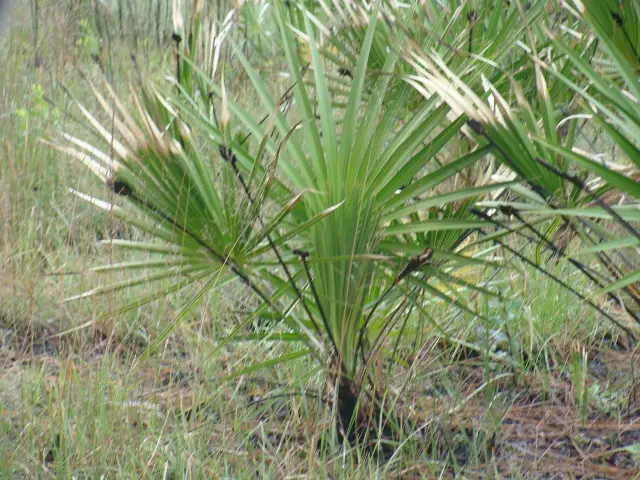
The Scrub began just after the Civil War, when newly freed people built homes in a scrub palmetto thicket just northeast of the Town of Tampa.
That is the account on the city's Soulwalk marker for The Scrub. The city's Perry Harvey Sr. Park history adds that the community was founded by recently freed people, some from the immediate area and others from the greater Tampa Bay region, that it stood between the growing downtown business center and the cigar making enclave of Ybor City, and that by the late 1800s The Scrub was home to the majority of Tampa's African American population. The neighborhood took its name from the scrub palmetto that once dominated the landscape.
Official sources give slightly different start dates for the business district. Hillsborough County, describing the Tampa Bay History Center's exhibit, calls Central Avenue a Black business hub in the late 1890s, while the city's Soulwalk guide says a business community began to take root along Central Avenue by 1900.
How large did the Central Avenue district become?
Between 1900 and 1930 Tampa's Black population quadrupled, and the number of African American businesses on and around Central Avenue rose to more than 200.
The two city pages give slightly different 1930 population figures. The Perry Harvey Sr. Park page gives growth from 4,382 to 21,531, and the Soulwalk marker gives 4,382 to 21,551. Both are shown in the timeline below.
| Period | What happened | Source |
|---|---|---|
| After the Civil War | Freed people build homes in a scrub palmetto thicket northeast of the Town of Tampa | City Soulwalk marker |
| Late 1890s to 1900 | Business district takes root along Central Avenue | County; City guide |
| 1900 to 1930 | Black population grows from 4,382 to 21,531 (park page) or 21,551 (marker); businesses pass 200 | City park page |
| 1927 | Tampa Urban League co-authors A Study of Negro Life in Tampa | City Soulwalk marker |
| Early 1920s to late 1950s | Central Avenue's heyday | City park page |
| 1940s | More Black residents and Black-owned businesses than any other area of the county | Hillsborough County |
| 1959 | Single family homes in The Scrub demolished; Central Park Village built | City Soulwalk marker |
| 1960s | I-4 and urban renewal disrupt business and dislocate customers | City Soulwalk marker |
| 1974 | Last business on Central Avenue closes | City park page |
| December 2012 | The Ella, first building of Encore!, opens | City Soulwalk marker |
| February 2023 | City of Tampa unveils Soulwalk | City Soulwalk page |
Prosperity on the avenue sat beside neglect in the neighborhood. The Soulwalk marker says the 1927 Tampa Urban League report addressed the unequal conditions in The Scrub and Tampa's other segregated neighborhoods, including unpaved streets, inadequate water and sewer service, and a lack of parks and playgrounds.
Which businesses, musicians and leaders anchored Central Avenue?
The City of Tampa names a day nursery, two restaurants, a newspaper, a longshoremen's union and national music acts among the pillars of Tampa's Central Avenue.
The city's account of Central Avenue's business leaders runs from Clara Alston's Helping Hands Day Nursery to Moses White's Palmetto Dinette and Watts Sanderson's Blue Room to C. Blythe Andrews' newspaper, The Florida Sentinel, as examples of how Tampa's African American community could obtain whatever it needed on and around Central Avenue. Hillsborough County describes C. Blythe Andrews Jr. as a community activist and chairman of the Florida Sentinel-Bulletin, a family owned semiweekly that has focused on Black residents and interests for more than 75 years.
Music made the avenue famous. At its peak, the city says, the music and entertainment scene on Central fostered local musicians and hosted national acts: Cab Calloway and Ella Fitzgerald came through on the Chitlin Circuit, while Ray Charles and Cannonball Adderley started their careers on Central. The city's Soulwalk guide marks the site of Ray Charles' first recording at 813 Short Emory St.
Labor leadership mattered as much as storefronts. Perry Harvey Sr. was a founding member of the Longshoreman's Union Local 1402 and its president from 1937 until just before his death in 1972. The city credits him with better wages, benefits and working conditions for Tampa's predominantly Black dock workers, and with helping create the first Black owned apartment building and plaza, which included a bank, a supermarket and a restaurant. When Florida Governor LeRoy Collins appointed him to the state's bi-racial committee, the city says, he helped to desegregate the county's school system.
The neighborhood also produced civil rights and education leaders. The city names Reverend A. Leon Lowry and Helen Saunders, who worked with others to bring Martin Luther King Jr. to Tampa in 1961, notes that downtown lunch counter sit-ins were planned in the churches and the NAACP office near Central Avenue, and honors Blanche Armwood and Christina Meacham as leaders in education and Clara Frye for helping bring medical care to those barred from the city's facilities.
What happened to Central Avenue during urban renewal?
Slum clearance in 1959 razed The Scrub's homes, and Interstate 4 and 1960s urban renewal then disrupted Central Avenue's businesses.
Federal funding allotted to so-called slum clearance programs led to the demolition, in 1959, of the single family homes in The Scrub and the construction of the Central Park Village housing project, according to the city's Soulwalk marker. Construction of I-4 and the urban renewal projects of the 1960s disrupted business along Central Avenue and dislocated customers.
The City of Tampa says the business district itself escaped demolition at the time, but the last business on Central Avenue closed in 1974, and the street south of I-275 has completely vanished.
The housing that replaced The Scrub has itself been replaced. Central Park Village gave way to Encore!, and its first building, The Ella, opened in December 2012, the Soulwalk marker says. The city's park page describes Encore! as a planned mixed use development built by the Tampa Housing Authority, just east of Perry Harvey Sr. Park.
Where can Central Avenue's history be seen in Tampa today?
Perry Harvey Sr. Park and the city's Soulwalk walking paths are the main places to see Central Avenue's history today.
The City of Tampa describes four major artworks in the park, made with the Tampa Bay History Center as partner and funded in part by the National Endowment for the Arts: James Simon's gateway sculptures of musicians, dancers and a jukebox, 12 to 16 feet high; Rufus Butler Seder's eight LIFETILES murals built from historic photographs of The Scrub and Central Avenue; Joel Randell's 8 foot bronze of Perry Harvey Sr.; and Mike Parker's Leaders' Row, which uses a Sanborn map and plasma cut aluminum. Fourteen inset timeline pavers run through the park, and Natalie Blake's three ceramic tile murals at The Trio in Encore! carry the story east of the park.
The city's two pages give the park different addresses: the park art page lists 900 E. Scott Street, while the Soulwalk guide lists the park's artworks at 1000 E Harrison St. The guide lays out three walking paths through the district.
| Soulwalk path | Approximate distance | Examples of stops listed |
|---|---|---|
| Path 1 | 0.5 to 0.75 miles | St. Paul AME Church, Oaklawn Cemetery, Ray Charles First Recording, Longshoreman Association Local 1402 Hall (est. 1935) |
| Path 2 | About 1 mile | Central Avenue Historical Marker, Perry Harvey Sr. Park, The Trio, St. Peter Claver School, Central Park Village Site |
| Path 3 | About 0.9 mile | Jackson House, Tampa Union Station, St. Peter Claver Catholic Church, Booker T. Washington |
The wider Soulwalk trail, unveiled by the City of Tampa in February 2023 with the Tampa Bay History Center and the University of South Florida, spans nearly 100 destinations across 46 miles and 26 neighborhoods, and the city points visitors to the Bloomberg Connects app for site descriptions and walking routes. The Tampa Bay History Center's permanent exhibit Travails and Triumphs also covers Central Avenue, according to Hillsborough County.
Last verified: October 18, 2026, against the City of Tampa Perry Harvey Sr. Park history, The Scrub Soulwalk marker, the Soulwalk home page and Central Avenue walking guide, and two Hillsborough County Black history pages.
Frequently asked questions
Why was the neighborhood called The Scrub?
The City of Tampa says it was named for the scrub palmetto that once dominated the land northeast of the Town of Tampa, where freed people built homes after the Civil War. By the late 1800s it held the majority of Tampa's African American population.
Does any of Central Avenue still exist in Tampa?
Very little. The City of Tampa states that Central Avenue south of I-275 has completely vanished and only a handful of buildings remain on nearby streets. Perry Harvey Sr. Park now occupies the former business district and Encore! the site of The Scrub.
Who was Perry Harvey Sr.?
He was a founding member of Longshoreman's Union Local 1402 in Tampa and its president from 1937 until just before his death in 1972. The city credits him with better wages for Black dock workers and with helping desegregate the county school system after Gov. LeRoy Collins named him to the state bi-racial committee.
Which musicians played Central Avenue?
The City of Tampa says Cab Calloway and Ella Fitzgerald came through on the Chitlin Circuit, while Ray Charles and Cannonball Adderley started their careers on Central Avenue.
How long is the Central Avenue Soulwalk walk?
The City of Tampa's Soulwalk guide lists three paths through Central Avenue and The Scrub of about 0.5 to 0.75 miles, about 1 mile and about 0.9 mile.
Sources
- Public Art at Perry Harvey, Sr. Park (City of Tampa Arts and Cultural Affairs) https://www.tampa.gov/art-programs/perry-harvey-sr-park Used for: The Scrub, 200 businesses, population, heyday, business leaders, musicians, Perry Harvey Sr., 1974, artworks, 900 E. Scott Street
- The Scrub, Soulwalk Historical Marker (City of Tampa) https://www.tampa.gov/soulwalk/historic-markers/scrub Used for: settlement, 21,551, 1927 report, 1959 demolition, I-4, Encore!, The Ella
- Soulwalk: Central Avenue and The Scrub walking guide (City of Tampa, PDF) https://tampa.gov/sites/default/files/document/2024/soulwalk_central_ave_scrub_0.pdf Used for: business community by 1900, park and Encore today, walking paths and distances, landmark list, 1000 E Harrison St.
- Soulwalk (City of Tampa) https://www.tampa.gov/soulwalk Used for: February 2023 launch, nearly 100 sites, 46 miles, 26 neighborhoods, partners
- Legacies of Leadership (Hillsborough County) https://hcfl.gov/about-hillsborough/history/black-history-in-hillsborough/legacies-of-leadership Used for: C. Blythe Andrews Jr. and the Florida Sentinel-Bulletin
- History Center Highlights Hillsborough County's Black History (Hillsborough County) https://hcfl.gov/about-hillsborough/history/black-history-in-hillsborough/history-center-highlights-hillsborough-countys-black-history-in-newest-exhibit Used for: late 1890s business hub, 1940s Central Avenue, Travails and Triumphs exhibit
How this page was made
Digital Towns uses AI assistance to research and write its guides, and every page is only as good as the sources it cites. Our goal is the most accurate, useful local information possible.
This page was fact-checked twice before publishing.
If you see an error, or anything you can show is false, tell us right away and we will take a third look.
Report an error
Thank you. We'll take a third look and correct the page if it's wrong.