Short answer: El Circulo Cubano, the Cuban Club, is a mutual aid society founded in Ybor City in 1902 by Cuban cigar workers to unite Tampa's Cubans and aid the sick. Its four-story 1917 clubhouse at 2010 N. Avenida Republica de Cuba, which Hillsborough County credits to architect M. Leo Elliott with Bayar C. Bonfoey, held a clinic, pharmacy, theater, boxing arena and pool, and joined the National Register in 1972.
Last verified: October 18, 2026, against the sources listed at the end of this page.
What is El Circulo Cubano, the Cuban Club of Ybor City?
El Circulo Cubano de Tampa, the Cuban Club, is a mutual aid society that Cuban cigar workers founded in Ybor City in 1902, and it still operates from its 1917 clubhouse on Avenida Republica de Cuba.
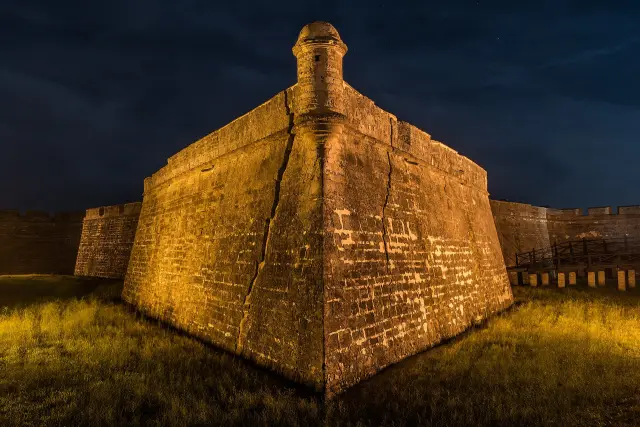
The clubhouse is a four-story yellow brick building at 2010 N. Avenida Republica de Cuba. According to Hillsborough County, the building at one time held a library, health clinic, pharmacy, cantina, ballroom, boxing arena, gymnasium, pool and bowling lanes, and on Nov. 15, 1972, it was added to the National Register of Historic Places.
The name means Circle of Cubans, as the Cuban Club explains on its own history page. The club's site describes the Grand Ballroom on the top floor as still the scene of wedding receptions, New Year's Eve parties and dances, and the county notes that the two-story theater is still in use.
| Year | Milestone | Source |
|---|---|---|
| 1899 | Cuban immigrants in Tampa form recreational societies with varying degrees of success | State marker |
| 1902 | Cuban workers found El Circulo Cubano as a mutual aid society | State marker |
| 1907 | First meeting house built in Ybor City | Hillsborough County |
| 1916 | Fire destroys the first clubhouse | State marker |
| 1917 | Present four-story clubhouse built on the original site | State marker |
| 1918 to 1920 | Building serves as a temporary hospital during the influenza epidemic | Hillsborough County |
| Nov. 15, 1972 | Listed on the National Register of Historic Places (ID 72000320) | National Park Service |
| Early 1990s | Cuban Club Foundation formed to maintain the building | Hillsborough County |
| 1998 | Florida Heritage marker F-382 erected | UNF marker record |
How did the Cuban Club begin after Cuban independence?
The Cuban Club began in 1902, when Cuban workers in Tampa founded El Circulo Cubano as a mutual aid society after earlier recreational societies, formed as early as 1899, met with varying degrees of success.
The 1998 state marker, recorded by the Florida Division of Historical Resources, states that the founders meant the society to bind all Cuban residents of Tampa into a fraternal group, to offer assistance and help to the sick. The same marker credits skilled Cuban cigar makers, along with their Spanish counterparts, with making Tampa's hand-rolled cigars world famous.
Earlier Cuban organizations in the Tampa area had a political purpose. In West Tampa, then a separate city incorporated in 1895, the patriotic society La Sociedad Patriotica Cespedes de West Tampa funded the $20,000 construction of Cespedes Hall, which served West Tampa from 1895 to 1898 and was a rallying point for workers who donated money, and in some cases volunteered to fight, for Cuban independence, according to Hillsborough County. El Circulo Cubano, founded in Ybor City four years after the hall came down, was organized instead as a mutual aid society.
Hillsborough County records that West Tampa's first mayor, Fernando Figueredo Socarras, was the driving force behind Cespedes Hall and named it for his mentor Carlos Manuel de Cespedes, a hero of the Ten Years' War. The City of West Tampa, which owned the wooden building, decided in late 1898 to demolish it in favor of a two-story brick structure, likely out of fear of fire after two lightning strikes. A county marker for the vanished hall was erected on North Albany Avenue in 2024 by the Hillsborough County Historical Advisory Council.
The society built quickly. Hillsborough County records that El Circulo Cubano had its first meeting house built in 1907 in Ybor City. The state marker places the present building on that original site, at 14th Street and 10th Avenue, and the National Park Service register record gives the same location, 10th Ave. and 14th St., with 1907 as its significant year.
What did Cuban Club dues pay for?
Cuban Club dues paid for members' health care, recreational activities, library services and death benefits.
Most members were working-class cigar makers, many of them immigrants. Hillsborough County notes that in the early years the Cuban Club had surgeons, doctors, nurses and pharmacists on staff, with its own health clinic and pharmacy inside the building.
The clubhouse served the wider city at least once. When the influenza epidemic of 1918 to 1920 reached Tampa, Hillsborough County reports, the Cuban Club was converted to a temporary hospital for ailing locals, including non-members, within a few years of the new building on Avenida Republica de Cuba being completed.
Recreation and learning filled the rest of the program. The club's theater, library and ballroom, listed on the 1998 marker, made the building, in the marker's words, a gathering place for members and a unifying force in the Cuban community of Ybor City.
What makes the 1917 Cuban Club building distinctive?
The 1917 Cuban Club is a four-story yellow brick building in the Neoclassical or Classical Revival style, with two-story columns flanking its east entrance.
The present building replaced a loss. The Cuban Club records that fire destroyed the first clubhouse in 1916 and that members soon began plans for a replacement on the same site. Hillsborough County credits the new structure, built in 1917, to M. Leo Elliott, a prominent Hillsborough County architect, working in partnership with Bayar C. Bonfoey. The National Park Service register record for the building lists its architect as unknown, so the two official sources differ on this point.
Hillsborough County describes metal Juliet balconies and a third-floor terrace on the Ybor City building, with French doors, an elaborate stained-glass window and a pair of grand staircases with wrought iron railings inside. Most of the floor is laid in an unusual three-dimensional cube-pattern tile. The state marker adds imported tile, stained glass windows and carved sgraffito spandrels, and a ballroom ceiling decorated with elaborate murals.
Hillsborough County notes that some structural changes were made in the last 100 years, but that the Cuban Club has preserved many of its original architectural features. The University of North Florida transcription of the marker gives the building's National Register number as 72000320.
Why was the Cuban Club known for boxing, sport and music?
The Cuban Club was known for boxing because its 1920s arena seated up to 2,000 fans, and its courtyard later hosted touring Cuban and big band stars.
Athletics were built into the Cuban Club from the basement up. According to Hillsborough County, in the early 1900s the basement held a basketball court, a gym, a locker room and a plunge pool of white Cuban marble, and the club's own website lists a gymnasium with lockers, a swimming pool and two bowling lanes.
Boxing drew the largest crowds. Hillsborough County reports that in the 1920s the club's boxing arena was a centerpiece for Ybor City's boxing fans, with seating for up to 2,000 people in multilevel wooden bleachers. The two-story theater, still in use, seats about 500.
The courtyard on the west side of the building became a stage for touring stars. The Cuban Club states that the courtyard has hosted boxing matches, the Cuban entertainers Benny More and Celia Cruz, and the big band sounds of Glenn Miller and Tommy Dorsey.
What happened to the Cuban Club after 1962?
After 1962 the Cuban Club's dues income fell, and in the early 1990s a foundation was formed to maintain the Ybor City building the society still uses.
Hillsborough County reports that membership dues, which came mostly from cigar workers, declined as a result of the 1962 Cuban Trade Embargo. The Cuban Club Foundation was formed in the early 1990s to maintain the Ybor City building and oversee its day-to-day operations, and the county notes that El Circulo Cubano remains active and operates out of the building.
The building entered the National Register of Historic Places on Nov. 15, 1972, a date the National Park Service record shows for the listing documents. In 1998 the City of Tampa, the Ybor City Development Corporation and the Florida Department of State sponsored Florida Heritage marker F-382, according to the UNF transcription; Hillsborough County places the marker at East Palm Avenue and North Avenida Republica de Cuba, on the left when traveling west on East Palm Avenue.
The club's papers are held by USF Libraries Special Collections as El Circulo Cubano Archives within its Tampa Bay Mutual Aid Society Collections, which the library says include committee meeting minutes, fliers, programs, photographs, membership records and registers. The Cuban Club's history page lists its address as 2010 Avenida Republica de Cuba, Tampa, Florida 33605, and its phone as (813) 248-2954.
Last verified: October 18, 2026, against the Hillsborough County El Circulo Cubano and Cespedes Hall marker articles, the Florida Division of Historical Resources marker record, the National Park Service NPGallery register entry 72000320, the Cuban Club history page, and the UNF and USF library records.
Frequently asked questions
Where is the Cuban Club in Ybor City?
The building is at 2010 N. Avenida Republica de Cuba, on the society's original site at 14th Street and 10th Avenue, according to the state marker. The 1998 historical marker stands at East Palm Avenue and North Avenida Republica de Cuba, according to Hillsborough County.
Who designed the Cuban Club building?
Hillsborough County credits M. Leo Elliott, a prominent county architect of the period, working in partnership with Bayar C. Bonfoey. The National Park Service register record lists the architect as unknown. The building was completed in 1917 after fire destroyed the first clubhouse in 1916.
Was the Cuban Club ever used as a hospital?
Yes, temporarily. Hillsborough County reports that during the influenza epidemic of 1918 to 1920, the Cuban Club was converted to a temporary hospital for ailing locals, including non-members.
Who runs the Cuban Club today?
The Cuban Club Foundation, formed in the early 1990s, maintains the building and oversees daily operations, while El Circulo Cubano itself remains active in the 1917 clubhouse, according to Hillsborough County.
Is the Cuban Club on the National Register of Historic Places?
Yes. Hillsborough County dates the listing to Nov. 15, 1972, and the National Park Service record gives its register ID as 72000320. A Florida Heritage marker, F-382, followed in 1998.
Sources
- Historical Markers of Hillsborough County: El Circulo Cubano (Hillsborough County) https://hcfl.gov/about-hillsborough/history/historical-hillsborough/historical-markers-of-hillsborough-county-el-circulo-cubano Used for: 1907 first meeting house, 1917 building by M. Leo Elliott and Bayar C. Bonfoey, member services, influenza hospital, 1962 embargo, Cuban Club Foundation, basement athletics, boxing arena, theater, architecture, NRHP Nov. 15, 1972, marker location
- History of El Circulo Cubano (The Cuban Club, official website) https://cubanclubybor.com/history/ Used for: name meaning, 1916 fire, 1917 building contents, courtyard performers, bowling lanes and pool
- El Circulo Cubana Marker, Tampa, FL (George Lansing Taylor Jr. Collection, University of North Florida Digital Commons) https://digitalcommons.unf.edu/historical_architecture_main/7359 Used for: marker F-382 text, NRHP #72000320, 1998 sponsors
- Circulo Cubano (Cuban Club), Florida Historical Marker Details (Florida Department of State, Division of Historical Resources) https://markers.flheritage.com/home/details/250 Used for: 1899 recreational societies, 1902 founding, original site at 14th Street and 10th Avenue, NRHP 1972
- Historical Markers of Hillsborough: Cespedes Hall (Hillsborough County) https://hcfl.gov/about-hillsborough/history/historical-hillsborough/historical-markers-of-hillsborough-cespedes-hall Used for: West Tampa incorporation 1895, Cuban patriotic society La Sociedad Patriotica Cespedes, hall 1895 to 1898
- Tampa Bay Mutual Aid Society Collections (USF Libraries Special Collections) https://digitalcommons.usf.edu/mutual_aid Used for: El Circulo Cubano archives at USF
- Circulo Cubano de Tampa, NPGallery National Register asset record (National Park Service) https://npgallery.nps.gov/AssetDetail/NRIS/72000320 Used for: NRIS ID 72000320, 11/15/1972 listing documents, location 10th Ave. and 14th St., significant year 1907, architect listed as unknown
How this page was made
Digital Towns uses AI assistance to research and write its guides, and every page is only as good as the sources it cites. Our goal is the most accurate, useful local information possible.
This page was fact-checked twice before publishing.
If you see an error, or anything you can show is false, tell us right away and we will take a third look.
Report an error
Thank you. We'll take a third look and correct the page if it's wrong.