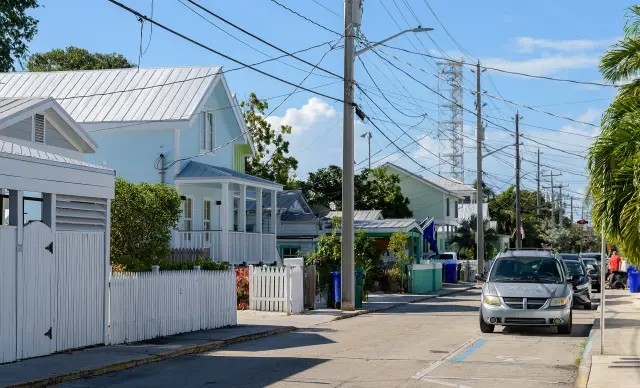
Short answer: The Jackson House is a two-story wood rooming house at 851 Zack Street in downtown Tampa that lodged Black railroad workers, travelers and entertainers during segregation. Moses and Sarah Jackson turned it into a boarding house near Tampa Union Station, it joined the National Register of Historic Places in 2007, and the City of Tampa calls it the only such boarding house still standing.
Last verified: October 18, 2026, against the sources listed at the end of this page.
What is the Jackson House in Tampa?
The Jackson House is a Jim Crow era rooming house at 851 Zack Street, on the north edge of downtown Tampa, that gave lodging to Black visitors who were barred from white hotels.
The National Register nomination names it the Jackson Rooming House, lists Jackson Boarding House and Jackson Hotel as other names, and describes a two-story, wood frame vernacular building constructed in three stages between c. 1905 and c. 1920.
The City of Tampa SoulWalk marker states that while it was not the only boarding house or hotel for Black visitors to Tampa, it is the only one that remains standing. The National Park Service NPGallery record gives the listing date as 3/7/2007, National Register Information System ID 07000112, with Black heritage as its area of significance.
Who built the Jackson House, and why was it so close to Union Station?
Moses and Sarah Jackson made the house a rooming house because it stood steps from Tampa Union Station, but the sources disagree on when the house itself was built.
The City of Tampa says Moses and Sarah Jackson built it as a private residence in the late 1890s and that the conversion may have begun as early as 1910. The National Register nomination instead says it was probably built as a private home by Frank James, a Black laborer, around 1905, acquired by Moses Jackson in 1906 and enlarged c. 1912; it notes that family tradition places construction c. 1899, but that no building appears at the site on the 1903 Sanborn map.
| Question | City of Tampa SoulWalk | National Register nomination (2007) |
|---|---|---|
| When was the house built? | Late 1890s, by Moses and Sarah Jackson | Around 1905, probably by Frank James; family tradition says c. 1899 |
| When did it become a boarding house? | Possibly as early as 1910 | Enlarged c. 1912 as a rooming house |
| How far is Union Station? | Less than one block to the east | Half a block away |
| When did it stop taking guests? | Boarding house concluded in the 1990s | Took in guests until 1999; hotel license turned in 2005 |
Location drove the business. The nomination states that the new Union Depot Hotel across Nebraska Avenue lodged white guests only, and that by 1915 the Jackson Boarding House remained the only guest facility for Black travelers in the vicinity of Union Station. It adds that no other formal hotels or named lodging facilities appear to have been built in the Tampa neighborhood bounded by Central Avenue and Nebraska Avenue between about 1912 and about 1951.
The family ran it for most of a century. The nomination records that Moses Jackson ran the boarding house until his death in 1929, that Sarah Jackson then managed it, kept a laundry service and founded the Jackson Cab Company, the only Black-owned cab company in Tampa in the 1930s, and that her daughters Josephine and Ora Dee ran the house until 1944, when the youngest daughter, Sarah Jackson Robinson (1916 to 2006), took over its management. The City of Tampa adds that the family retained the building throughout its time as a boarding house and then kept it as a private residence until 2010.
Which musicians are said to have stayed at the Jackson House?
The National Register nomination says Black performers including Duke Ellington, Cab Calloway and Ella Fitzgerald reportedly stayed at the Jackson House in the 1930s and 1940s.
The nomination describes the guests more broadly as railroad workers and passengers, traveling salesmen, clergymen, teachers and entertainers who needed temporary lodging, many of them in Tampa to perform for both Black and white audiences.
The nomination qualifies these Zack Street stays with the word reportedly, and it names no dates for individual visits.
Meals were not part of the business. A footnote in the nomination states that although Sanborn maps label it the Jackson Boarding House, the Tampa hostelry never served meals to its guests.
What does the Jackson House look like inside and out?
The Jackson House is an L-shaped, two-story frame building on brick piers, with a full-width, two-story veranda facing Zack Street and a central hall on each floor.
The National Register nomination describes the Tampa house with exterior walls sheathed with aluminum siding, paired and single 2/2-light double hung wood sash windows whose placement reflects the size of the rooms inside, and three sections that each carry their own hip roof covered with asphalt roll. The hip roof veranda on the main facade has solid wall balustrades and wood columns, and its porch rests on a concrete block base that rises four feet from the sidewalk. At the southwest corner is a narrow, two-story screened porch, and at the time of the nomination the house was painted yellow with brown and red trim.
Inside the Tampa rooming house, the nomination records a series of sleeping rooms separated by a central hallway on both floors. The ground floor also has a living room, sitting room, kitchen, dining room and a bath, while the second floor consists entirely of sleeping rooms except for a single bathroom.
Fire insurance maps track the building's growth. The nomination states that the 1915 Sanborn Fire Map shows a single footprint with a line separating the two original sections, and that by the 1931 map the present rear addition with its two-story screened porch was in place. A footnote adds that the Tampa City Directory originally listed the house as 835 Zack Street, and the form gives the property's acreage as less than one.
The nomination finds the Jackson Rooming House significant at the local level under Criterion A, in the area of Ethnic Heritage: Black, with a period of significance from about 1905 to 1957 and significant dates of about 1905, 1912 and 1920. It lists the architect and builder as unknown and gives the Florida Master Site File number HI0906.
Why is the Jackson House the last of its kind in downtown Tampa?
The Jackson House is the last of its kind because the Black neighborhood and Central Avenue business district around it were demolished during urban renewal.
The National Register nomination places Central Avenue, the main business district for Tampa's African American community, about five blocks west of 851 Zack Street, and records that the avenue grew from only five Black-owned businesses in 1893 to over 80 by 1910.
The same nomination lists performers at the Apollo Ballroom on Central and Harrison, including James Brown, Ray Charles, Ella Fitzgerald with the Chick Webb Band, B.B. King and Cannonball Adderley. By the 1960s, it states, the neighborhood was in serious decline, and urban renewal projects that demolished substandard housing and commercial buildings displaced lower and moderate income residents, followed by the construction of Interstates 4 and 275. When the house was nominated, the rest of that section of Zack Street was devoted to paved parking lots, leaving the resource isolated in a sea of concrete and asphalt.
The City of Tampa now marks the site through SoulWalk, which its SoulWalk home page says the city unveiled in February 2023 as a collaborative effort with the Tampa Bay History Center, the University of South Florida and community partners, spanning nearly 100 unique destinations. The SoulWalk marker page describes permanent markers that commemorate the people, places and events that shaped the city's Black communities, highlights the Jackson House alongside the Woolworth Sit-In, The Scrub, Dobyville, Memorial Park Cemetery and Jimi Hendrix markers, and states that eleven new markers are planned for installation in 2026.
No source re-checked for this page lists public hours or admission for the Zack Street house, so it is a site to view from the street rather than a visitor attraction with posted hours.
Last verified: October 18, 2026, against the City of Tampa SoulWalk Jackson House and marker pages, the National Park Service NPGallery record and 2007 National Register nomination for the Jackson Rooming House, and the SoulWalk home page.
Frequently asked questions
Where is the Jackson House in Tampa?
The Jackson House is at 851 Zack Street on the north edge of downtown Tampa, which the National Register nomination notes was first listed in the city directory as 835 Zack Street. The City of Tampa places Tampa Union Station less than one block to the east.
When was the Jackson House built?
Sources disagree. The City of Tampa says Moses and Sarah Jackson built it in the late 1890s, while the National Register nomination says Frank James probably built it as a two-room cottage around 1905 and Moses Jackson acquired it in 1906.
Is the Jackson House on the National Register of Historic Places?
Yes. The National Park Service record lists the Jackson Rooming House at 851 Zack St. with a date of 3/7/2007 and reference number 07000112. It is also one of the City of Tampa SoulWalk historical markers.
Can the public tour the Jackson House?
No source checked on October 18, 2026, lists public hours or admission for the Jackson House. The Zack Street building can be seen from the street near Tampa Union Station.
Did Ella Fitzgerald stay at the Jackson House?
The National Register nomination says Ella Fitzgerald, Duke Ellington and Cab Calloway reportedly stayed at the Jackson House in the 1930s and 1940s. The nomination qualifies those stays with the word reportedly.
Sources
- The Jackson House, City of Tampa SoulWalk Historical Markers https://www.tampa.gov/soulwalk/historic-markers/jackson-house Used for: late 1890s date per city, conversion as early as 1910, Union Station less than one block east, only remaining Black boarding house, boarding ended 1990s, private residence to 2010
- SoulWalk Historical Markers, City of Tampa https://www.tampa.gov/soulwalk/historic-markers Used for: marker program, highlighted markers, eleven new markers in 2026
- National Register of Historic Places nomination: Jackson Rooming House, Hillsborough County (National Park Service) https://npgallery.nps.gov/GetAsset/4090377d-b2a8-4744-8912-5f7989403808 Used for: other names, construction c. 1905 to c. 1920, Frank James, 1906 purchase, Union Depot, family management, Jackson Cab Company, guests reportedly, no meals, Central Avenue, urban renewal, guests until 1999
- NPGallery asset detail: Jackson Rooming House, NRIS 07000112 (National Park Service) https://npgallery.nps.gov/AssetDetail/NRIS/07000112 Used for: NRIS ID, 3/7/2007 date, area of significance, 851 Zack St.
- Soulwalk (City of Tampa) https://www.tampa.gov/soulwalk Used for: SoulWalk unveiled February 2023; collaborative effort with Tampa Bay History Center, USF and community partners; nearly 100 destinations
How this page was made
Digital Towns uses AI assistance to research and write its guides, and every page is only as good as the sources it cites. Our goal is the most accurate, useful local information possible.
This page was fact-checked twice before publishing.
If you see an error, or anything you can show is false, tell us right away and we will take a third look.
Report an error
Thank you. We'll take a third look and correct the page if it's wrong.