Short answer: Egmont Key is a Hillsborough County island at the mouth of Tampa Bay that has guarded and guided traffic to Tampa. Fort Dade, established there in 1898, was built to safeguard the Tampa Bay area and was deactivated in 1923; the Tampa Bay Pilots Association set up operations on the island in 1926; and since 1974 it has been a national wildlife refuge, also managed as Egmont Key State Park.
Last verified: October 18, 2026, against the sources listed at the end of this page.
Why does Egmont Key matter to Tampa?
Egmont Key matters to Tampa because it sits at the mouth of Tampa Bay, where it has held the bay's lighthouse, its harbor defenses and its pilot station.
The island is part of Hillsborough County, the county that contains the City of Tampa; the county's own history series calls it Hillsborough County's Egmont Key. The Museum of Florida History, part of the Florida Department of State, files Fort Dade under Tampa, Hillsborough County, calls Egmont Key historically significant to the defense of the Tampa Area, and notes that the island is reached by private boat only.
Three threads tie the island to Tampa. The Army built Fort Dade there to protect the bay during and after the Spanish-American War. The Tampa Bay Pilots Association has used the island as its station for about a century. And a Civil War era Navy tug wrecked off its shore in 1866. The Florida State Parks history of Egmont Key adds that the island was named for John Perceval, the second Earl of Egmont, and that both Spanish conquistadors and nuclear submarines have passed its shores entering Tampa Bay.
What happened on Egmont Key, year by year?
The island's recorded history runs from an 1848 lighthouse to a 1974 wildlife refuge, with Fort Dade and the pilots in between.
| Year | Event | Source |
|---|---|---|
| 1848 | First lighthouse completed, the only one between St. Marks and Key West | Florida State Parks |
| 1858 | Current brick tower first lit | U.S. Coast Guard History |
| 1866 | USS Narcissus wrecked off the northwest coast on January 4 | Hillsborough County |
| 1898 | Fort Dade established | Florida State Parks |
| 1906 | Construction of Fort Dade completed | Florida State Parks |
| 1923 | Fort Dade deactivated | Florida State Parks |
| 1926 | Tampa Bay Pilots Association sets up operations on the island | Florida State Parks |
| 1939 | Coast Guard takes over operation of the lighthouse | Florida State Parks |
| 1974 | Egmont Key National Wildlife Refuge established | U.S. Fish and Wildlife Service |
| 2015 | Narcissus wreck dedicated as Florida's 12th underwater archaeological preserve | Hillsborough County |
The U.S. Coast Guard history page also lists 1978 as the year the island was placed on the National Register of Historic Places and 1989 as the year the light was automated.
How did Fort Dade defend Tampa Bay?
Fort Dade was a coastal defense post begun in 1898 to protect the Tampa Bay area during the Spanish-American War, and it stayed active until 1923.
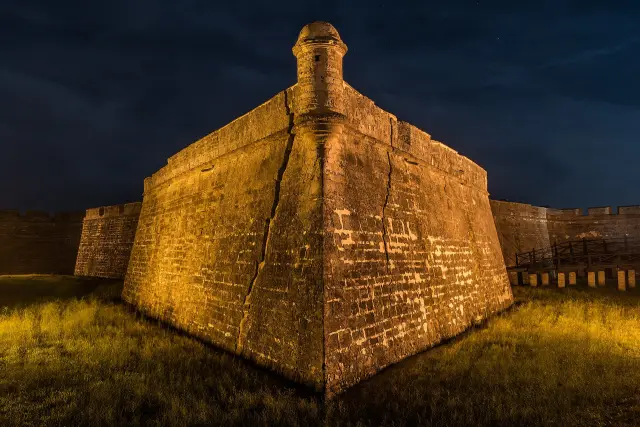
The Museum of Florida History states that construction of Fort Dade began in 1898 with the development of the coastal defense system associated with the Spanish American War, and that five artillery batteries as well as a town complete with railroad, school, movie theater and other services were built on the island. Florida State Parks says construction on the fort was completed in 1906 and that the post had more than 300 residents, with brick roads, electricity, telephones, a hospital, jail, movie theater, bowling alley and tennis courts.
The same war touched the Tampa side of the bay. The MacDill Air Force Base history page notes that the interbay peninsula, where the base now stands, had been used as a military staging area during the Spanish-American War, and Florida State Parks says temporary tent hospitals on Egmont Key treated soldiers wounded in that war. The state park history gives 1923 as the year the fort was deactivated.
What do the Tampa Bay Pilots do on Egmont Key?
The Tampa Bay Pilots board ships entering and leaving Tampa Bay and have run their pilot station from Egmont Key for about a century.
The Tampa Bay Pilots Association states that it was founded in 1886 and originally waited for ships at the Egmont lighthouse, whose height let pilots see approaching ships from great distances, and that for more than a century Tampa Bay Pilots have met vessels from the pilot station on Egmont Key. Florida State Parks dates the association's operations on the island to 1926, three years after Fort Dade closed, and says the pilots association currently inhabits the island along with one Florida State Park staff member.
The association's facts page states that its state-regulated and licensed harbor pilots have directed foreign flagged cargo and cruise ships into and out of Tampa Bay since 1886, serving the ports of Tampa, Manatee and St. Petersburg 24 hours a day, 7 days a week, 365 days a year. Florida State Parks explains the job: when ships approach Tampa Bay, a pilot boards and takes the vessel to the docks, and another guides it out again, which helps prevent groundings and collisions. The association's office is at 1825 Sahlman Drive, Tampa, phone (813) 247-3737.
What other military history happened on Egmont Key?
Before and after Fort Dade, Egmont Key served as a lighthouse station, a Seminole detention camp, a Civil War post and a World War II watch point.
Florida State Parks states that the first lighthouse on this Tampa Bay island was completed in 1848, that the Great Hurricane of September 1848 sent tides 15 feet above normal over the island and damaged it, and that another storm led Congress to fund a rebuilt lighthouse in 1858 meant to withstand any storm. The Coast Guard history page tells it differently: the 1848 tower survived the hurricane, was later struck by lightning and cracked, and was replaced by the current tower in 1858 for $16,000. The two official accounts disagree on why the first tower was replaced.
The state park history says that at the end of the Third Seminole War (1855 to 1858) the United States Army detained Seminole prisoners on the island, and that Confederate troops and later the Union Navy occupied it during the Civil War. The U.S. Fish and Wildlife Service states that Egmont Key is on the National Register of Historic Places for its role in Florida's Seminole Indian Wars, the Civil War and the Spanish-American War.
The Civil War also left a wreck. Hillsborough County reports that on January 4, 1866, the USS Narcissus, a wooden-hulled Navy tug bound for New York to be decommissioned, hit a sandbar off the northwest coast of Egmont Key during a storm; its boiler exploded and the entire crew of 26 Navy sailors was lost. The wreck lies about 2 miles off the island in roughly 15 feet of water, is considered a military grave and property of the U.S. Navy, and is Tampa Bay's only underwater archaeological preserve.
World War II brought the island back into the Tampa Bay defense system. The Museum of Florida History states that from the early 1930s the Coast Guard conducted training operations there, that observation towers manned by Army and Navy personnel formed part of the coastal watch system, and that inbound merchant ships had to stop at Egmont Key to off-load explosive munitions before entering the bay, reloading them on the way out. It also lists amphibious warfare and aerial gunnery exercises.
Who manages Egmont Key today?
The U.S. Fish and Wildlife Service manages Egmont Key as a national wildlife refuge, and the Florida Park Service manages it cooperatively as Egmont Key State Park.
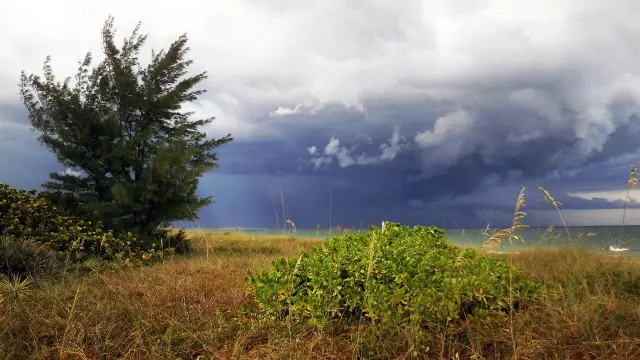
The Fish and Wildlife Service refuge page states that the refuge was established in 1974 to protect the significant natural, historical and cultural resources from the impending threats of development. It describes a remote 250 acre island at the mouth of Tampa Bay with habitat for nesting sea turtles, gopher tortoises and over 30,000 nesting pairs of birds, and bird sanctuaries at the south end making up about one third of the island, with approximately 97 acres set aside for wildlife. The About Us page adds that the refuge preserves the remains of historic Fort Dade and an over 100-year-old lighthouse, and that it is managed as part of the Crystal River NWR Complex.
Erosion is an active concern. The Service lists beach erosion among its research projects on the island, alongside bird, sea turtle, gopher tortoise and box turtle monitoring, and its library holds an Egmont Key Hurricane Factsheet dated May 14, 2025, summarizing cleanup and restoration since the 2024 hurricanes.
Last verified: October 18, 2026, against the Fish and Wildlife Service refuge pages, the Florida State Parks Egmont Key history, the Coast Guard light history, the Museum of Florida History Fort Dade entry, the Hillsborough County Narcissus article, the MacDill history page and the Tampa Bay Pilots Association pages.
Frequently asked questions
Is Egmont Key part of Hillsborough County?
Yes. Hillsborough County refers to the island as Hillsborough County's Egmont Key in its history series, and the Museum of Florida History lists Fort Dade under Tampa, Hillsborough County.
When was Fort Dade built and when did it close?
Florida State Parks says Fort Dade was established in 1898, completed in 1906 and deactivated in 1923. The Museum of Florida History lists five artillery batteries and a town with a railroad, school and movie theater.
Why do Tampa Bay pilots use Egmont Key?
The Tampa Bay Pilots Association, founded in 1886, first watched for ships from the Egmont lighthouse because its height gave a long view of approaching ships. Florida State Parks dates the association's operations on the island to 1926.
What is the USS Narcissus?
It is a Union Navy tug that wrecked off the northwest coast of Egmont Key on January 4, 1866, losing all 26 sailors. Florida dedicated it as the state's 12th underwater archaeological preserve in 2015, according to Hillsborough County.
How do visitors get to Egmont Key?
The Museum of Florida History states that the island, at the mouth of Tampa Bay southwest of Fort DeSoto Beach, is reached by private boat only. The Fish and Wildlife Service describes it as a remote 250 acre island.
Sources
- Egmont Key National Wildlife Refuge (U.S. Fish and Wildlife Service) https://www.fws.gov/refuge/egmont-key Used for: 1974 establishment, 250 acres, nesting birds, NRHP basis, hurricane factsheet
- About Us, Egmont Key National Wildlife Refuge (U.S. Fish and Wildlife Service) https://www.fws.gov/refuge/egmont-key/about-us Used for: Fort Dade remains, lighthouse, refuge purposes, Crystal River complex, state park co-management
- Fort Dade (Museum of Florida History, Florida Department of State) https://museumoffloridahistory.com/explore/exhibits/permanent-exhibits/world-war-ii/historical-sites/westcentral-listing/fort-dade/ Used for: Tampa defense significance, 1848 light, 1898 Fort Dade, batteries and town, Coast Guard and WWII uses
- Sunk Twice in Two Years, USS Narcissus Now Rests in Pieces off Egmont Key (Hillsborough County) https://hcfl.gov/about-hillsborough/history/historical-hillsborough/uss-narcissus-rests-in-pieces-off-egmont-key Used for: Hillsborough County's Egmont Key, 1866 wreck, 26 sailors, 2015 preserve
- History of the Tampa Bay Pilots Association https://www.tampabaypilots.com/about Used for: 1886 founding, Egmont lighthouse lookout, pilot station on Egmont Key
- Facts (Tampa Bay Pilots Association) https://www.tampabaypilots.com/facts Used for: ports served, state licensing, fee setting
- History (MacDill Air Force Base) https://www.macdill.af.mil/About-Us/History/ Used for: Interbay Peninsula as Spanish-American War staging area
- History of Egmont Key (Florida State Parks, Florida Department of Environmental Protection) https://www.floridastateparks.org/learn/history-egmont-key Used for: 1848 lighthouse, 1858 rebuild, Seminole camp, Fort Dade 1898 to 1923, 300 residents, pilots 1926, Coast Guard 1939
- Egmont Key Light (U.S. Coast Guard History Program, July 25, 2019) https://www.history.uscg.mil/Browse-by-Topic/Assets/Land/All/Article/1915905/egmont-key-light/ Used for: 1858 tower, $16,000, lightning account, 1978 National Register, 1989 automation
How this page was made
Digital Towns uses AI assistance to research and write its guides, and every page is only as good as the sources it cites. Our goal is the most accurate, useful local information possible.
This page was fact-checked twice before publishing.
If you see an error, or anything you can show is false, tell us right away and we will take a third look.
Report an error
Thank you. We'll take a third look and correct the page if it's wrong.