Short answer: Florida Tech's Indian River Lagoon Research Institute, established in 2013 on the university's Melbourne campus, studies muck and nutrients, lagoon flow, sediment loading, ecosystem recovery and engineering fixes for the estuary. Its faculty produced the Environmental Muck Dredging reports for Brevard County, run the Living Docks oyster program, and in 2026 published a Banana River study tying muck to low-oxygen zones on the lagoon floor.
Last verified: October 16, 2026, against the sources listed at the end of this page.
What is Florida Tech's Indian River Lagoon Research Institute?
The Indian River Lagoon Research Institute (IRLRI) is a Florida Tech group of scientists and engineers in Melbourne, established in 2013, that works on the health of the Indian River Lagoon.
Florida Tech's institute page describes the lagoon as being right in the university's backyard. According to Florida Tech's Facts and Figures, the institute was established in 2013 to improve and sustain the health of the one-of-a-kind estuary, and university faculty have studied the Indian River Lagoon for more than 30 years. Florida Tech counts more than 15 engineering and science faculty working through the institute, while the institute's own page describes a group of more than 20 faculty members with decades of lagoon research experience.
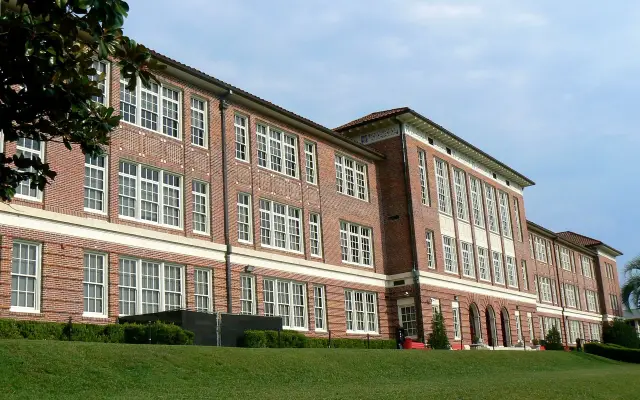
The work is based on Florida Tech's 130-acre campus in the City of Melbourne, at 150 W. University Blvd., about 2 miles from downtown Melbourne and 6 miles from the nearest beach. As listed on the institute page in October 2026, the IRLRI director is Robert Weaver, an associate professor on its engineering team, and the outreach coordinator for community projects is Kelli Hunsucker. Florida Tech itself began in 1958 as Brevard Engineering College and took the name Florida Institute of Technology in 1966.
What does the institute study?
The Melbourne institute studies muck and nutrients, lagoon flow, nutrient reduction, sediment loading, ecosystem recovery, policy and management, and engineering technologies, according to Florida Tech.
Its starting premise, stated on the Florida Tech page, is a lagoon home to more than 3,000 species of plants and animals that has suffered from a half century of fertilizer runoff and wastewater as development grew on the Space Coast. The page describes muck as a thick mixture of nitrogen and phosphorus that resembles black tar and reaches up to 10 feet high in some parts of the lagoon, smothering seagrass beds.
The newest published result comes from the Banana River, a shallow estuary within the Indian River Lagoon system. On October 7, 2026, Florida Tech reported a study by assistant professor Austin Fox and graduate researchers, published in August 2026 in Frontiers in Marine Science, that used 80 oxygen sensors on the river floor. Oxygen at the sediment level ran 10 to 15% lower than near the surface or at mid-depth, muck deposits contributed to low oxygen as much as 500 meters from their footprint, and one or more sensors recorded hypoxic conditions 90% of the time.
Florida Tech describes the Fox paper as the first to determine that internal nutrient loading is happening in the estuary: when oxygen-starved bottom dwellers die, phosphorus already locked in the sediment returns to the water and feeds new algal blooms. The Melbourne team's next step, the university says, is to quantify those hypoxia effects across the Indian River Lagoon and its tributaries.
What did the muck dredging studies cover?
The institute's largest body of applied work is three years of Environmental Muck Dredging research that Florida Tech scientists in Melbourne carried out for Brevard County.
Florida Tech's final reports archive lists the Year 1 report, Impacts of environmental muck dredging 2014-2015, submitted to the Brevard County Natural Resources Management Department in July 2016 and edited by J.G. Windsor, Jr. The IRLRI page credits funding to Department of Environmental Protection grant agreements S0714 and NS005, administered by Brevard County.
Year 2 was split into subtasks delivered between 2017 and 2019, several of which are listed below from the Florida Tech archive.
| Year 2 subtask | Lead author | Report date |
|---|---|---|
| Seagrass monitoring and infaunal surveys | Kevin Johnson | September 2017 |
| Fish populations and seagrass restoration | Jonathan Shenker | March 2018 |
| Effectiveness of muck removal on sediment and water quality | Austin L. Fox | December 2017 |
| Nitrogen and phosphorus inputs from major tributaries | John H. Trefry | October 2017 |
| Hydrologic and water quality model for Brevard County waters | Gary Zarillo | April 2018 |
| Source to Slime study | Leesa Souto | May 2019 |
Year 3 reports, dated 2019 to 2021, returned to the Brevard County sites to measure muck removal efficiency and the biological and chemical changes after dredging, tracked muck inputs from rivers, creeks and outfalls, applied a Quick-Flux technique lagoon-wide to measure sediment nitrogen and phosphorus fluxes, and produced guidance on optimizing the selection of sites for environmental dredging in the Indian River Lagoon system. The institute's main page also archives the State of Florida Restore Lagoon Inflow Research Project reports from 2020, 2021 and 2023.
How does the institute involve Melbourne-area residents?
Melbourne-area residents take part mainly through Living Docks, an IRLRI program that turns docks and seawalls into oyster habitat, and through public Lagoon Forums.
Living Docks invites lagoon-front owners to turn docks and seawalls into oyster habitat by hanging mesh bags of used oyster shells in the water to attract oyster larvae. Florida Tech states that a single dock with 37 pilings, averaging 32 oysters per piling, can filter about 21 million gallons of water per year. A 2024 Florida Tech news report calls Living Docks an IRLRI initiative to increase benthic habitat in the Indian River Lagoon, where filter feeders such as oysters, mussels and barnacles help clean the water.
Students build much of the gear on campus. In March 2024 the institute brought students from the Bisk College of Business and more than three dozen from Melbourne Central Catholic to Crawford Green, where volunteers assembled 40 oyster mats, according to a Florida Tech news report. Those mats, with others made at a December event, were slated for the dock of the Aquarina community in Melbourne Beach.
The institute also hosts public Lagoon Forums aimed at connecting scientists, engineers, citizens and municipalities. Its archive includes Lagoon Straight Talk, held at Florida Tech in June 2022 and organized by the Brevard Indian River Lagoon Coalition, with speakers from the Indian River Lagoon National Estuary Program, the SOIRL Citizens Oversight Committee and the Lagoon Ocean Inflow Research Project.
Which partners does the Melbourne institute work with?
The closest partner is the East Coast Zoological Foundation, which operates Brevard Zoo and is planning an aquarium and conservation center at Port Canaveral.
In March 2024 Florida Tech and the foundation announced the Consortium of Aquarium Researchers and Educators (CARE), which Florida Tech will manage as the primary university, based at the Dr. Duane De Freese Coastal Conservation Hub inside the foundation's planned aquarium at Port Canaveral. Florida Tech expects CARE to reach the aquarium's estimated 500,000 annual guests. The partners had already built an oyster reef and a living shoreline demonstration site, studied lagoon seagrass and worked on buffer zones, and planned to study sediment quality for seagrass recovery at Banana River Lagoon sites and to use the zoo's seagrass nursery for seagrass ecology research.
Regional coordination runs through the estuary program. The hub's namesake, Duane De Freese, is a two-time Florida Tech graduate whom the university identified in 2024 as executive director of the Indian River Lagoon National Estuary Program. The estuary program explains that the national program protects and restores the 28 estuaries designated by Congress as Estuaries of National Significance, and Florida Tech gave De Freese its Jerome P. Keuper Distinguished Alumni Award on October 17, 2025.
Last verified: October 15, 2026, against the IRLRI page, Florida Tech's Facts and Figures, the muck dredging reports archive, four Florida Tech news posts from 2024 to 2026 and the Indian River Lagoon National Estuary Program home page.
Frequently asked questions
When was the Florida Tech Indian River Lagoon Research Institute founded?
Florida Tech says the institute was established in 2013 on its Melbourne campus. The university adds that its faculty have studied the Indian River Lagoon for more than 30 years.
Who directs the IRLRI at Florida Tech?
The institute page lists Robert Weaver, Ph.D., as IRLRI director for research questions and Kelli Hunsucker, Ph.D., as outreach coordinator for community projects, as of October 2026.
What is the Living Docks program in the Melbourne area?
Living Docks is an IRLRI program in which owners hang mesh bags of used oyster shells from docks and seawalls to attract oyster larvae. Mats built at Florida Tech in 2024 were slated for a dock at Aquarina in Melbourne Beach.
What did Florida Tech's 2026 Banana River study find?
Using 80 bottom sensors, the team found oxygen 10 to 15% lower at the sediment than higher in the water, muck affecting oxygen up to 500 meters away, and hypoxia recorded somewhere 90% of the time.
Is the IRLRI connected to Brevard Zoo?
Yes. Florida Tech and the East Coast Zoological Foundation, which runs Brevard Zoo, announced the CARE research consortium in March 2024 for the foundation's planned aquarium at Port Canaveral, with Florida Tech managing it.
Sources
- Indian River Lagoon Research Institute, Florida Tech https://www.fit.edu/indian-river-lagoon/ Used for: institute mission, faculty, research themes, muck description, Living Docks, forums, reports archive, contacts, EMD funding
- Facts and Figures, Florida Tech https://www.fit.edu/about/facts-and-figures/ Used for: 2013 establishment, faculty counts, campus location, founding, budget
- Florida Tech, East Coast Zoological Foundation Partner for Lagoon Research Group at New Aquarium (March 20, 2024) https://news.fit.edu/academics-research/florida-tech-east-coast-zoological-foundation-partner-for-lagoon-research-group-at-new-aquarium/ Used for: CARE consortium, partnership history, research topics
- Indian River Lagoon Research Institute Hosts Workshop to Construct Oyster Mats (March 14, 2024) https://news.fit.edu/panther-bites/indian-river-lagoon-research-institute-hosts-workshop-to-construct-oyster-mats/ Used for: oyster mat workshop, Living Docks, Aquarina dock
- Champion of Florida’s Waters: Duane De Freese Honored With Keuper Distinguished Alumni Award (February 9, 2026) https://news.fit.edu/alumni/champion-of-floridas-waters-duane-de-freese-honored-with-keuper-distinguished-alumni-award/ Used for: De Freese, IRL Council, IRLNEP
- Muck Dredging Final Reports Archive, Florida Tech https://research.fit.edu/indian-river-lagoon-research-institute/muck-dredging-final-reports/ Used for: EMD Year 1 to Year 3 reports and authors
- New Study Shows Effects of Hypoxia in Banana River (October 7, 2026) https://news.fit.edu/academics-research/new-study-shows-effects-of-hypoxia-in-banana-river/ Used for: 2026 hypoxia study findings
- Indian River Lagoon National Estuary Program https://onelagoon.org/ Used for: National Estuary Program, 28 estuaries of national significance
How this page was made
Digital Towns uses AI assistance to research and write its guides, and every page is only as good as the sources it cites. Our goal is the most accurate, useful local information possible.
This page was fact-checked twice before publishing.
If you see an error, or anything you can show is false, tell us right away and we will take a third look.
Report an error
Thank you. We'll take a third look and correct the page if it's wrong.