Short answer: Melbourne drinking water comes from Lake Washington on the upper St. Johns River and from four Floridan Aquifer wells. In Brevard and Indian River counties, a 166,500-acre flood control and marsh project finished in 2016 stores St. Johns floodwater in restored marshes, while Brevard County cleans the Indian River Lagoon with a half-cent sales tax that voters decide whether to renew on the November 2026 ballot. Brevard Zoo treats about 100 sea turtles a year and up to six manatees at a time.
Last verified: October 15, 2026, against the sources listed at the end of this page.
Where does Melbourne drinking water come from?
Melbourne drinking water comes from two places: Lake Washington, one of the upper St. Johns River lakes, and four deep Floridan Aquifer wells that feed a reverse osmosis plant.
Water for the John A. Buckley Surface Water Treatment Plant is pumped from Lake Washington, the third uppermost of the naturally connected upper St. Johns River lakes and one of the few surface water supplies of drinking water in Florida (City of Melbourne Water Treatment and Distribution). The Joe Mullins Reverse Osmosis Water Treatment Plant opened in 1995 with 5 million gallons per day of capacity, and its four Floridan Aquifer wells, roughly 650 to 850 feet deep, each yield about 3.1 million gallons a day.
Melbourne water reaches far beyond the city limits. The utility supplies Melbourne, Melbourne Beach, Indialantic, Indian Harbour Beach, Satellite Beach, Palm Shores, Melbourne Village and unincorporated Brevard County south of the Pineda Causeway, and sells water wholesale to West Melbourne. The Lake Washington guide and the St. Johns River headwaters guide cover the lake and the river that feeds it.
What is the Upper St. Johns River Basin Project in Brevard County?
The Upper St. Johns River Basin Project is a flood control and marsh restoration system of about 166,500 acres in Brevard and Indian River counties, completed in May 2016.
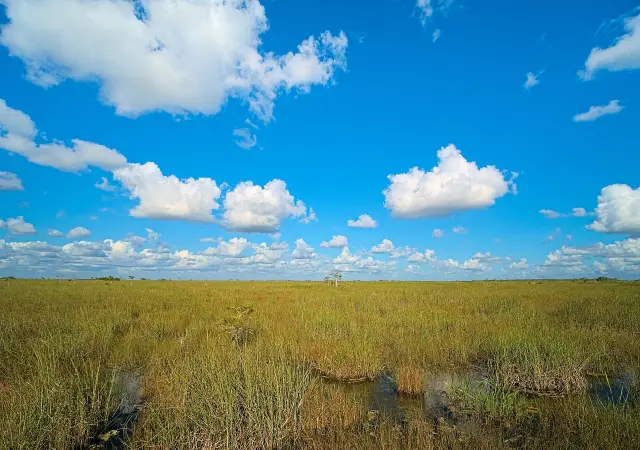
Florida’s longest river begins its 310-mile northward run in a 2,000-square-mile basin of marsh, sawgrass and cypress domes west of Vero Beach (St. Johns River Water Management District). In the early 1900s the upper basin was diked and drained for farming; by the early 1970s 62 percent of the marsh was gone, and canals sent floodwater east into the Indian River Lagoon, hurting water quality there.
In 1977 the St. Johns River Water Management District and the U.S. Army Corps of Engineers began a long-term flood control project that reclaimed drained marsh in the upper basin with reservoirs and replumbed canals. The finished system holds four water management areas, four marsh conservation areas and two marsh restoration areas, and under maximum storm conditions it is designed to hold 500,000 acre-feet of water. It won the international Thiess Riverprize in October 2008. The Upper St. Johns River Basin Project guide follows the marshes and their flood role for Brevard.
What is being done to clean up the Indian River Lagoon around Melbourne?
Brevard County pays for Indian River Lagoon cleanup projects around Melbourne through its voter-approved lagoon half-cent sales tax (the SOIRL program), and voters decide on the November 2026 ballot whether to renew it for ten years.
The SOIRL program uses the sales tax to cut excess nitrogen and phosphorus, remove legacy nutrient loads such as muck, and restore natural filtration in the lagoon along Brevard and Melbourne (Brevard County SOIRL program). The November 2026 ballot asks whether Brevard County should renew the existing half-cent tax for ten years, with all revenue in a trust fund, continued citizen committee oversight and annual independent audits.
What is changing and how to watch: the SOIRL Citizen Oversight Committee meets on the third Friday of each month from 8:30 a.m. to 11:30 a.m., with meetings listed for October 16, November 20 and December 18, 2026, in the Florida Room of Building C. The program office is at 2725 Judge Fran Jamieson Way in Viera, (321) 633-2016, and the county also sends weekly algae bloom reports to subscribers.
Florida Tech in Melbourne runs the Indian River Lagoon Research Institute, which describes a lagoon home to more than 3,000 species of plants and animals where muck has built up as high as 10 feet in places, smothering seagrass (Florida Tech Indian River Lagoon Research Institute). The Florida Tech research institute guide and the Eau Gallie River guide, on the muck dredging there, go deeper.
Where are injured sea turtles and manatees from Melbourne cared for?
Injured sea turtles from Brevard beaches are treated at Brevard Zoo, 8225 North Wickham Road in Melbourne, in a Sea Turtle Rehabilitation Center opened in April 2014, and the zoo also runs a newer manatee rehabilitation facility for stable, non-critical patients.
The Brevard Zoo Sea Turtle Rehabilitation Center sees about 100 patients each year in two holding facilities with 14 tanks, six to 12 feet across, and it is one of few centers able to take turtles with the contagious fibropapilloma virus (Brevard Zoo Sea Turtle Rehabilitation Center). The center is not open to the public. A sea turtle in trouble on a Melbourne beach is reported to 321-206-0646.
Manatees came next. Indian River Lagoon manatees lost much of their seagrass to algal blooms, and the U.S. Fish and Wildlife Service declared an Unusual Mortality Event in March 2021 (Brevard Zoo Manatees). The Brevard Zoo manatee facility, built with a grant from the Florida Fish and Wildlife Conservation Commission, can care for up to six manatee patients at a time, depending on their size. The sea turtle rehabilitation center guide and the manatees in Melbourne guide cover both programs.
How can Melbourne residents help the lagoon?
Melbourne residents with a dock on the Indian River Lagoon can grow oysters for the Brevard Zoo oyster gardening program, and the City of Melbourne Environmental Community Outreach Division offers rebates and cleanup programs.
The Brevard Zoo oyster gardening program, run by its lagoon restoration team, trains Brevard lagoon-front residents with a private or community dock to raise juvenile oysters in habitats hung from the dock for six to nine months, then returns them to restoration reefs (Brevard Zoo oyster gardening program). Gardeners commit 1 to 2 hours a week, cannot be away more than two weeks during the fall to summer season, and must be able to lift 30 pounds; the program has grown over 500,000 live oysters. Freshwater lakes, ponds and creeks do not qualify.
The City of Melbourne Environmental Community Outreach Division runs toilet, rain barrel and composter rebates, a water conservation program, Trash Bash, Adopt-a-Road and the city environmental newsletter, and it handles trash and recycling service requests at 321-608-5080 (City of Melbourne Environmental Community Outreach). The oyster gardening and living shorelines guide explains the reef work around Melbourne.
What Ice Age fossils were found in Melbourne?
Melbourne is a named Ice Age fossil site: University of Florida locality BR002, on the banks of Crane Creek in the western part of the city, holds fossils about 11,000 to 25,000 years old.
The Florida Museum of Natural History says two of three Melbourne localities produced almost all the museum fossils: one on the east bank of Crane Creek where it crossed the Melbourne Golf and Country Club south of West New Haven Avenue, and one about a mile south-southwest in a former orange grove (Florida Museum, Melbourne fossil site). The fossils come from a 4- to 5-foot bed of fine brown sand.
The Melbourne fauna list includes the dire wolf (Canis dirus), the saber-toothed cat Smilodon fatalis, the glyptodont Glyptotherium floridanum and the ground sloth Megalonyx jeffersoni, and a mounted Columbian mammoth skeleton collected at Melbourne is on display at the Beneski Museum of Natural History at Amherst College. The Melbourne bone bed fossils guide tells the story of the 1920s digs.
Which Melbourne environment guide answers which question?
Nine Melbourne environment guides sit under this hub, and the table below matches each common question to the guide that answers it.
| Question | Key fact | Melbourne guide |
|---|---|---|
| Where does Melbourne tap water come from? | Lake Washington plus four Floridan Aquifer wells | Lake Washington guide |
| Where does the St. Johns River start? | A 2,000-square-mile basin that begins west of Vero Beach | St. Johns River headwaters guide |
| What is the marsh project west of Melbourne? | About 166,500 acres, finished May 2016 | Upper St. Johns River Basin Project guide |
| What was done about muck in the Eau Gallie River? | Muck dredging in the river | Eau Gallie River guide |
| Who studies the lagoon in Melbourne? | More than 3,000 lagoon species; muck up to 10 feet | Florida Tech Indian River Lagoon Research Institute guide |
| Where are injured sea turtles treated? | About 100 patients a year since April 2014 | Brevard Zoo sea turtle rehabilitation center guide |
| Where can manatees be seen and helped? | Zoo facility for up to six patients | Manatees in Melbourne guide |
| How can a dock owner help the lagoon? | Grow oysters six to nine months | Oyster gardening and living shorelines guide |
| What Ice Age animals lived in Melbourne? | Site BR002 on Crane Creek, 11,000 to 25,000 years old | Melbourne bone bed fossils guide |
Frequently asked questions
Is Melbourne tap water from Lake Washington?
Partly. The City of Melbourne John A. Buckley plant treats water pumped from Lake Washington on the upper St. Johns River, and the Joe Mullins reverse osmosis plant treats water from four Floridan Aquifer wells about 650 to 850 feet deep.
Who should be called about an injured sea turtle near Melbourne?
Brevard Zoo lists 321-206-0646 for a sea turtle that needs help. Its Sea Turtle Rehabilitation Center at 8225 North Wickham Road, Melbourne, treats about 100 patients a year but is not open to the public.
What is the Brevard County lagoon sales tax?
It is a voter-approved Brevard County half-cent sales tax that pays for projects cutting nitrogen and phosphorus, removing muck and restoring the lagoon off Melbourne. The November 2026 ballot asks whether to renew it for ten years with citizen oversight and audits.
Can anyone in Melbourne become an oyster gardener?
No. The Brevard Zoo oyster gardening program takes Brevard residents with a private or community dock on the Indian River Lagoon who can give 1 to 2 hours a week and lift 30 pounds. Freshwater lakes, ponds and creeks in Melbourne do not qualify.
Were mammoth fossils found in Melbourne?
Yes. The Florida Museum lists a Columbian mammoth skeleton collected at Melbourne, now on display at Amherst College, among fossils from Crane Creek site BR002, dated about 11,000 to 25,000 years old.
Sources
- Water Treatment and Distribution, City of Melbourne https://www.melbourneflorida.org/Government/Departments/Public-Works-Utilities/Water-Treatment-Distribution Used for: Lake Washington supply, John A. Buckley and Joe Mullins plants, wells, service area
- Environmental Community Outreach, City of Melbourne https://www.melbourneflorida.org/Government/Departments/Public-Works-Utilities/Environmental-Community-Outreach Used for: ECO Division programs, rebates, phone
- Save Our Indian River Lagoon, Brevard County https://www.brevardfl.gov/SaveOurLagoon Used for: half-cent sales tax program, November 2026 renewal question, oversight committee meetings, office contact
- St. Johns River (upper basin), St. Johns River Water Management District https://www.sjrwmd.com/waterways/st-johns-river/upper/ Used for: basin size, drainage history, Upper St. Johns River Basin Project dates, acreage, storage, awards
- Sea Turtle Rehabilitation Center, Brevard Zoo https://brevardzoo.org/conservation/conservation-programs/sea-turtle-rehabilitation-center/ Used for: opening date, patients, tanks, public access, address, stranding hotline
- Manatees, Brevard Zoo https://brevardzoo.org/conservation/conservation-programs/manatees/ Used for: Unusual Mortality Event, manatee rehabilitation capacity, FWC grant
- Oyster Gardening, Restore Our Shores https://restoreourshores.org/living-shoreline/oyster-gardening/ Used for: oyster gardener requirements, growing period, oysters grown
- Melbourne, Florida Vertebrate Fossils, Florida Museum of Natural History https://www.floridamuseum.ufl.edu/florida-vertebrate-fossils/sites/melbourne Used for: Melbourne fossil locality BR002, Crane Creek sites, age, species, mammoth skeleton
- Indian River Lagoon Research Institute, Florida Tech https://www.fit.edu/indian-river-lagoon/ Used for: lagoon species count, muck depth, research focus
How this page was made
Digital Towns uses AI assistance to research and write its guides, and every page is only as good as the sources it cites. Our goal is the most accurate, useful local information possible.
This page was fact-checked twice before publishing.
If you see an error, or anything you can show is false, tell us right away and we will take a third look.
Report an error
Thank you. We'll take a third look and correct the page if it's wrong.