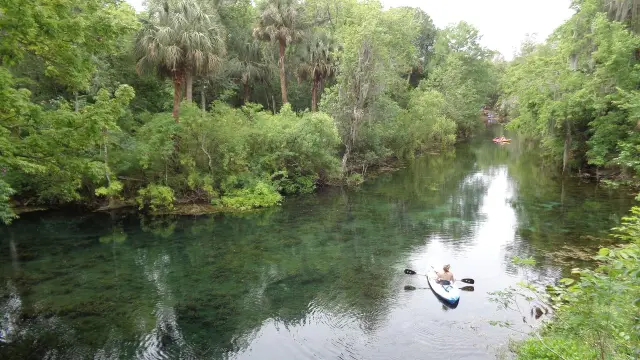
Short answer: Brevard Zoo in Melbourne runs an oyster gardening and living shoreline program for the Indian River Lagoon. Trained volunteers with lagoon docks in Brevard County hang shells covered in baby oysters off their docks for about six to nine months, then return them to be planted on coquina reefs. The program reports over 500,000 oysters grown and 170,000 square feet of reef built as of 2026.
Last verified: October 16, 2026, against the sources listed at the end of this page.
How does oyster gardening work in Melbourne?
Lagoon-front volunteers in Brevard County are trained to grow juvenile oysters off their docks for about six to nine months, then return them to Brevard Zoo for planting on Indian River Lagoon restoration reefs.
Oyster gardening is a volunteer program run by Brevard Zoo in Melbourne, through its nonprofit East Coast Zoological Foundation, that turns private docks along the Indian River Lagoon into oyster nurseries. According to the program's oyster gardening page, lagoon-front residents attend a workshop, collect shells covered in juvenile oysters, called spat, and hang them off their docks and pilings in cages for approximately six to nine months. The gardeners clean and care for the cages, and the grown oysters are then returned at a homecoming event and planted on restoration reefs.
The data from each dock does double duty. The program states that measurements from gardeners' oysters point the zoo team to the best locations for new reefs, and that the project has grown over 500,000 live oysters. Brevard Zoo lists its address as 8225 North Wickham Road in Melbourne.
Who can become an oyster gardener in Brevard County?
An oyster gardener needs a Brevard County dock on the brackish Indian River Lagoon, or an HOA community dock, plus one to two hours a week and the ability to lift 30 pounds.
The program sets a short list of requirements. A volunteer needs a dock on the Indian River Lagoon in Brevard County, or membership in an HOA community with a shared dock. Oysters need the brackish water of the lagoon, so docks on freshwater lakes, ponds, rivers and creeks do not qualify, and a dock on an inland Melbourne lake cannot host a garden. Gardeners commit one to two hours a week to maintaining the habitats, must be able to lift 30 pounds, and should not be out of town for more than two weeks during the gardening season, which runs from fall to summer.
Each new Brevard County gardener receives roughly 35 to 60 oyster shells, with anywhere from none to 30 or 40 spat on each, and splits them between two cages. People without a dock can still take part: the program trains them as Oyster Buddies, who temporarily fill in for one to two hours a week maintaining habitats, need reliable transportation and must be able to lift 40 pounds. Gardeners who skipped recent seasons sign up as returning gardeners, and residents whose homes are not selected are invited to become Oyster Buddies or join other conservation programs.
Where do the Melbourne-grown oysters end up?
The grown oysters go onto coquina reefs that the Brevard Zoo team builds in the Indian River Lagoon, which totaled 170,000 square feet of oyster reef as of 2026, according to the program.
The Brevard Zoo program's reef page describes a design built from coquina, a limestone rock made from compressed shell and coral, laid as a perimeter based on the permitted footprint, then filled with fossilized shell and topped with recycled shell, with live oysters added in areas deemed necessary based on natural recruitment.
| Season | Reef built | Milestone reported |
|---|---|---|
| 2023 | About 13,700 square feet, 18 reefs | First coquina reef |
| 2024 | Just over 27,000 square feet | 100th oyster reef |
| 2025 | Just over 52,000 square feet | About 12,000 live oysters seeded; Florida Nature Conservation Award |
| Total as of 2026 | 170,000 square feet | Reported on the program reef page |
The pace has grown each year. In 2023 the team built 18 reefs in the north basin of the lagoon, about 13,700 square feet, and completed its first coquina reef, which the zoo reported eliminated manmade material from its projects. The 2024 season wrap-up reported just over 27,000 square feet and the program's 100th oyster reef, and quoted Senior Conservation Manager Olivia Escandell saying the team was seeing more and more natural recruitment of wild oysters in the Melbourne area, after several years of concentrated building in that part of the lagoon.
In 2025 the team built just over 52,000 square feet of reef, nearly double the year before, using a full-time construction team and its own barge, according to Brevard Zoo. The same year it seeded about 12,000 live oysters onto new reefs and received the Florida Nature Conservation Award from the Florida Association of Zoos and Aquariums for its oyster work.
What is a living shoreline on the Indian River Lagoon?
A living shoreline is a nature-based alternative to seawalls, bulkheads and rock revetments that the Brevard Zoo lagoon program promotes for the Indian River Lagoon.
The Brevard Zoo program's living shoreline page defines a living shoreline as a nature-based approach to shoreline protection, used instead of hardened structures such as seawalls, bulkheads and rock revetments. It is built with vegetation, marsh, oyster reefs and other organic features to control erosion, reduce wave energy, improve water quality and filter pollutants. Components can include aquatic vegetation, oyster reefs, sand and stone.
The program places living shorelines alongside related work on mangroves, seagrass, clams and native-plant buffer zones between lagoon yards and the water. Its seagrass is grown in two nurseries, one in Rockledge and one at the Hubbs-SeaWorld Research Institute in Melbourne Beach, which marked a full year of operation in fall 2024 according to the zoo's 2024 season report.
How has Florida Tech worked on oyster restoration in Melbourne?
Florida Tech students and the university's Indian River Lagoon Research Institute built shell-covered oyster mats for lagoon restoration in 2012 and 2017, according to university news posts.
Oyster work in Melbourne predates the current reef program. A Florida Tech blog post dated December 9, 2012 reported that Brevard Zoo and volunteers had replaced over 28,000 oyster mats and restored about 50 reefs in the lagoon, and that the campus Tri Beta chapter dedicated one meeting per academic year to the mats, producing 20 to 30 at a meeting depending on attendance. Each mat used 36 oyster shells, a piece of aquaculture-grade mesh and zip ties.
Florida Tech ran its own program as well. In April 2017, Florida Institute of Technology's Indian River Lagoon Research Institute invited the public to an Earth Day oyster mat workshop on the lawn of the Link Building on the Florida Tech campus, from 2 to 6 p.m. on April 21. Those mats went to the Living Docks program, which hangs shell-covered mats from dock pilings so oysters, sponges, barnacles and tunicates settle there. The university stated that healthy adult oysters can filter 50 gallons of water per day.
Who funds the program and where does the shell come from?
The shell comes from restaurants, seafood festivals and shellfish distributors through Shuck and Share, and Brevard County funds oyster gardening supplies and the oyster reef builds.
Through Shuck and Share, restaurants, seafood festivals and shellfish distributors set aside discarded shells, and the program reports collecting around 8 million pounds of shell to date for gardening and reef building. Brevard County is the main public funder: the partners page says the Brevard County Natural Resources Management Department and the County Commissioners fund supplies for hundreds of oyster gardeners, while the St. Johns River Water Management District supports oyster mat work through sales of its lagoon license plate, known as the snook tag. Zoo reports from 2023 and 2024 credit Brevard County's lagoon project plan, known as SOIRL, which the 2023 post says works in partnership with Brevard County Natural Resources, with funding the oyster reefs.
Research now runs alongside construction. A study funded by a Restore America's Estuaries grant with U.S. Environmental Protection Agency money collects ten oysters each month from four sites across Brevard County to examine spat settlement and oyster reproductive health, because the zoo team has seen a lack of consistent spawning in the Brevard part of the lagoon. The zoo says the study also supports Brevard County's plan to construct 14.5 acres of oyster reef.
Last verified: October 15, 2026, by rereading the Brevard Zoo lagoon program's gardening, reef, living shoreline, Shuck and Share and partner pages, four Brevard Zoo news posts and two Florida Tech news archive posts.
Frequently asked questions
How long do Brevard oyster gardeners keep the oysters?
Gardeners keep the spat-covered shells in cages hanging from their docks for approximately six to nine months, cleaning them for one to two hours a week. The grown oysters are then returned at a homecoming event and planted on Indian River Lagoon restoration reefs built by the Brevard Zoo team.
Can someone in Melbourne without a lagoon dock take part?
Yes, though not as a gardener. Docks must sit on the brackish Indian River Lagoon in Brevard County or belong to an HOA community dock. Others can train as Oyster Buddies who temporarily fill in maintaining habitats, or volunteer at a reef build.
How much oyster reef has the Brevard Zoo program built?
The program reports 170,000 square feet of oyster reef built as of 2026. Annual totals rose from about 13,700 square feet in 2023 to just over 27,000 in 2024 and just over 52,000 in 2025, when the work earned a Florida Nature Conservation Award.
What is the snook tag connection to oyster work in Brevard?
The snook tag is the St. Johns River Water Management District's Indian River Lagoon license plate. The program lists the plate's sales as a funding source for its oyster mats project, alongside Brevard County funding for oyster gardening supplies.
Why are coquina reefs used in the lagoon?
Coquina, a limestone rock made from compressed shell and coral, forms the perimeter of each reef and is filled with fossilized and recycled oyster shell. The program says it mimics natural oyster habitat, provides better water circulation, and that switching away from metal and plastic materials made its reefs more environmentally friendly.
Sources
- Oyster Gardening (Brevard Zoo lagoon program website) https://restoreourshores.org/living-shoreline/oyster-gardening/ Used for: gardening process, eligibility, 500,000 oysters, commitments
- Oyster Reefs (Brevard Zoo lagoon program website) https://restoreourshores.org/living-shoreline/oyster-reefs/ Used for: coquina reef method, 170,000 sq ft as of 2026
- Living Shorelines (Brevard Zoo lagoon program website) https://restoreourshores.org/living-shoreline/ Used for: living shoreline definition and threats
- Shuck & Share (Brevard Zoo lagoon program website) https://restoreourshores.org/shuck-and-share/ Used for: restaurant shell recycling, 8 million pounds
- Government Agencies partners (Brevard Zoo lagoon program website) https://restoreourshores.org/partners/government-agencies/ Used for: county funding, snook tag, partner list
- Season Wrap-Up 2024 (Brevard Zoo blog) https://brevardzoo.org/news/restore-our-shores-season-wrap-up/ Used for: 27,000 sq ft, 100th reef, Melbourne-area recruitment, Melbourne Beach nursery
- 12 Moments of Impact 2025 (Brevard Zoo blog) https://brevardzoo.org/news/12-moments-of-impact-restore-our-shores/ Used for: 52,000 sq ft in 2025, FAZA award, 12,000 oysters seeded
- Studying Oyster Health in the Indian River Lagoon (Brevard Zoo blog) https://brevardzoo.org/news/studying-oyster-health-in-the-indian-river-lagoon/ Used for: reproductive health study, 14.5 acres county plan
- Oyster Reef Building Season Has Come to an End (Brevard Zoo blog, 2023) https://brevardzoo.org/news/oyster-reef-building-season-has-come-to-an-end/ Used for: 18 reefs, 13,700 sq ft, first coquina reef
- Celebrate Earth Day by Making Oyster Mats with Florida Tech (Florida Tech, April 11, 2017) https://news.fit.edu/academics-research/oyster-mats/ Used for: Living Docks, IRLRI workshop, 50 gallons a day
- Save the Reef through Oyster Restoration (Florida Tech, Dec. 9, 2012) https://news.fit.edu/archive/save-the-reef-through-oyster-restoration/ Used for: 28,000 mats, 50 reefs, Tri Beta partnership
How this page was made
Digital Towns uses AI assistance to research and write its guides, and every page is only as good as the sources it cites. Our goal is the most accurate, useful local information possible.
This page was fact-checked twice before publishing.
If you see an error, or anything you can show is false, tell us right away and we will take a third look.
Report an error
Thank you. We'll take a third look and correct the page if it's wrong.