Short answer: In September 1958, Brevard County school officials threatened to evict Brevard Engineering College, the Countdown College that became Florida Tech, from its rented classrooms at the segregated Eau Gallie Junior High School because Julius Montgomery, a Black Cape Canaveral technician, had enrolled. Montgomery withdrew so the college could open, enrolled in 1961 on its new Melbourne campus, and in 1969 won a Melbourne City Council seat.
Last verified: October 16, 2026, against the sources listed at the end of this page.
Who was Julius Montgomery?
Julius Montgomery was an electronics technician who came to the Cape from Alabama in 1956, broke color lines at Cape Canaveral and at the college that became Florida Tech, and later won a seat on the Melbourne City Council.
In 1956 he became, in NASA's words, the first African American hired at the Cape Canaveral Air Force Station to work as a technical professional. In 1958 he signed up for the first classes of Brevard Engineering College, the evening college for missile workers known as Countdown College that grew into Florida Institute of Technology in Melbourne.
That registration nearly ended the college before it began. Brevard County school officials, whose segregated Eau Gallie Junior High School was renting classrooms to the college, threatened to evict it if a Black student attended. Montgomery withdrew so classes could go on, then enrolled in 1961 once the college had its own campus. Florida Tech now describes his decision as the personal sacrifice that ensured the university's survival.
| Date | Event | Source |
|---|---|---|
| 1951 | Bachelor's degree from Tuskegee Institute | NASA |
| 1956 | Hired at Cape Canaveral as an electronics technician at $96 a week | NASA |
| Summer 1958 | Superintendent Woodrow Darden agrees to rent three Eau Gallie Junior High classrooms to the college | Florida Tech, 2019 |
| September 1958 | School district ultimatum; Montgomery volunteers to withdraw | Florida Tech, 2020 |
| January 11, 1961 | Melbourne Daily Times headline: BEC Gets University Campus | Florida Tech, 2019 |
| 1961 | Enrolls as classes move to the Country Club Road campus | Florida Tech, 2020 |
| 1969 | Wins a Melbourne City Council seat | National Air and Space Museum |
| 1988 | Retires from RCA | NASA |
| January 13, 2020 | Honorary doctorate of humane letters at Gleason Auditorium | Florida Tech, 2020 |
| January 22, 2020 | Dies at age 90 | NASA |
How did Julius Montgomery come to the Cape?
Montgomery came to Cape Canaveral in 1956 after a technical career that began at Tuskegee Institute and in the Air Force.
NASA's history office records that Montgomery graduated from Tuskegee Institute in 1951, served four and a half years in the Air Force, earned a first-class radio license and worked as a radio station engineer in Mobile, Alabama. He applied for an electronics technician job at Cape Canaveral, passed the entrance exam and moved to Florida in 1956 at a starting salary of $96 a week. Florida Tech's account places him in the RCA Development Lab, where he was the first Black man at the Cape in a role other than janitor.
His Cape Canaveral team, nicknamed range rats, traveled the missile range after test launches to find out what had failed and repair the electronics, and spent time at sea maintaining satellite equipment. NASA adds that the team developed circuits for the missiles and rockets tested at the Cape, much of it custom-built because the hardware was not commercially available. The National Air and Space Museum quotes his memory of his first day at the RCA Development Lab, when he introduced himself to his new coworkers one by one: "Nobody would shake my hand."
What happened at Eau Gallie Junior High School in 1958?
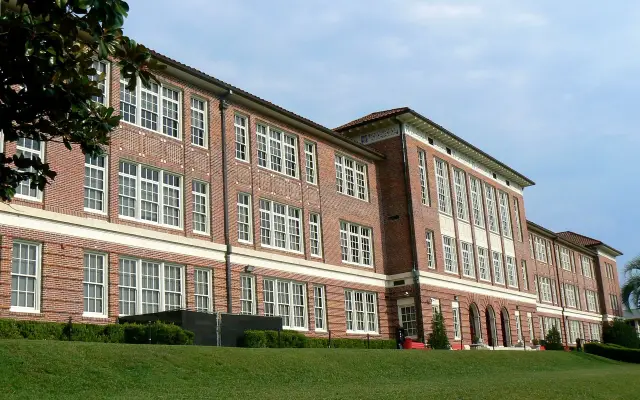
Brevard Engineering College started without a building, renting three classrooms in 1958 at the segregated Eau Gallie Junior High School.
In Florida Tech's history of its launch, Patterson writes that the Brevard County Schools agreed to rent three classrooms at Eau Gallie Junior High School, now Westshore Junior Senior High School, and that the first mass meeting of students and faculty was held there at 7 p.m. A companion Florida Tech account names county superintendent of schools Woodrow Darden as the official who approved the arrangement in the summer of 1958.
Montgomery had met founder Jerome Keuper in the RCA lab, and Keuper urged him to enroll. On the sign-up sheet he listed his Tuskegee degree. In September 1958, when school district officials learned that an African American would be attending classes at the segregated Eau Gallie school, they gave Keuper an ultimatum: Montgomery must withdraw, or the college and its missilemen would be evicted. Patterson's 2019 article says a pair of African American missilemen were attending at the time.
Montgomery went to Keuper and volunteered to withdraw. According to Florida Tech, Keuper credited him with saving the fledgling college and promised that Montgomery and other African American students would be welcome once it found a home of its own. NASA's account adds that the college could only open in the Eau Gallie classrooms because Montgomery stepped aside.
How did Countdown College find a campus in Melbourne?
The home Keuper promised came from the University of Melbourne, a small school founded by Melbourne Village founder Virginia Wood, which leased its campus to the college in 1961.
The 2019 Florida Tech article explains that Wood and her allies had launched the University of Melbourne on 35 acres west of Babcock Street offered by developer V. Conner Brownlie. Brownlie's deed restricted the land to white students; in September the university's regents gave him one week to remove the restriction, he agreed, and the cornerstone of the University of Melbourne was laid on October 6, 1955. In 1958 Wood let Brevard Engineering College use the University of Melbourne building to register students, and during the week of July 7 its faculty were on hand in the evenings to meet prospective students.
A plan for a 20-acre campus next to Patrick Air Force Base in Satellite Beach stalled for lack of community support by the fall of 1960. Wood, Hubert Normile and Homer Denius of Radiation, Inc. then proposed that the college settle in Melbourne. On January 11, 1961, Melbourne's Daily Times ran the banner headline BEC Gets University Campus, announcing a one dollar a year, 99-year lease on the 40-acre University of Melbourne property. Ground was broken for classrooms in April 1961, and that year, as academic operations shifted to the Country Club Road campus, Montgomery enrolled. NASA identifies him as the first African American student to integrate the college.
What did Julius Montgomery do in Melbourne politics?
Montgomery also pressed into Melbourne's elected offices, and the National Air and Space Museum reports that he stood for election beginning in 1956 and finally won in 1969, becoming the first African American ever to win a seat on the Melbourne City Council.
The museum puts that campaign in context: when he first ran in 1956, fewer than 50 African Americans held elected office in the former Confederate states. Its account also describes him as the first Black member of the Melbourne, Florida, City Council. Montgomery stayed with RCA at the Cape for more than thirty years, retiring in 1988, and afterward started a general contracting business and took part in panel discussions at the Smithsonian's National Air and Space Museum in Washington, according to NASA.
How does Florida Tech remember Julius Montgomery?
Florida Tech honors him with the Julius Montgomery Pioneer Award for community service.
Florida Tech's own sources and NASA differ on its start: the School of Arts and Communication timeline dates the first ceremony to 2006, with Montgomery himself as the first recipient, while NASA says the award was first given in 2007. On January 13, 2020, Florida Tech president T. Dwayne McCay conferred on him an honorary doctorate of humane letters at Gleason Auditorium, recognizing his commitment to education and civil rights. Montgomery died nine days later, on January 22, 2020, at age 90.
Beyond Brevard, Montgomery's story appears in a book on the first African Americans in the space program by Richard Paul, written with Steven Moss, according to the museum. On February 20, 2010, he joined a National Air and Space Museum panel with Morgan Watson, NASA's first Black engineer, and astronauts Leland Melvin and Mae Jemison, where he told the story of his first day at the Cape. The Eau Gallie junior high where the 1958 confrontation took place is today's Westshore Junior Senior High School, according to Florida Tech's histories.
Last verified: October 15, 2026, by re-reading NASA's 2021 history of Montgomery, the National Air and Space Museum's January 2020 remembrance, three Florida Tech histories by Gordon Patterson (2018, 2019 and January 2020), and the Florida Tech School of Arts and Communication timeline.
Frequently asked questions
What was Countdown College?
Countdown College was the nickname of Brevard Engineering College, the evening college for Cape Canaveral missile workers that Jerome Keuper launched in 1958. It first met in rented classrooms at Eau Gallie Junior High School and became Florida Institute of Technology, now on Country Club Road in Melbourne.
Why did Julius Montgomery withdraw from Brevard Engineering College in 1958?
In September 1958 Brevard County school officials learned an African American would attend classes in the segregated Eau Gallie Junior High School and threatened to evict the college. Montgomery volunteered to withdraw so the college could survive, on Keuper's promise of a place once it had its own campus.
When did Julius Montgomery enroll at Florida Tech?
He enrolled in 1961, after the college secured a 99-year lease on the 40-acre University of Melbourne campus, announced on January 11, 1961. NASA identifies him as the first African American student to integrate Brevard Engineering College, later Florida Institute of Technology.
Was Julius Montgomery on the Melbourne City Council?
Yes. After standing for election from 1956, he won a Melbourne City Council seat in 1969, the first African American ever to win one, according to the National Air and Space Museum.
Which school building was involved in the 1958 dispute?
The classes met in three rented classrooms at Eau Gallie Junior High School. Florida Tech's histories identify the building as today's Westshore Junior Senior High School.
Sources
- The Secret History of Julius Montgomery: A Profile in Courage (Florida Tech News, Gordon Patterson, January 17, 2020) https://news.fit.edu/archive/the-secret-history-of-julius-montgomery-a-profile-in-courage/ Used for: 1956 Cape hiring, RCA Development Lab, September 1958 ultimatum at Eau Gallie Junior High, withdrawal, 1961 enrollment, January 13, 2020 honorary doctorate at Gleason Auditorium
- The Secret History of How a Progressive Woman's Passion for the Humanities and Nature Led to a Permanent Home for Countdown College (Florida Tech News, Gordon Patterson, 2019) https://news.fit.edu/archive/the-secret-history-of-how-a-progressive-womans-passion-for-the-humanities-and-nature-led-to-a-permanent-home-for-countdown-college/ Used for: Darden classroom agreement 1958, pair of African American missilemen, Keuper promise, University of Melbourne deed restriction, January 1961 campus lease
- The Secret History of Launching Florida Tech (Florida Tech News, Gordon Patterson, September 13, 2018) https://news.fit.edu/archive/the-secret-history-of-launching-florida-tech/ Used for: three classrooms rented at Eau Gallie Junior High School, now Westshore Junior Senior High, and the first mass meeting
- Julius Montgomery: First African American Technical Professional at Cape Canaveral Air Force Station (NASA History, June 15, 2021) https://www.nasa.gov/history/julius-montgomery-first-african-american-technical-professional-at-cape-canaveral-air-force-station Used for: Tuskegee 1951, Air Force, 1956 hiring at $96 a week, range rats, integration of Brevard Engineering College, retirement 1988, death January 22, 2020
- Remembering Julius Montgomery: Space Program Pioneer (National Air and Space Museum, Richard Paul, January 24, 2020) https://airandspace.si.edu/node/225790 Used for: Alabama to the Cape 1956, RCA Development Lab first day, sign-up sheet, 1956 to 1969 council campaign and 1969 win, 2010 panel, We Could Not Fail
- Our Stories and Events, Brevard African American history timeline (Florida Tech School of Arts and Communication) https://www.fit.edu/arts-and-communication/about-sac/our-stories-and-events/ Used for: Florida Tech first Julius Montgomery Pioneer Award ceremony 2006 (its own award)
How this page was made
Digital Towns uses AI assistance to research and write its guides, and every page is only as good as the sources it cites. Our goal is the most accurate, useful local information possible.
This page was fact-checked twice before publishing.
If you see an error, or anything you can show is false, tell us right away and we will take a third look.
Report an error
Thank you. We'll take a third look and correct the page if it's wrong.