Short answer: Bud L. Holman was a Vero Beach business leader and municipal airport manager who, in 1947, offered the Brooklyn Dodgers the empty barracks of the former naval air station. He met their scout at the train, took part in the lease talks that created Dodgertown, and personally guaranteed its swimming pool. Holman Stadium, dedicated March 11, 1953, is named for him.
Last verified: October 16, 2026, against the sources listed at the end of this page.
Who was Bud Holman?
Bud Holman was the Vero Beach business leader and airport manager whose name is on the ballpark at Dodgertown.
The Baseball and Dodgertown state marker, placed in 2014 at 4000 26th Street, sums up his place in Vero Beach history in one line: Dodgertown became the spring training home of the Brooklyn Dodgers in 1948, when local business leader Bud Holman convinced the Dodgers to set up a spring training facility in Vero Beach. MLB's Holman Stadium page calls him a local businessman and Airport Director, and the Walter O’Malley history of Dodgertown calls him a prominent business leader and Vero Beach Municipal Airport Manager.
The O'Malley history adds a candid note: though he became a rabid Dodger fan, Holman initially knew little about baseball. As an astute businessman, it says, he saw and acted on the opportunity to bring the Dodgers to Vero Beach for spring training.
What was Holman's role at the Vero Beach airport?
Holman managed the Vero Beach airport just after the Navy returned it, which is how he came to control the barracks the Dodgers would use.
The airfield is older than the Dodgers deal. The City of Vero Beach's airport annual report to the City Council counts the airport's years of operation since 1929. The U.S. Naval Station, Vero Beach state marker records that the Vero Beach Naval Air Station was commissioned on 24 November 1942, that the previously city-owned airport expanded from 100 acres to 2500 acres, and that the station trained over 2700 men, 300 WAVES and women Marines.
The marker says the station was placed in caretaker status in June 1946 and deeded back to the city. The O'Malley history gives the steps: notice came on May 10, 1946, that the airport and buildings would be turned over to Vero Beach and Indian River County, the base was transferred from the Navy on March 23, 1947, and went to the city on April 12 that year, on condition that money from use of the airbase property go into a special fund for flight facilities. That left the city's airport manager with 100 acres of abandoned two-story wooden barracks next to the runways and a reason to find a paying tenant.
How did Holman bring the Dodgers to Vero Beach?
Holman went looking for the baseball team with the most minor leaguers to fill Vero Beach's empty barracks, and the answer was the Brooklyn Dodgers.
According to the O'Malley history, Holman inquired which baseball team had the largest minor league system, was told the Dodgers, and contacted Dodger President Branch Rickey about establishing training headquarters in Vero Beach. The MLB timeline for the 1940s adds how he heard of the opening: Rickey's daughter mentioned the club's search for a training site to a neighbor, Dick Cameron, who relayed it to Bud Holman.
Rickey, looking for a U.S. site to train the Dodgers and their 26 minor league teams in a self-contained camp, sent Buzzie Bavasi, general manager of the minor league Nashua, New Hampshire, team, by train on November 2, 1947. Bavasi was supposed to go on to possible sites in Fort Pierce or Stuart but never did. The MLB timeline quotes him: Bud Holman met me at the train and he wouldn't let me go any farther south. Bavasi added that the facilities were already there, all they had to do was put in the ball fields, and the airport was close by for the club's own plane.
How was the Dodgertown lease negotiated?
Holman helped negotiate a five year lease at $1.00 per year that turned the old base into Dodgertown.
The MLB timeline says Dodger team officials, Bud Holman and Vero Beach councilmember J. R. Reaves were involved in the negotiations, and that the negotiators visited the Banana River Naval Station to buy the equipment needed for living arrangements. The Vero Beach Press-Journal reported on December 11, 1947, that the Dodgers had selected Vero Beach, and on December 19, Rickey told his board that a five year lease at $1.00 per year was expected. On January 25, 1948, the paper reported the City Council's approval of a revamped five-year lease with an option for five more, the first time the name Dodger Town appeared in the newspaper, printed as two words. That first spring the Dodgers' major league camp was held out of the country at Ciudad Trujillo in the Dominican Republic, while the minor leaguers trained at Dodgertown.
What Holman offered fit what Rickey wanted. The O'Malley history says Rickey hoped to create a baseball college to educate more than 650 players while his scouts kept searching for talent to fill the 26 Dodger farm teams. The Dodgers inspected the Vero Beach barracks and found creaky floors and weeds growing inside, no heating or air conditioning, and rooms where many players would sleep six to a room, but the potential was there. LIFE magazine made the new Dodgertown setup its April 5, 1948, cover story with an extensive photo essay.
Holman also put his own credit behind the Vero Beach camp. When Rickey wanted a swimming pool and asked Holman and city fathers to start a fund for one, the O'Malley history says Holman guaranteed the construction himself, to be reimbursed from future Dodger exhibition games, and the pool was built. A later lease called for the Dodgers to pay the city $3,000 to complete the debt on the competition-size pool and to earmark the receipts from one exhibition game for the airport fund.
Why is the ballpark called Holman Stadium?
The Dodgers named their new ballpark for Holman in 1953 as thanks for bringing the club to Vero Beach.
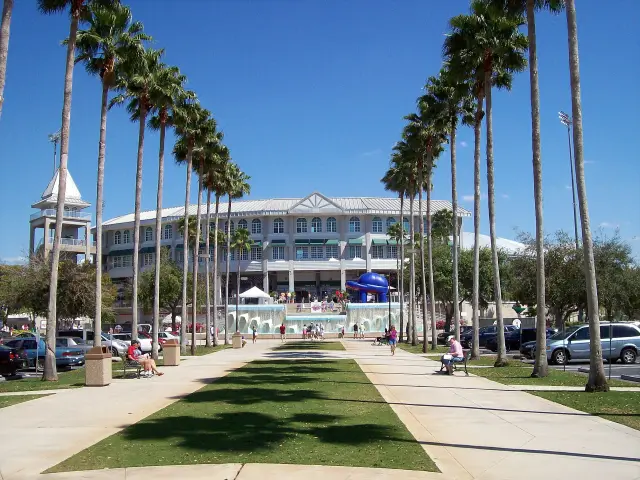
According to the MLB timeline for the 1950s, on January 15, 1953, Walter O'Malley made public in the Press Journal his intent to name the new stadium for Bud L. Holman, a prominent Vero Beach resident and the man responsible for attracting the Dodgers to the city. O'Malley had first planned a 4,200-seat stadium before expanding total capacity to 5,000. Holman Stadium was dedicated on March 11, 1953, before an overflow crowd of 5,532, and its plaque reads that the Brooklyn Dodgers dedicate Holman Stadium to honor Bud L. Holman of the Friendly City of Vero Beach.
The timeline says M.M. Jack Frost, vice president of Eastern Air Lines, stood in for Eastern president Eddie Rickenbacker and unveiled the plaque with O'Malley, and that Holman briefly responded to the honor. Fifty Royal Palm trees, a gift from Dodger part-owner Mary Louise Smith, were placed around the stadium, and MLB notes that when Holman Stadium opened, the ballpark had more seats, 5,000, than Vero Beach had people.
Where does his name appear today?
Holman's name stays in daily use at the Vero Beach complex, now the Jackie Robinson Training Complex.
The Vero Beach state marker gives Holman Stadium 6,500 seats, while MLB's 1953 account gives 5,000, a difference in the official record that this page states rather than resolves. MLB's Holman Stadium page lists a later renovation with a complete seating bowl replacement of 6,478 new seats, a new playing field of Celebration sod and new fencing.
The Vero Beach camp Holman helped start grew well beyond his first pitch. The marker says Dodger President Branch Rickey sought to create a baseball campus there where players could live and play together, and that Hall of Fame players Jackie Robinson and Roy Campanella were among the first African American players to train at Dodgertown. The marker records that Dodgertown was the South's first racially integrated spring training camp, where 600-plus players from the Dodgers' 26 minor league teams played, and that 6 World Championship and 14 National League pennant-winning teams played there. In 2001 the Dodgers sold Dodgertown to Indian River County and leased it back until 2008, when spring training moved west to Arizona, and in 2012 the O'Malley family stepped up to manage historic Dodgertown as a year-round multi-sports complex.
| Date | Event | Source |
|---|---|---|
| 24 November 1942 | Vero Beach Naval Air Station commissioned | State marker 717 |
| June 1946 | Station in caretaker status, deeded back to the city | State marker 717 |
| November 2, 1947 | Bavasi sent by train to see Vero Beach | MLB |
| December 11, 1947 | Press-Journal reports Vero Beach selected | MLB |
| January 15, 1953 | Stadium name announced | MLB |
| March 11, 1953 | Holman Stadium dedicated, crowd of 5,532 | MLB |
| 2001 | Dodgers sell Dodgertown to Indian River County | State marker 841 |
Last verified: October 15, 2026, with fresh checks of the MLB Dodgertown timelines and Holman Stadium page, the O'Malley family history, two Florida Department of State markers and the city's airport report.
Frequently asked questions
What was Bud Holman's job in Vero Beach?
MLB describes him as a local businessman and Airport Director, and the Walter O'Malley history calls him a prominent business leader and Vero Beach Municipal Airport Manager when he approached the Dodgers in 1947.
How did Bud Holman learn the Dodgers wanted a new camp?
According to the MLB timeline, Branch Rickey's daughter mentioned the search to a neighbor, Dick Cameron, who passed it on to Holman in 1947. Holman then offered the former naval air station land at the Vero Beach airport.
When was Holman Stadium dedicated?
On March 11, 1953, before an overflow crowd of 5,532, according to MLB. Walter O'Malley had announced on January 15, 1953, that the new Vero Beach ballpark would carry Holman's name.
What does the state historical marker say about Holman?
The 2014 Baseball and Dodgertown marker says Dodgertown became the Dodgers' spring training home in 1948 when local business leader Bud Holman convinced the Dodgers to set up a facility in Vero Beach.
Is Holman Stadium still used?
Yes. It is part of the Jackie Robinson Training Complex in Vero Beach, and MLB lists a renovation with 6,478 new seats, a new playing field and new fencing.
Sources
- The O'Malley Family and Dodgertown (walteromalley.com, official Walter O'Malley site) https://www.walteromalley.com/dodgertown/the-omalley-family-and-dodgertown/ Used for: Holman as airport manager, barracks, largest minor league system, baseball college, LIFE cover, pool guarantee, base transfer dates
- 1940s timeline, Jackie Robinson Training Complex (MLB.com) https://www.mlb.com/robinson-training-complex/history/timeline/1940s Used for: Dick Cameron, Bavasi trip and quote, negotiators, lease dates
- 1950s timeline, Jackie Robinson Training Complex (MLB.com) https://www.mlb.com/robinson-training-complex/history/timeline/1950s Used for: stadium naming, dedication, plaque, Eastern vice president, royal palms
- Holman Stadium, Jackie Robinson Training Complex (MLB.com) https://www.mlb.com/robinson-training-complex/history/holman-stadium Used for: Airport Director description, 6,478-seat renovation
- Baseball and Dodgertown, Florida Historical Marker 841 https://markers.flheritage.com/home/details/841 Used for: marker summary, 6,500 seats, 2001 sale, 2008, 2012
- U.S. Naval Station, Vero Beach, World War II, Florida Historical Marker (Florida Division of Historical Resources) https://markers.flheritage.com/home/details/717 Used for: naval air station dates and acreage
- Vero Beach Regional Airport 2017 Annual Report to the City Council (City of Vero Beach) https://www.covb.org/DocumentCenter/View/1350/2017-Annual-Report-to-the-City-Council Used for: airport in operation since 1929
How this page was made
Digital Towns uses AI assistance to research and write its guides, and every page is only as good as the sources it cites. Our goal is the most accurate, useful local information possible.
This page was fact-checked twice before publishing.
If you see an error, or anything you can show is false, tell us right away and we will take a third look.
Report an error
Thank you. We'll take a third look and correct the page if it's wrong.