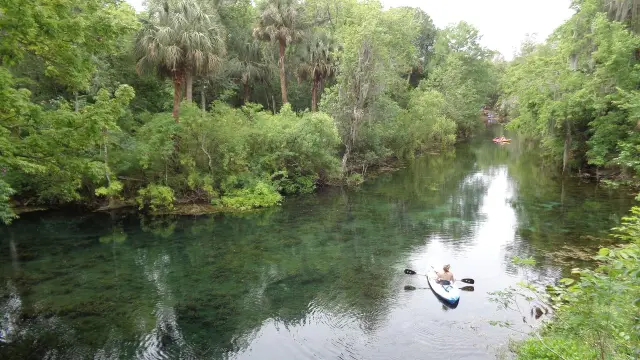
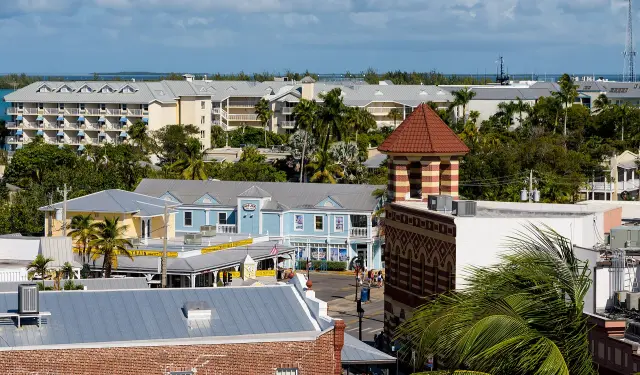
Short answer: The part of the Archie Carr National Wildlife Refuge nearest Melbourne is its northern, Brevard County end, which begins at Melbourne Beach on the barrier island east of the city. There the protected land includes a chain of Brevard County sanctuaries along SR A1A, among them 228-acre Coconut Point Sanctuary and 187-acre Maritime Hammock Sanctuary, backing beaches the Fish and Wildlife Service calls the most significant loggerhead nesting area in the world.
Last verified: October 18, 2026, against the sources listed at the end of this page.
What part of the Archie Carr refuge is near Melbourne?
The refuge's northern end, the stretch nearest Melbourne, starts at Melbourne Beach and runs south through the Brevard County barrier island toward Indian River County.
The U.S. Fish and Wildlife Service's refuge overview describes the Archie Carr National Wildlife Refuge as stretching across 20.5 miles of beach and shoreline habitat between Melbourne Beach and Wabasso Beach, in Brevard and Indian River Counties. The Service adds that the refuge was established in 1991 and named for the late Dr. Archie Carr, Jr. The Town of Melbourne Beach calls itself Brevard County's oldest beach community, established 1883, and the refuge's Brevard miles continue south from the town along SR A1A.
The South Brevard segment is not one continuous federal tract. The Service states that the refuge itself is only 258 acres, placed within a patchwork of protected lands and among properties that have already been developed. Much of the protected ground below Melbourne Beach is instead held in Brevard County's Environmentally Endangered Lands (EEL) sanctuaries, and the Great Florida Birding and Wildlife Trail, a Florida Fish and Wildlife Conservation Commission program, describes Coconut Point Sanctuary as part of both the county's EEL program and the Archie Carr refuge complex.
The route from mainland Melbourne to the Brevard end follows US-192 and A1A. The Service's driving directions to the Barrier Island Center start at exit 180 on I-95, follow US-192 east and continue on Strawbridge Avenue to Florida A1A, then run south on A1A, with the center on the left after 12.8 miles. The Coconut Point and Maritime Hammock trailheads lie along the same stretch of A1A at lower street numbers, and the Service describes the Barrier Island Center as a great place to start a visit.
Which Brevard County sanctuaries make up the refuge's northern end?
Brevard County's Park Directory lists three EEL sanctuaries on South Highway A1A in Melbourne Beach: Coconut Point at 4000, Maritime Hammock at 6200 and Doc Ehrhart at 8385.
| Sanctuary (Brevard County EEL) | Address | Size | Hours listed |
|---|---|---|---|
| Coconut Point Sanctuary | 4000 South Highway A1A, Melbourne Beach (county directory) | 228 acres (birding trail) | Daily, 7 a.m. to 6 p.m. |
| Maritime Hammock Sanctuary | 6200 S. Highway A1A, Melbourne Beach | 187 acres (birding trail) | Daily, 7 a.m. to 6 p.m. |
| Doc Ehrhart Sanctuary, home of the Barrier Island Center | 8385 S Hwy A1A, Melbourne Beach | 34 acres (birding trail) | Center Tuesday through Sunday, 9 a.m. to 5 p.m.; closed Monday |
The first by street number is Coconut Point Sanctuary. The birding trail lists it at 228 acres, managed by Brevard County, open daily from 7 a.m. to 6 p.m. and free to enter, and notes that it is not to be confused with Coconut Point Park, a separate park to the north. A 0.75-mile hiking trail runs through coastal strand, oak scrub, maritime hammock and mangrove swamp, and an observation platform looks over the Indian River Lagoon. The county directory gives the sanctuary phone as (321) 723-3556.
Parking for Coconut Point is shared with a beach park. The birding trail directs walkers to park at Juan Ponce De Leon First Landing Park on SR A1A, which has restrooms, and to cross the highway on foot to the northern trailhead; a bicycle can be left at a southern trailhead a few hundred yards to the south, and a canoe tie-up on the lagoon side gives paddlers another way into the Melbourne Beach sanctuary.
Down the highway, Maritime Hammock Sanctuary at 6200 SR A1A protects the largest intact maritime hammock in Brevard County, according to the birding trail. The 187-acre site has a 3.5-mile foot path, closed to bikes, with two trailheads 350 yards apart on A1A, both with bicycle racks, and a paddling launch. The trail notes that mangroves along the lagoon are regenerating thanks to the county's extensive habitat restoration. The third sanctuary, the 34-acre site at 8385 SR A1A, was known as the Barrier Island Sanctuary until UCF News reported its renaming on April 26, 2025, for biologist Llewellyn Doc Ehrhart; it holds the refuge visitor center and is described on its own Digital Towns page.
Why do the beaches below Melbourne Beach matter for loggerheads?
The beaches below Melbourne Beach sit inside what the Service calls the most significant area for loggerhead sea turtle nesting in the world and the most significant area for green turtle nesting in North America.
For the refuge, Brevard and Indian River beaches together, the Service puts that at 20 to 35 percent of all loggerhead and green sea turtle nests in the United States, and states that the long stretches of quiet beach, with little or no artificial light, are essential to the 15,000 to 30,000 nests the refuge receives each year. Leatherbacks nest on the refuge in smaller numbers, as a minor nesting area.
The nesting calendar is set out on the refuge species page. Sea turtles typically begin arriving to nest in March and April, the peak months run from May through August, and nests need about 60 days to incubate, so nests laid in August may hatch in October. Across the refuge's 20.5 miles, the same page counts 8,000 to 20,000 loggerhead nests and 1,000 to 15,000 green turtle nests a year. The season can run late: the Service reports that in 2020 the refuge recorded the latest nest for the state of Florida, on December 6. The Service gives the refuge's average winter low as 52 degrees, the season when gulls, terns, plovers and sandpipers are present in larger numbers on the Brevard shoreline.
Long-term counting has shaped what is known about these Brevard beaches. UCF News reported in May 2025 that for more than 50 years the late UCF biologist Llewellyn Doc Ehrhart advanced scientific understanding of sea turtle ecology and the coastal ecosystems of Brevard County, and that his research helped secure permanent nesting grounds along the refuge.
What rules apply on the refuge beaches near Melbourne Beach?
The Service's activities page bars access after dark on the beaches below Melbourne Beach and keeps dogs, horses, ATVs, bicycles and cars off the refuge's public beaches and foot trails.
Surf fishing is permitted through all designated dune crossovers but outside lifeguarded areas. Birders may use the refuge beaches at any time of year except in privately owned sections, a limit that matters on a Brevard shoreline the Service describes as a patchwork of protected land and developed property.
Photography on the Archie Carr beaches is open, with exceptions. The Service states that commercial filming and photography, and some sea turtle filming and photography, may be regulated, and it directs questions to the refuge at 772/581-5557. On the county land, the birding trail lists Coconut Point and Maritime Hammock as open daily from 7 a.m. to 6 p.m., and notes that the Maritime Hammock foot path is closed to bicycles.
How is the Brevard end of the refuge managed?
Management of the Brevard end is shared between the Fish and Wildlife Service and a partnership of state and county governments and private conservation groups.
The Service built that partnership to acquire and manage the dune habitat, and it states that the group, known as the Archie Carr Working Group, has protected over 2,600 acres, far more than the federal refuge's own 258 acres. Brevard County's role is visible on the ground in South Brevard: the birding trail lists Brevard County as the manager of both Coconut Point Sanctuary and Maritime Hammock Sanctuary.
The Service's management page lists the work done on Archie Carr land. It includes a fire management plan with prescribed fires that help mitigate wildfire damage and encourage new growth of native vegetation, beach nourishment and habitat restoration projects, wildlife surveys, and sea turtle monitoring. Archie Carr Partnership staff carry out chemical and mechanical control of eight invasive plants named by the Service: Brazilian pepper, melaleuca, air potato, rosary pea, guinea grass, Chinese tallow tree, cogon grass and Japanese climbing fern. A Comprehensive Conservation Plan for the refuge is dated September 18, 2008. The Service manages the refuge as part of the Everglades Headwaters National Wildlife Refuge Complex, and its Visit Us page lists the refuge office at 4055 Wildlife Way in Vero Beach.
What wildlife lives in the South Brevard sanctuaries?
The South Brevard sanctuaries hold scrub-jays, migrating warblers, wading birds, river otters and bobcats as well as sea turtles, according to the state birding trail.
At Coconut Point Sanctuary, the birding trail reports rare Florida Scrub-Jays occurring sporadically near the northern trailhead, Common Ground-Doves and Loggerhead Shrikes along the hammock edges, wind-sculpted live oaks used by migrating warblers and Painted Buntings, and Ospreys, Wood Storks, Great Blue Herons and the occasional Roseate Spoonbill seen from the lagoon platform.
Maritime Hammock Sanctuary produced a continental first. According to the birding trail, North America's first mainland record of Red-legged Thrush was found at the Melbourne Beach site in May 2010. The same listing names Giant Land Crab, Northern River Otter, American Alligator and Bobcat on the property, Anhinga and night-herons at its ponds, and West Indian Manatee and Atlantic Bottle-nosed Dolphin in the lagoon beside it. The Service's refuge overview adds brown pelicans, gopher tortoises, snakes, manatees and crabs, and its species page notes eastern coachwhip snakes near the dunes in spring.
Last verified: October 18, 2026, against four U.S. Fish and Wildlife Service refuge pages, three Great Florida Birding and Wildlife Trail site listings, the Brevard County Park Directory, the Town of Melbourne Beach home page and UCF News, each read again that day.
Frequently asked questions
Where does the Archie Carr refuge begin near Melbourne?
The Fish and Wildlife Service describes the refuge as running 20.5 miles between Melbourne Beach in Brevard County and Wabasso Beach in Indian River County, so its northern end lies on the barrier island across the lagoon from Melbourne.
How big is Coconut Point Sanctuary?
The Great Florida Birding and Wildlife Trail lists Coconut Point Sanctuary at 228 acres, managed by Brevard County and open daily from 7 a.m. to 6 p.m.; the county directory places it at 4000 South Highway A1A in Melbourne Beach.
Are dogs allowed on the refuge beaches?
No. The Fish and Wildlife Service states that dogs, horses, ATVs, bicycles and cars are not allowed on the refuge's public beaches and foot trails, and that refuge access is not allowed after dark.
When do sea turtles nest below Melbourne Beach?
The Service reports turtles typically arrive in March and April, with peak nesting from May through August. Nests incubate about 60 days, so August nests may hatch in October, and in 2020 the refuge logged Florida's latest nest, on December 6.
What is special about Maritime Hammock Sanctuary?
The birding trail says the 187-acre sanctuary at 6200 SR A1A protects the largest intact maritime hammock in Brevard County, with a 3.5-mile foot path, and recorded North America's first mainland Red-legged Thrush in May 2010.
Sources
- About Us, Archie Carr National Wildlife Refuge, U.S. Fish and Wildlife Service https://www.fws.gov/refuge/archie-carr/about-us Used for: extent, 258 acres, Working Group 2,600 acres, habitats, nesting significance
- Activities, Archie Carr National Wildlife Refuge, U.S. Fish and Wildlife Service https://www.fws.gov/refuge/archie-carr/visit-us/activities Used for: surf fishing, after-dark rule, prohibited dogs/horses/ATVs/bikes/cars, birding, photography
- What We Do, Archie Carr National Wildlife Refuge, U.S. Fish and Wildlife Service https://www.fws.gov/refuge/archie-carr/what-we-do Used for: fire management, beach nourishment, invasive species control, CCP 2008
- Species, Archie Carr National Wildlife Refuge, U.S. Fish and Wildlife Service https://www.fws.gov/refuge/archie-carr/species Used for: seasons, arrival months, latest nest December 6, 2020, winter low
- Coconut Point Sanctuary, Great Florida Birding and Wildlife Trail https://floridabirdingtrail.com/site/coconut-point-sanctuary/ Used for: Coconut Point Sanctuary size, address, trail, parking, birds, management
- Maritime Hammock Sanctuary, Great Florida Birding and Wildlife Trail https://floridabirdingtrail.com/site/maritime-hammock-sanctuary/ Used for: Maritime Hammock Sanctuary size, address, trail, Red-legged Thrush 2010, wildlife
- Town of Melbourne Beach https://www.melbournebeachfl.org/ Used for: oldest beach community, established 1883
- Critical Florida Sea Turtle Sanctuary Renamed in Honor of Late UCF Biology Professor Doc Ehrhart, UCF News, May 9, 2025 https://www.ucf.edu/news/critical-florida-sea-turtle-sanctuary-renamed-in-honor-of-late-ucf-biology-professor-doc-ehrhart/ Used for: Ehrhart's Brevard research
- Park Directory, Brevard County Parks and Recreation https://www.brevardfl.gov/ParksAndRecreation/ParkDirectory Used for: sanctuary names, addresses, phone
- Barrier Island Sanctuary, Great Florida Birding and Wildlife Trail https://floridabirdingtrail.com/site/barrier-island-sanctuary/ Used for: 34 acres, center hours
- Visit Us, Archie Carr National Wildlife Refuge, U.S. Fish and Wildlife Service https://www.fws.gov/refuge/archie-carr/visit-us Used for: refuge office address
How this page was made
Digital Towns uses AI assistance to research and write its guides, and every page is only as good as the sources it cites. Our goal is the most accurate, useful local information possible.
This page was fact-checked twice before publishing.
If you see an error, or anything you can show is false, tell us right away and we will take a third look.
Report an error
Thank you. We'll take a third look and correct the page if it's wrong.