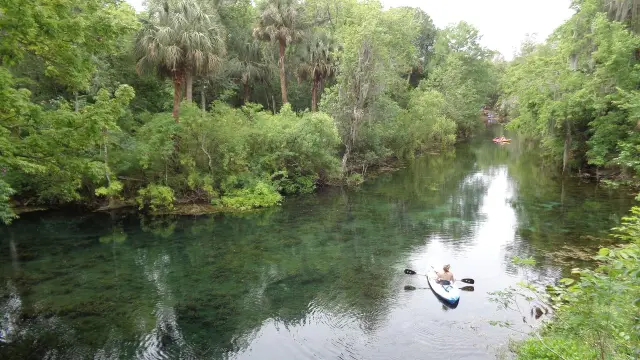
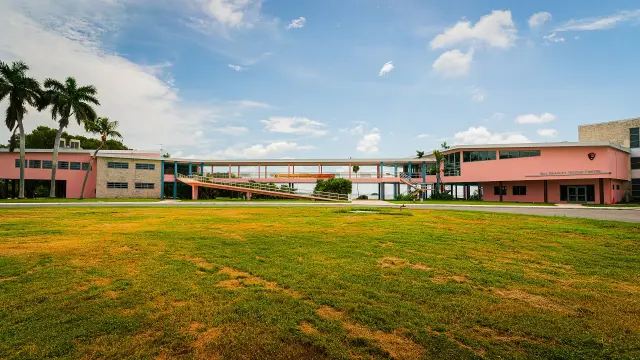
Short answer: The Historic Jungle Trail is a road on Orchid Island that winds through 8 miles of barrier island hammock and has been on the National Register of Historic Places since 2003. Its north end leaves A1A inside Pelican Island National Wildlife Refuge, 3.3 miles south of Sebastian Inlet. Three public stops line it: the refuge Centennial Trail at 11455 Jungle Trail, Captain Forster Hammock Preserve at 8650 and Jones' Pier Conservation Area at 7770. The refuge allows no pets; Forster allows leashed dogs.
Last verified: October 15, 2026, against the sources listed at the end of this page.
Where is the Historic Jungle Trail, and how is it reached from Sebastian?
The Historic Jungle Trail runs along the lagoon side of Orchid Island, and its north end meets A1A inside Pelican Island National Wildlife Refuge, 3.3 miles south of Sebastian Inlet.
The state coastal guide describes the Historic Jungle Trail as beginning in the refuge and winding through 8 miles of barrier island hammock habitat (Florida DEP). The county's Jungle Trail Management Plan measured the road at approximately seven miles from Old Winter Beach Road north to its intersection with State Road A1A, split into a portion south of C.R. 510 (Wabasso Beach Road) and a portion north of it (Indian River County Jungle Trail Management Plan). That plan dates from 1989, so the state guide's 8 miles is the more recent figure.
From Sebastian the quickest route crosses the lagoon on CR 510 at Wabasso. The refuge directions run from I-95 exit 156 east on County Road 512 (Sebastian Boulevard), right on 90th Avenue, which becomes 85th Street, then straight onto County Road 510 to A1A. At A1A, turn left (north), and in 3.8 miles turn left onto Jungle Trail; two Pelican Island NWR parking lots sit along this stretch (U.S. Fish and Wildlife Service). Drivers coming south from Sebastian Inlet State Park reach the same turn 3.3 miles south of the inlet. The public use areas are located 3.7 miles north of Wabasso Beach Road (CR 510) or 3.3 miles south of Sebastian Inlet, the Service states.
The south end of the Jungle Trail is at Old Winter Beach Road, so a full drive from the refuge south crosses C.R. 510 and passes Captain Forster Hammock Preserve and Jones' Pier before reaching it (Indian River County).
Which public stops line the Jungle Trail, and what does each allow?
Three public stops sit on the Jungle Trail: the refuge Centennial Trail at 11455 Jungle Trail, Captain Forster Hammock Preserve at 8650 and Jones' Pier Conservation Area at 7770, each with different rules for dogs and bicycles.
| Stop | Address | Managed by | Hours | Dogs | Bicycles |
|---|---|---|---|---|---|
| Pelican Island NWR, Centennial Trail | 11455 Jungle Trail | U.S. Fish and Wildlife Service | Daily, 7:30 a.m. to sunset | No pets, service animals only | Not allowed on trails |
| Captain Forster Hammock Preserve | 8650 Jungle Trail | Indian River County since 1994 | 7:30 a.m. to sunset, year round | Leashed | Not allowed |
| Jones' Pier Conservation Area | 7770 Jungle Trail | Indian River County, bought 2008 | Not posted on the county page | No animals | Park at racks, no riding on trails |
The refuge sets the strictest animal rule on the Jungle Trail: no pets are allowed, only service animals, and bicycles are not allowed on its trails (USFWS visitor page). Drinking water is not available on the Refuge and should be brought along, the same page warns, and a restroom is available at the trailhead to Birds Impoundment Trail. Its 11455 Jungle Trail, Vero Beach, FL 32963 is the address of the Centennial Trail, the refuge states.
The two Indian River County preserves differ from each other. Captain Forster lists access only from Jungle Trail with no access to A1A, leashed dogs, no alcohol, no camping, no overnight parking and no bicycles (Indian River County). Jones' Pier bars dogs and any other domestic animals because the site contains natural areas connected to the Lagoon, and lets riders lock up at the racks but not ride the trails (Indian River County). Hunting, fishing and taking plants are prohibited at both county sites.
What is at the Pelican Island refuge end of the Jungle Trail?
The refuge end of the Jungle Trail holds the Centennial Trail, a three-quarter-mile walk to a 500-foot accessible observation tower and boardwalk overlooking Pelican Island in the Indian River Lagoon.
Pelican Island, and its surrounding 5400+ acres of protected waters and lands, make up the refuge that sits across the lagoon from Sebastian (USFWS). The Centennial walking trail passes Centennial Pond and culminates in a 500-foot Americans with Disabilities Act accessible observation tower and boardwalk with a view of Pelican Island proper. Two 3-mile loop trails circle managed salt marsh.
The Pelican Island public use areas are open daily, from 7:30 am until sunset, according to the refuge visitor page, while the same page's footer lists refuge hours as sunrise to sunset; the 7:30 a.m. figure matches the county preserves down the road. Fall through spring are considered the best time of year to see the famous residents of Pelican Island, the Service says, naming migratory white pelicans and nesting brown pelicans.
Through the end of 2026 there is a free way to get oriented. Refuge volunteers meet visitors at the Centennial Trailhead, 0.7 miles south of A1A on the west side of Jungle Trail Road, every Friday from 10:30am-1:30pm through December 26th, 2026, weather and volunteer availability permitting, with no reservations required (USFWS). Questions go to the refuge office at (772) 581-5557, 4055 Wildlife Way, Vero Beach (USFWS).
What does Captain Forster Hammock Preserve offer on the Jungle Trail?
Captain Forster Hammock Preserve, at 8650 Jungle Trail, offers about a mile of walking trails through maritime hammock, a restroom, a riverfront dock and 15 parking spaces, open 7:30 a.m. to sunset.
Indian River County describes the preserve as a 110-acre parcel owned by the State of Florida and managed by Indian River County since 1994 (Indian River County). The amenity list on the same page counts parking spaces -15, handicap spaces - 1, one restroom, two water fountains, walking trails of about 1 mile, benches, educational signage and a riverfront dock and fishing area for 2 boats. The page header gives the size as 111 acres, one acre more than its own description, a small mismatch on the county listing as of October 14, 2026.
The preserve is located one mile south of County Road 510 on Historic Jungle Trail and contains six distinct natural communities, the county states. Maritime hammock is the largest, covering approximately 68% of the site, and is one of the last remaining mature maritime hammocks in the county; large live oaks there carry wild butterfly orchids and native bromeliads, and migrating songbirds such as black and white warblers and yellow-rump warblers stop over. The site is part of the Great Florida Birding Trail.
The preserve is named for a Jungle Trail pioneer. Captain Frank Forster, the Preserve's namesake, immigrated to Florida in the late 19th century and settled this part of Orchid Island to farm citrus and vegetables along Historic Jungle Trail, the county states.
What is at Jones' Pier Conservation Area, and is the interpretive center open?
Jones' Pier Conservation Area at 7770 Jungle Trail is a 16.5-acre county site with docks, boardwalks, a pavilion, restrooms and the historic pier, and the county still lists its interpretive center as coming soon.
The 16.5-acre JPCA that was purchased by the County in 2008 is part of the original Jones homestead, acquired from the Jones family with help from the Florida Communities Trust (Indian River County). The county amenity list names two docks, a walking trail, extended boardwalks, a picnic pavilion, restroom facilities, a water fountain, swings and picnic tables, an observation pier and the historic Jones Pier. Under the purchase the county committed to a management plan that restores ecological value while using the site for public access and educational and historical exhibits.
The buildings took years to restore. The Jones House and Cottage were flooded and suffered extensive water damage in Hurricane Matthew in 2016, and the county has since converted the Cottage into a Student/Volunteer Wet Lab and planned an interpretive center inside the Jones House after elevating it (Indian River County FAQ).
As of October 14, 2026, the county's Jones' Pier page lists the Educational Cottage as Coming Soon, a renovated historical bungalow and interpretive center, and posts no visiting hours for it (Indian River County). A visitor from Sebastian who wants to see inside the house should confirm the days with Indian River County at 772-567-8000, the number on the county page before crossing the Wabasso causeway.
Why was the Jungle Trail built, and why is it on the National Register?
The Jungle Trail began as the Orchid-Narrows Road, built by settler Seaborn Jones and his Orchid Island neighbors, and it was listed on the National Register of Historic Places in 2003.
In 1889, Seaborn Jones and his family homesteaded 160 acres on Orchid Island, and Mr. Jones and his neighbors built the Orchid-Narrows Road which is now known as Jungle Trail, Indian River County records (Indian River County). The family grew beans and tomatoes while their citrus groves were developing, and in 1907 Mr. Jones built a dock to aid in commerce along the Indian River.
Bridges then tied the Jungle Trail to the mainland. A 2019 Florida historical marker in Indian River Shores records that in 1923, a road with bridges was opened, crossing the river at the Narrows, running from Quay, later renamed Winter Beach, to join Jungle Trail on Orchid Island (Florida Division of Historical Resources). The marker adds that Orchid Island settlers sent winter vegetables and citrus back across to be loaded onto the Florida East Coast Railway.
Frequently asked questions
How is the Jungle Trail reached from Sebastian?
Take County Road 510 east across the Wabasso causeway to A1A, then drive north 3.8 miles and turn left onto Jungle Trail, per the U.S. Fish and Wildlife Service. From Sebastian Inlet State Park, the turn is 3.3 miles south on A1A.
Is the Historic Jungle Trail on the National Register of Historic Places?
Yes. Indian River County records that the road, built by settler Seaborn Jones and his neighbors as the Orchid-Narrows Road, was listed on the National Register of Historic Places in 2003.
Can dogs go on the Jungle Trail preserves?
Only at Captain Forster Hammock Preserve, where Indian River County allows leashed dogs. Pelican Island National Wildlife Refuge allows no pets except service animals, and Jones' Pier Conservation Area bars all domestic animals because it adjoins the Indian River Lagoon.
What are the hours on the Jungle Trail?
The Pelican Island refuge public use areas and Captain Forster Hammock Preserve both open at 7:30 a.m. and close at sunset. The county's Jones' Pier page posts no hours for its interpretive center, which it still lists as coming soon.
Can bicycles go on the Jungle Trail preserves?
Not on their trails. The refuge bans bicycles on its trails, Captain Forster Hammock Preserve bans them entirely, and Jones' Pier lets riders park at its bike racks but not ride its trails.
Sources
- Visit Us, Pelican Island National Wildlife Refuge (U.S. Fish and Wildlife Service) https://www.fws.gov/refuge/pelican-island/visit-us Used for: Jungle Trail location, directions, hours, Centennial Trail address, pet and bicycle rules, drinking water, phone
- Pelican Island National Wildlife Refuge (U.S. Fish and Wildlife Service) https://www.fws.gov/refuge/pelican-island Used for: refuge size, Centennial Trail and tower, loop trails, best season, Friday volunteer program
- Captain Forster Hammock Preserve Conservation Area (Indian River County) https://indianriver.gov/business_detail_T21_R41.php Used for: address, size, management since 1994, hours, parking, amenities, rules, Forster history
- Jones' Pier Conservation Area (Indian River County) https://www.indianriver.gov/business_detail_T21_R49.php Used for: address, 16.5 acres bought 2008, amenities, interpretive center listing, rules
- Indian River County, Florida Coastal Access Guide (Florida Department of Environmental Protection) https://floridadep.gov/fco/coastal-access-guide/content/indian-river-county Used for: 8 miles of barrier island hammock
- Quay/Winter Beach Bridge Road, Florida Historical Marker (Florida Division of Historical Resources) https://markers.flheritage.com/home/details/1061 Used for: 1923 road and bridges to Jungle Trail, citrus shipments to the railway
- Frequently Asked Questions (Indian River County) https://indianriver.gov/faq/index.php Used for: Jones homestead 1889, Orchid-Narrows Road, National Register 2003, 1907 dock, Hurricane Matthew damage, Cottage wet lab
- Indian River County Jungle Trail Management Plan https://www.indianriver.gov/Document%20Center/Services/Planning-and-Development/Planning%20Division/Permits%20And%20Forms/Plans%20And%20Reports/Jungle-Trail-MP.pdf Used for: approximately seven miles from Old Winter Beach Road to A1A, segments north and south of C.R. 510
How this page was made
Digital Towns uses AI assistance to research and write its guides, and every page is only as good as the sources it cites. Our goal is the most accurate, useful local information possible.
This page was fact-checked twice before publishing.
If you see an error, or anything you can show is false, tell us right away and we will take a third look.
Report an error
Thank you. We'll take a third look and correct the page if it's wrong.