Short answer: Sebastian was settled in the 1870s as a fishing and trading town on the Indian River and incorporated on December 8, 1924. Offshore, a hurricane wrecked the Spanish treasure fleet in July 1715. Pelican Island became the first federal bird reservation on March 14, 1903, and Sebastian Inlet was blasted open for good in 1948. Its history is shown at the Sebastian Area Historical Museum and the McLarty Treasure Museum.
Last verified: October 15, 2026, against the sources listed at the end of this page.
What are the main dates in Sebastian history?
Sebastian history turns on six dates: the 1715 fleet wreck offshore, settlement in the 1870s, Pelican Island in 1903, incorporation in 1924, the inlet opening of 1948 and the General Development Corporation home sites of the late 1950s.
| Date | Event | Deeper guide |
|---|---|---|
| Late July 1715 | Hurricane wrecks the Spanish fleet off the Sebastian coast | Sebastian 1715 Spanish treasure fleet guide |
| 1865 | August Park settles in the Sebastian area | Sebastian early settler families guide |
| 1872 | First known attempt to cut an inlet to the ocean | Sebastian inlet cutting guide |
| 1870s | Settlement grows into a trading and fishing center | Sebastian working waterfront history guide |
| March 14, 1903 | Pelican Island becomes the first federal bird reservation | Sebastian Pelican Island 1903 guide |
| May 23, 1919 | Sebastian Inlet District formed | Sebastian inlet cutting guide |
| June 1923 | Inlet opened at its current location, with small coquina jetties | Sebastian inlet cutting guide |
| December 8, 1924 | Town of Sebastian incorporated | Guide to how Sebastian became a town |
| June 29, 1925 | Indian River County created | Sebastian modern era guide |
| 1948 | Sebastian Inlet blasted open for good | Sebastian WWII and postwar guide |
| Late 1950s | General Development Corporation lays out about 15,000 home sites | Sebastian General Development Corporation guide |
Sources for the dates: 1715 fleet camp marker, Park Family Cemetery marker, Sebastian marker, U.S. Fish and Wildlife Service, Sebastian Inlet District, Congressional Record, Indian River County and City of Sebastian. The table doubles as a map of this section: each row names the Sebastian guide that tells that chapter in full.
When was Sebastian settled and when did it become a town?
Sebastian was settled in the 1870s as a fishing and trading stop on the Indian River and was incorporated as the Town of Sebastian on December 8, 1924, six months before Indian River County existed.
The 1963 state marker at U.S. 1 at Sebastian Inlet says Sebastian became an important trading and fishing center during the era of the river steamers (Florida Division of Historical Resources). One family came earlier: the 2022 Park Family Cemetery marker at 1921 N Central Avenue records that August Park, born in Danzig, settled in the Sebastian area in 1865 as the first permanent resident of European descent (Park Family Cemetery marker).
At a meeting on December 8, 1924, 82 of the 105 registered voters approved the corporate limits, chose the name Town of Sebastian and elected a mayor and five aldermen; the City of Sebastian was re-incorporated in 1925 (Congressional Record, November 13, 2024). Indian River County, whose land had at times been part of St. Lucie, Brevard and Mosquito counties, became a county on June 29, 1925 (Indian River County), so the Town of Sebastian is older than the county it sits in. The guide to how Sebastian became a town covers the founding, and the Sebastian guides on early settler families, notable residents, the Florida East Coast Railway, the citrus and pineapple era, the 2024 centennial and community character fill in the decades after.
What happened to the 1715 Spanish fleet off Sebastian?
Late in July 1715 a hurricane destroyed a homeward bound Spanish fleet of eleven or possibly twelve ships off the Sebastian coast, and about 1,500 survivors camped on the barrier island near Sebastian Inlet.
The 1974 state marker south of Sebastian Inlet State Park describes the ships as carrying gold and silver coinage from the American colonies to Spain (1715 fleet camp marker). Mel Fisher's Treasures, which runs a 1715 fleet museum in Sebastian, dates the departure from Havana to July 24, 1715, with eleven Spanish galleons and the French ship Griffon (Mel Fisher's Treasures). Florida State Parks says the flagship Capitana, under Capitan-General Don Juan Esteban de Ubilla, guarded more than 3.5 million pesos in treasure (Florida State Parks).
The survivors and salvagers' camp, harassed by pirates, is now the site of the McLarty Treasure Museum inside Sebastian Inlet State Park (Florida State Parks). Accounts do not agree on every number: the state marker counts eleven or possibly twelve merchant ships, while Mel Fisher's Treasures counts eleven Spanish galleons plus the Griffon and puts the losses at 700 lives and over 14 million pesos in treasure (Mel Fisher's Treasures). The Sebastian history section splits the story across guides on the 1715 wreck sites, the emeralds and gold, Florida salvage law, Kip Wagner and the Real Eight, Mel Fisher, the Spanish colonial era and how the Treasure Coast got its name.
Why is Pelican Island central to Sebastian history?
Pelican Island, in the Indian River Lagoon, became the first federal bird reservation in 1903, giving birth to the National Wildlife Refuge System.
On March 14, 1903, with encouragement from Frank Chapman and the Florida Audubon Society, President Theodore Roosevelt established Pelican Island as the first federal bird reservation, and Audubon hired Paul Kroegel as its first warden (U.S. Fish and Wildlife Service). The Service also places the Ais people at Pelican Island from 2000 BCE to the mid-1600s.
The island itself has shrunk. It covered 5.5 acres in 1903, began eroding around 1943, and by 2000 was less than half its original size, which led to the shoreline project finished in 2001 (Pelican Island National Wildlife Refuge). The Sebastian guides on Pelican Island in 1903, Paul Kroegel, the Ais people and the 2003 centennial cover the reservation, the warden and the people who lived on the lagoon first.
How did Sebastian Inlet and the fish houses shape the town?
Sebastian grew as a fishing village whose catch depended on an outlet to the Atlantic, which the Sebastian Inlet District, formed May 23, 1919, finally kept open after a 1948 blast.
The Sebastian Inlet District history says that during late World War II the inlet site was turned over to the U.S. Navy as an amphibious training ground for demolition squads, and that in 1948 Roy O. Couch, Harry C. Goode Sr., Jake Brannin and others used surplus Navy demolitions to blast it open (Sebastian Inlet District). The 1963 state marker gives an older sequence, an attempt in 1886, a cut in 1895 and a reopening in 1921 (Sebastian marker), while the district dates the first known attempt to 1872, counts at least six attempts by 1905 and records an opening at the current location in June 1923 (Sebastian Inlet District).
The fish house era is preserved at the Sebastian Fishing Museum in Sebastian Inlet State Park, which honors the Sembler, Smith and Judah families with a replica fish house and dock (Florida State Parks). On the mainland, City of Sebastian staff began discussions in early 2009 about reviving a working waterfront on the lagoon, now a two-acre site run in partnership with Fisherman's Landing Sebastian (City of Sebastian). In the late 1950s General Development Corporation built the streets and drainage for about 15,000 single-family home sites, most of them developed by the late 1990s (City of Sebastian). Guides on cutting the inlet, the working waterfront, World War II and General Development Corporation go deeper.
Which hurricanes shaped Sebastian history?
Hurricanes Frances and Jeanne struck within weeks of each other in September 2004, and the National Weather Service recorded a 101-knot peak wind at Sebastian during Jeanne on September 26, 2004.
The National Weather Service Melbourne report on Jeanne lists Sebastian with a 71-knot two-minute wind and a 101-knot peak wind at 0647 UTC on September 26, 2004 ; the same report says the Sebastian River bridge was damaged by erosion and closed for at least a week (National Weather Service, Jeanne). In its Frances report earlier that month, the Service noted that part of the northbound lane of U.S. 1 north of the Sebastian River was closed because the road risked being undermined, along with erosion of the western bank of the Indian River (National Weather Service, Frances).
The Sebastian history section keeps a storm guide for each major event: Erin in 1995, Frances and Jeanne in 2004, Wilma in 2005, Fay in 2008, Isaac in 2012, Matthew in 2016, Irma in 2017, Dorian in 2019, Ian and Nicole in 2022 and Milton in 2024.
Where can Sebastian history be seen today?
Sebastian history is on display at the Sebastian Area Historical Museum on Main Street, the McLarty Treasure Museum and Sebastian Fishing Museum in Sebastian Inlet State Park, and at state historical markers around town.
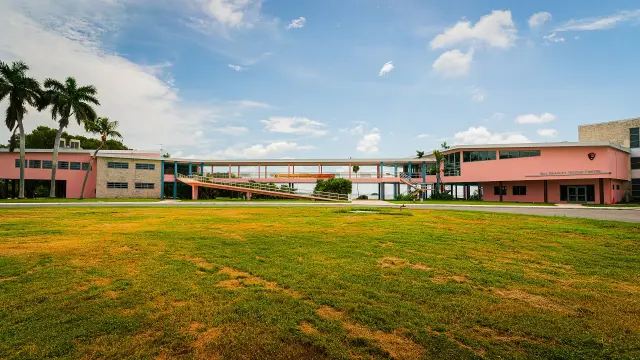
The Sebastian Area Historical Museum occupies the 1927 Historic Sebastian Public School at 1235 Main Street, with exhibits on the Ais, Pelican Island, fishing, agriculture and transportation. It opens Tuesdays, Thursdays and Saturdays from 11 a.m. to 2 p.m. with volunteer staff, admission is free, and appointments on other days go through 772 581-1380 (Sebastian Area Historical Museum).
Inside Sebastian Inlet State Park, the Sebastian Fishing Museum is open 10 a.m. to 4 p.m. seven days a week except major holidays, the McLarty Treasure Museum keeps a Wednesday to Sunday schedule, 10 a.m. to 4 p.m., closed Mondays and Tuesdays, and a car carrying two to eight people pays $8 to enter the park (Sebastian Inlet State Park hours and fees). The same page still carries a July 2023 note saying both museums open seven days a week, which contradicts the McLarty schedule, so a call to the park at 772-589-9659 before a Monday or Tuesday trip settles it. The Sebastian historical markers guide maps the state markers, and the Sebastian Cemetery guide and Sebastian trivia guide round out the section.
Frequently asked questions
When was Sebastian, Florida incorporated?
The Town of Sebastian was incorporated at a meeting of registered voters on December 8, 1924, and was re-incorporated as the City of Sebastian in 1925, according to the Congressional Record. Indian River County followed on June 29, 1925, so the town is older than the county.
Where did the 1715 treasure fleet sink?
A hurricane in late July 1715 wrecked the fleet off the east coast of Florida near present-day Sebastian. The survivors and salvagers camped on the barrier island near Sebastian Inlet, at the site now occupied by the McLarty Treasure Museum in Sebastian Inlet State Park.
Who was the first warden of Pelican Island?
Paul Kroegel was hired by the Audubon Society as the first warden after President Theodore Roosevelt made Pelican Island the first federal bird reservation on March 14, 1903, according to the U.S. Fish and Wildlife Service.
When was Sebastian Inlet opened?
The Sebastian Inlet District dates the first known attempt to 1872, but the inlet that exists today dates from 1948, when Sebastian Inlet District commissioners used surplus U.S. Navy demolitions to blast it open. The district itself was formed on May 23, 1919 to keep a channel open.
Is the Sebastian Area Historical Museum free?
Yes. The museum at 1235 Main Street, in the 1927 Historic Sebastian Public School, charges no admission and asks for donations. It opens Tuesdays, Thursdays and Saturdays from 11 a.m. to 2 p.m., and visits on other days can be arranged by calling 772 581-1380.
Sources
- Sebastian historical marker, 1963 (Florida Division of Historical Resources) https://markers.flheritage.com/home/details/378 Used for: 1870s settlement, river steamer era, early inlet attempts
- Site of Survivors' and Salvagers' Camp, The 1715 Fleet marker, 1974 (Florida Division of Historical Resources) https://markers.flheritage.com/home/details/380 Used for: 1715 hurricane, eleven or twelve ships, about 1,500 survivors
- Park Family Cemetery marker, 2022 (Florida Division of Historical Resources) https://markers.flheritage.com/home/details/1216 Used for: August Park settling in 1865, marker location
- Indian River County history (Indian River County centennial) https://indianriver.gov/community/irc_centennial_celebration/history.php Used for: county created June 29, 1925
- History and Culture of Sebastian Inlet (Florida State Parks) https://www.floridastateparks.org/learn/history-and-culture-sebastian-inlet Used for: 1715 fleet cargo, survivors camp at McLarty, Ais prehistory, Sebastian Fishing Museum families
- Sebastian Inlet State Park Hours and Fees (Florida State Parks) https://www.floridastateparks.org/parks-and-trails/sebastian-inlet-state-park/hours-fees Used for: McLarty and Fishing Museum hours, park entry fee, conflicting July 2023 note
- The 1715 Fleet, Mel Fisher's Treasures Sebastian https://www.melfisher.com/Sebastian.asp Used for: July 24, 1715 departure from Havana with the Griffon
- About Us, Pelican Island National Wildlife Refuge (U.S. Fish and Wildlife Service) https://www.fws.gov/refuge/pelican-island/about-us Used for: 1903 designation, Kroegel, Ais dates, island size
- The History of Sebastian Inlet (Sebastian Inlet District) https://www.sitd.us/the-history-of-sebastian-inlet Used for: 1919 district, WWII Navy use, 1948 opening
- The History of Sebastian Drainage System (City of Sebastian) https://cityofsebastian.org/434/The-History-of-Sebastian-Drainage-System Used for: General Development Corporation late 1950s home sites
- Stan Mayfield Working Waterfront (City of Sebastian) https://www.cityofsebastian.org/252/Stan-Mayfield-Working-Waterfront Used for: 2009 working waterfront effort, two-acre Fisherman's Landing site
- Hurricane Jeanne post-storm report (National Weather Service Melbourne) https://www.weather.gov/mlb/jeanne Used for: Sebastian wind observations September 26, 2004
- Hurricane Frances post-storm report (National Weather Service Melbourne) https://www.weather.gov/mlb/frances Used for: U.S. 1 lane closure north of Sebastian River
- Sebastian Area Historical Museum https://www.sebastianareahistoricalmuseum.com Used for: museum location, exhibits, days, admission, phone
- Recognizing the Centennial of Sebastian, Congressional Record, November 13, 2024 (govinfo.gov) https://www.govinfo.gov/content/pkg/CREC-2024-11-13/html/CREC-2024-11-13-pt1-PgE1135.htm Used for: December 8, 1924 incorporation meeting, 1925 re-incorporation
How this page was made
Digital Towns uses AI assistance to research and write its guides, and every page is only as good as the sources it cites. Our goal is the most accurate, useful local information possible.
This page was fact-checked twice before publishing.
If you see an error, or anything you can show is false, tell us right away and we will take a third look.
Report an error
Thank you. We'll take a third look and correct the page if it's wrong.