Short answer: Sebastian's wildlife is best seen at Pelican Island National Wildlife Refuge, the nation's first refuge, from the Centennial Trail tower at 11455 Jungle Trail; at Sebastian Inlet State Park ($8 per vehicle), where manatees stay from March to October and nearby county beaches host nesting sea turtles March 1 to October 31; and at St. Sebastian River Preserve, home to red-cockaded woodpeckers and winter manatees. Nuisance alligators go to the FWC hotline at 866-392-4286.
Last verified: October 15, 2026, against the sources listed at the end of this page.
Where can wildlife be seen around Sebastian?
The three main public places to watch wildlife near Sebastian are Pelican Island National Wildlife Refuge on the lagoon, Sebastian Inlet State Park on the barrier island, and St. Sebastian River Preserve State Park west of town.
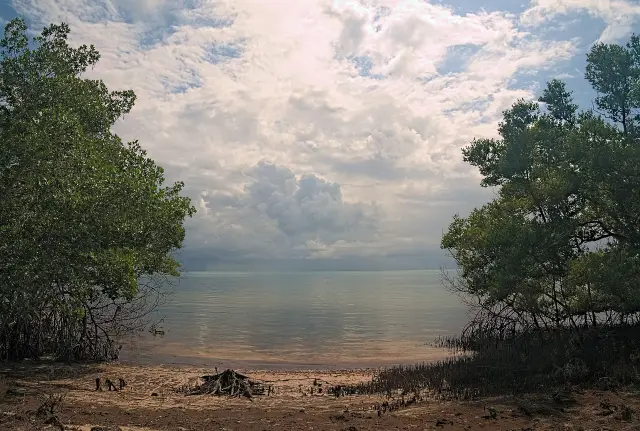
Pelican Island is the one with the history. President Theodore Roosevelt designated the island in 1903 as the nation's first national wildlife refuge for the protection of nesting birds (U.S. Fish and Wildlife Service). The island itself has shrunk from 5.5 acres to roughly 3 and is watched from shore: the refuge manages about seven miles of trails off Jungle Trail, including the three-quarter-mile Centennial Trail with an 18-foot observation tower and two spotting scopes aimed at the rookery. The trailhead is the viewing area lot at 11455 Jungle Trail; bicycles are not allowed on the trails, and no pets are allowed, only service animals (Pelican Island trails).
| Place | Where | What to look for | Cost and rules |
|---|---|---|---|
| Pelican Island National Wildlife Refuge | 11455 Jungle Trail | At least 16 nesting bird species on Pelican Island | No pets or bicycles on trails |
| Sebastian Inlet State Park | 9700 South Highway A1A | Over 180 bird species a year, manatees March to October, nesting sea turtles | $8 per vehicle; open 24 hours |
| St. Sebastian River Preserve State Park | West of I-95 off County Road 512 and Babcock Road | Red-cockaded woodpeckers, Florida scrub-jays, manatees November to March in the C54 canal | 60 miles of trails; phone 321-953-5005 |
| North Sebastian Conservation Area | 1295 Main St, Sebastian | Scrub-jay habitat, wood storks, bald eagles, sandhill cranes | 7:30 a.m. to sunset; leashed dogs |
Sebastian Inlet State Park charges $8 per vehicle at 9700 South Highway A1A and lists itself as open 24 hours a day (Florida State Parks). Two notices on that page matter on October 14, 2026: since Nov. 12, 2025 the South Ranger Station keeps standard park hours of 8 a.m. to sunset while the North Ranger Station stays open around the clock, and beach access from the south side is unavailable during construction. A visitor driving over from Sebastian for an early or late look at the inlet uses the north entrance.
Closer to home, Indian River County's North Sebastian Conservation Area on Main Street lists roseate spoonbills, wood storks, bald eagles, osprey and sandhill cranes among the wildlife on its 407 acres (Indian River County). The wading birds of Pelican Island guide, the shorebirds of Sebastian Inlet guide, and the brown pelicans, least terns and black skimmers guides follow the birds species by species.
When and where are manatees seen near Sebastian?
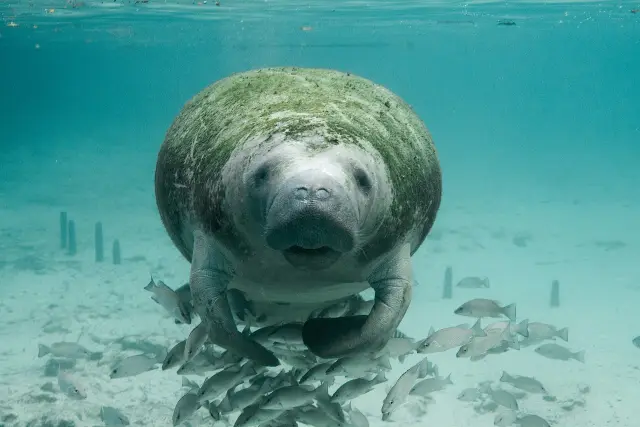
Manatees use the waters around Sebastian Inlet State Park from March to October, then gather from November through March in the C54 canal at St. Sebastian River Preserve State Park.
Florida State Parks gives the warm-season window for the inlet: manatees inhabit the park's waters from March to October, and the Bayside Marina docks are a viewing spot for manatees, dolphins and birds year round (Sebastian Inlet State Park). Divers in the park must keep at least 50 feet from manatees. In the cold months the action moves inland. West Indian manatees gather from November through March in the C54 canal, at the eastern end of Buffer Preserve Drive in Brevard County, where the preserve keeps a manatee observation deck (St. Sebastian River Preserve State Park).
Boat speed rules near Sebastian changed in 2026. In a release dated February 4, 2026, FWC said commissioners approved for advertising three proposed amendments to Indian River County manatee zones, one of them the Sebastian Inlet Idle Speed Zone, after reviewing the rule from Sebastian Inlet to the St. Lucie County line (FWC). The release said FWC staff would open a formal comment period and hold one or more public meetings before the proposals returned to the commission for a final hearing (FWC). The Florida Administrative Code record for Rule 68C-22.007, Indian River County Zones, shows the amended rule effective June 30, 2026 (Florida Administrative Code). The posted signs on the water govern. The Sebastian manatee protection zones guide covers the zones in detail, and the manatees guide covers the animals themselves.
When do sea turtles nest on the beaches near Sebastian?
Sea turtles nest on the Indian River County beaches east of Sebastian from March 1 to October 31, the season the county posts for its beach parks.
Indian River County says all sea turtles are protected by federal and state laws, that five of the world's eight species are found in Florida, and that beachgoers should fill in holes and remove trash because both can stop turtles from nesting and hatching (Indian River County). Sebastian Inlet State Park states that the park and surrounding beaches have the largest nesting assemblage of sea turtles in the United States (Florida State Parks).
The park runs ranger-led walks to watch nesting loggerheads during June and July, and reservations are required through Friends of Sebastian Inlet State Park. Juvenile green sea turtles also feed in the Indian River Lagoon seagrass and on the reefs off the McLarty Treasure Museum and along the rocks on the south side of Sebastian Inlet. The sea turtles guide gives the nest counts by species, and the sea turtle nesting rules guide covers lighting ordinances and beach rules from Sebastian Inlet to Vero Beach.
Which protected animals live in Sebastian neighborhoods and preserves?
Gopher tortoises, Florida scrub-jays, sandhill cranes and, west of town, red-cockaded woodpeckers are the protected land animals most often found around Sebastian.
The gopher tortoise is listed as Threatened in Florida, and both the tortoise and its burrow are protected under state law; tortoises must be relocated before land clearing or development, and property owners need FWC permits before capturing and relocating them (FWC). That rule covers clearing on any vacant Sebastian Highlands lot where tortoises live. Indian River County's Wabasso Scrub Conservation Area has served as a recipient site for relocated tortoises, and its management in part mitigates the take of Florida scrub-jays within platted lots in the Sebastian Highlands (Indian River County).
For the birds, St. Sebastian River Preserve State Park names red-cockaded woodpeckers, Florida scrub-jays and Bachman's sparrows as its most popular species (Florida State Parks). Scrub-jay watchers park on the southwest side, 1 mile west of Interstate 95 off County Road 512; woodpecker watchers park at Stumper Flats or Horseman's Headquarters on the northeast side. Separate guides cover gopher tortoises, the Florida scrub-jay, red-cockaded woodpeckers and sandhill cranes, and the snakes, coyotes and cane toads guides cover the animals Sebastian residents most often ask about in their own yards.
Who should Sebastian residents call about alligators and other wildlife?
In Sebastian, a problem alligator is reported to the FWC Nuisance Alligator Hotline at 866-392-4286, and fish or wildlife violations go to the FWC Wildlife Alert line at 888-404-3922.
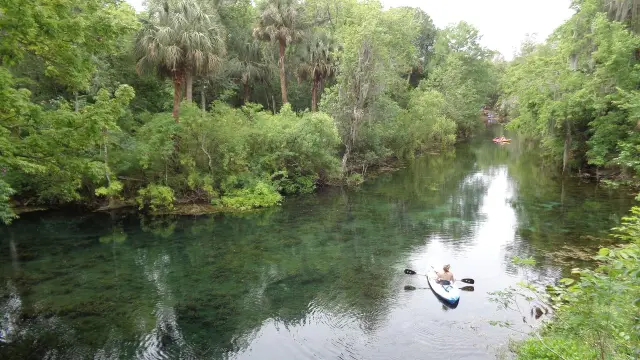
FWC generally treats an alligator as a nuisance if it is at least 4 feet long and the caller believes it poses a threat to people, pets or property, and it dispatches a contracted nuisance alligator trapper to resolve the situation (FWC Statewide Nuisance Alligator Program). Smaller alligators in a pool, garage or porch also go to the same hotline. Florida State Parks notes that alligators can be seen in the St. Sebastian River and the C54 canal (St. Sebastian River Preserve). The Sebastian alligators guide explains how removal works.
The Wildlife Alert hotline, 888-404-FWCC (888-404-3922), or #FWC from a cell phone, takes reports of fish, wildlife and boating violations on the Indian River Lagoon and elsewhere (FWC Wildlife Alert). Mosquitoes are a separate agency: the Indian River Mosquito Control District, legislatively established in 1925, provides mosquito control in the eastern two-thirds of Indian River County (Indian River Mosquito Control District). The mosquitoes and mosquito control guide covers spraying and the lagoon impoundments, and the Portuguese man o war guide covers the stinging drift that reaches Sebastian area beaches.
What fish are caught at Sebastian Inlet, and which rules matter most?
The Sebastian Inlet District's weekly report is the running record of what is caught at Sebastian Inlet, and the two rules anglers ask about most are snook's closed seasons and redfish's catch-and-release status.
The Sebastian Inlet District publishes a weekly fishing report, and its archive on October 14, 2026 listed the week of October 12, 2026 as the newest entry (Sebastian Inlet District). Those reports are the main record behind the species guides in this section, which run from barracuda, black drum and bluefish through tarpon and whiting, plus the redfish, snook, pompano, flounder, sheepshead and mullet guides and two bait guides on sand fleas and pinfish.
Sebastian sits in FWC's Indian River Lagoon region for both headline species. Red drum in that region, which runs from New Smyrna Beach to the Martin and Palm Beach county line, are catch-and-release only (FWC red drum rules). Snook in the same region are closed from December 15 to January 31 and from June 1 to August 31, with a slot of 28 to 32 inches total length and a bag of one fish per person per day (FWC snook rules). At Pelican Island, the refuge's Bird's trail allows bank fishing on the lagoon side, where the Service lists blue crab, red drum, snook and tarpon among the most popular catches (USFWS). The blue crabs, bottlenose dolphins and lagoon marine life guides cover the rest of the lagoon's animals.
Frequently asked questions
Can people visit Pelican Island near Sebastian?
Visitors watch it from shore: the refuge's Centennial Trail at 11455 Jungle Trail leads to an 18-foot observation tower with two spotting scopes aimed at the Pelican Island rookery. The refuge manages about seven miles of trails; no pets are allowed, only service animals.
Where can manatees be seen near Sebastian in winter?
From November through March, West Indian manatees gather in the C54 canal at the eastern end of Buffer Preserve Drive, at St. Sebastian River Preserve State Park, which has a manatee observation deck. From March to October they use the waters around Sebastian Inlet State Park.
How much does Sebastian Inlet State Park cost?
Florida State Parks lists the fee as $8 per vehicle at 9700 South Highway A1A. The park is listed as open 24 hours, but since November 12, 2025 the South Ranger Station keeps 8 a.m. to sunset hours, so after-hours visitors from Sebastian use the north entrance.
Who removes a nuisance alligator in Sebastian?
FWC's Statewide Nuisance Alligator Program handles it. Callers reach the hotline at 866-FWC-GATOR (866-392-4286); an alligator is generally a nuisance if it is at least 4 feet long and threatens people, pets or property, and FWC sends a contracted trapper.
Can redfish be kept at Sebastian Inlet?
No. Sebastian lies in FWC's Indian River Lagoon region, where red drum are catch-and-release only. The region runs from New Smyrna Beach south to the Martin and Palm Beach county line, so the rule covers the inlet and the lagoon off Sebastian.
Sources
- About Us, Pelican Island National Wildlife Refuge (U.S. Fish and Wildlife Service) https://www.fws.gov/refuge/pelican-island/about-us Used for: 1903 designation, first refuge, island size change
- Visit Us, Trails, Pelican Island National Wildlife Refuge (USFWS) https://www.fws.gov/refuge/pelican-island/visit-us/trails Used for: trail mileage, Centennial Trail, observation tower, address, no pets, bank fishing
- Species, Pelican Island National Wildlife Refuge (USFWS) https://www.fws.gov/refuge/pelican-island/species Used for: 16 nesting bird species
- Sebastian Inlet State Park experiences and amenities (Florida State Parks) https://www.floridastateparks.org/parks-and-trails/sebastian-inlet-state-park/experiences-amenities Used for: manatee months, bird species count, turtle walks, right whales, dolphins, Bayside Marina
- Sebastian Inlet State Park (Florida State Parks) https://www.floridastateparks.org/parks-and-trails/sebastian-inlet-state-park Used for: fee, hours, address, phone, South Ranger Station hours change, south side beach access notice
- St. Sebastian River Preserve State Park experiences and amenities (Florida State Parks) https://www.floridastateparks.org/parks-and-trails/st-sebastian-river-preserve-state-park/experiences-amenities Used for: C54 canal manatees, red-cockaded woodpecker and scrub-jay parking areas, trails, phone, alligators
- Statewide Nuisance Alligator Program (FWC) https://myfwc.com/wildlifehabitats/wildlife/alligator/snap/ Used for: hotline number and 4-foot nuisance guideline
- Wildlife Alert, report a violation (FWC) https://myfwc.com/contact/wildlife-alert/ Used for: Wildlife Alert hotline
- Gopher tortoise (FWC) https://myfwc.com/wildlifehabitats/wildlife/gopher-tortoise/ Used for: Threatened status, burrow protection, permits
- Red drum regulations (FWC) https://myfwc.com/fishing/saltwater/recreational/red-drum/ Used for: Indian River Lagoon region catch-and-release
- Snook regulations (FWC) https://myfwc.com/fishing/saltwater/recreational/snook/ Used for: Indian River Lagoon region seasons, slot and bag
- FWC approves proposed amendments to Indian River County manatee zones for advertising (FWC, Feb. 4, 2026) https://myfwc.com/news/all-news/indian-river-manatee-zone-0226/ Used for: 2026 manatee zone proposal
- Indian River County beach parks and sea turtles (Indian River County) https://www.indianriver.gov/business_detail_T21_R12.php Used for: nesting season March 1 to October 31
- Our World Famous Fishing Report (Sebastian Inlet District) https://www.sitd.us/our-world-famous-fishing-report Used for: weekly fishing report archive
- About Us, Indian River Mosquito Control District https://irmosquitocontrol.specialdistrict.org/about-us Used for: district founding and service area
- North Sebastian Conservation Area (Indian River County) https://indianriver.gov/business_detail_T21_R52.php Used for: scrub-jay HCP and wildlife list
- Wabasso Scrub Conservation Area (Indian River County) https://indianriver.gov/business_detail_T21_R63.php Used for: gopher tortoise recipient site, scrub-jay mitigation
- Rule 68C-22.007, Indian River County Zones, Florida Administrative Code (Florida Department of State) https://www.flrules.org/gateway/ruleNo.asp?id=68C-22.007 Used for: amended manatee zone rule effective June 30, 2026
How this page was made
Digital Towns uses AI assistance to research and write its guides, and every page is only as good as the sources it cites. Our goal is the most accurate, useful local information possible.
This page was fact-checked twice before publishing.
If you see an error, or anything you can show is false, tell us right away and we will take a third look.
Report an error
Thank you. We'll take a third look and correct the page if it's wrong.