Short answer: Fishing is allowed year-round in the open Indian River Lagoon waters of Pelican Island National Wildlife Refuge north of Sebastian, from the lagoon banks of Bird's and Pete's Impoundment Trails off Jungle Trail, and from spoil islands in daylight only. The posted buffer around Pelican Island is closed year-round, and fishing inside impoundments, lakes, ponds or from structures is prohibited. FWC Indian River Lagoon limits apply, including catch-and-release only for redfish.
Last verified: October 11, 2026, against the sources listed at the end of this page.
Where can people fish at Pelican Island National Wildlife Refuge?
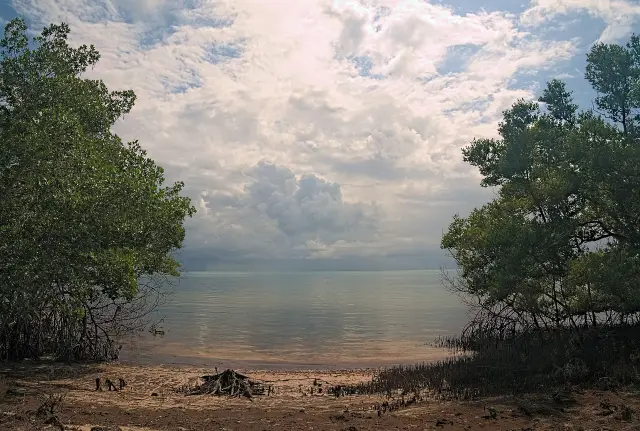
At Pelican Island National Wildlife Refuge north of Sebastian, fishing is allowed in the open lagoon waters, from shore along the lagoon side of two impoundment trails off Jungle Trail, and from spoil islands in daylight.
The refuge is mostly water. The U.S. Fish and Wildlife Service describes Pelican Island and its surrounding 5,400+ acres of protected waters and lands as the refuge, a footprint that covers much of the Indian River Lagoon between Sebastian and Wabasso (USFWS). Fishing is permitted in the open water areas of the refuge, and the Service names redfish, snook, sea trout, flounder, mangrove snapper and jack crevalle as the main sportfish (USFWS fishing page).
For anglers without a boat, the Jungle Trail side is the access. The Service permits bank and wade fishing on the lagoon side of Bird's and Pete's Impoundment Trails (USFWS). Indian River County's listing for the refuge words it slightly differently, allowing bank fishing on the Indian River Lagoon side of Bird's impoundment and Joe Michael Memorial Trails (Indian River County). Both agree on Bird's Impoundment Trail, which the trails page calls the loop that allows bank fishing opportunities on the lagoon side (USFWS trails).
Spoil islands are the third option. The federal refuge regulations for Pelican Island, 50 CFR 32.28(l), allow sport fishing year-round on designated areas and allow bank fishing from spoil islands during daylight hours only (eCFR). The spoil islands within refuge boundaries, which the Service mentions among the lagoon's many spoil and mangrove islands, are reached only by boat or kayak from Sebastian or Wabasso.
Which areas of the refuge are closed to fishing?
Two kinds of places are off limits to anglers at Pelican Island refuge: the posted buffer around Pelican Island itself, closed year-round, and the interiors of the salt marsh impoundments, lakes and ponds along Jungle Trail.
The island is the reason the refuge exists. President Theodore Roosevelt set it aside in 1903 for nesting birds, and the U.S. Fish and Wildlife Service keeps a posted buffer around Pelican Island proper that is closed year-round, while the rest of the refuge waters stay open (USFWS). Indian River County lists going on Pelican Island proper or entering within the closed area signs around the island among the refuge's prohibited acts (Indian River County). A boat drifting for trout off the island has to stay outside those signs.
The impoundments are closed for a different reason. They are managed mosquito control marshes whose water levels the refuge raises and lowers by season for wading birds, and the Service states that fishing is prohibited in the interior of impoundments, lakes and ponds (USFWS). The county list adds fishing from structures, which takes in the boardwalks, the observation tower on the Centennial Trail and the salt-marsh deck on the Joe Michael Memorial Trail (Indian River County).
| Area | Fishing status | Source |
|---|---|---|
| Open waters of the Indian River Lagoon in the refuge | Allowed year-round | USFWS; 50 CFR 32.28 |
| Lagoon side of Bird's Impoundment Trail | Bank and wade fishing allowed | USFWS; Indian River County |
| Lagoon side of Pete's Impoundment Trail | Bank and wade fishing allowed | USFWS |
| Lagoon side of Joe Michael Memorial Trail | Bank fishing listed | Indian River County |
| Spoil islands | Bank fishing in daylight only | 50 CFR 32.28 |
| Posted buffer around Pelican Island | Closed year-round | USFWS |
| Impoundment interiors, lakes and ponds | Prohibited | USFWS; Indian River County |
| Boardwalks, tower and other structures | Prohibited | Indian River County |
How do anglers reach the refuge, and when is it open?
Shore anglers reach Pelican Island refuge from Jungle Trail off State Road A1A, 3.7 miles north of Wabasso Beach Road, while boat and kayak anglers launch in Sebastian, at the Wabasso Causeway or at Sebastian Inlet State Park.
The Service places the public use areas on the Historic Jungle Trail in Indian River County off A1A, 3.7 miles north of the Wabasso Beach Road (CR 510) or 3.3 miles south of Sebastian Inlet (USFWS Visit Us). Those areas open daily from 7:30 a.m. until sunset, the same hours the county lists, year-round (Indian River County). The Bird's Impoundment trailhead sits at the informational kiosk near the public restrooms on north Jungle Trail, and the loop runs 2.72 miles around salt marsh and mangrove along the lagoon (USFWS trails). Drinking water is not available on the refuge, and the nearest supplies are back on the mainland in Sebastian or Wabasso (USFWS).
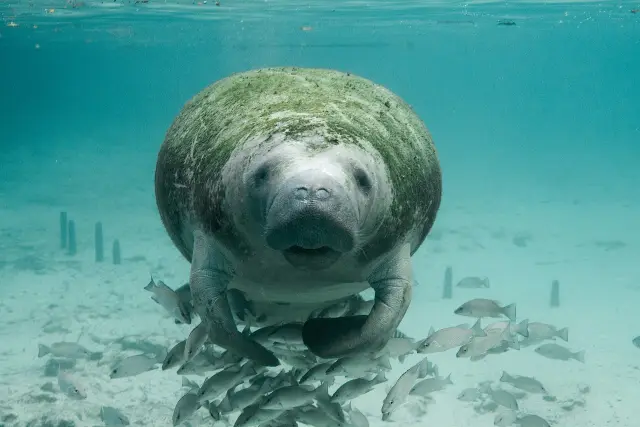
On the water, nothing launches from refuge land. The Service lists boat launch facilities in Sebastian, at the Wabasso Causeway and at Sebastian Inlet State Park for both motorized and paddle craft (USFWS activities). The Wabasso Causeway carries CR 510 across the lagoon south of the refuge, and Sebastian Inlet State Park sits at its north end. Manatee slow speed zones are posted along Spratt Creek and in other areas near shorelines and islands of the refuge (USFWS), which sets the pace for any skiff working the mangrove edges.
What do anglers catch in Pelican Island refuge waters, and what can be kept?
Pelican Island refuge anglers mostly target redfish, snook, seatrout and flounder, and in these Indian River Lagoon waters redfish are catch-and-release only while snook, seatrout and flounder each have closed seasons set by FWC.
The trails page lists blue crab, red drum, snook and tarpon among the most popular catches along Bird's Impoundment Trail (USFWS trails), and the fishing page adds sea trout, flounder, mangrove snapper and jack crevalle (USFWS). The refuge sets where fishing happens; the Florida Fish and Wildlife Conservation Commission sets what can be kept. Sebastian and the refuge fall inside FWC's Indian River Lagoon Region, which runs from New Smyrna Beach to the Martin and Palm Beach county line.
Redfish in the Indian River Lagoon Region, including all of the water around Pelican Island, are catch-and-release only (FWC red drum). Snook are closed December 15 to January 31 and June 1 to August 31, with a slot of 28 to 32 inches (FWC snook). Spotted seatrout are closed November 1 to December 31, with a 15 to 19 inch slot and a limit of two fish per person per day (FWC seatrout). Flounder must measure 14 inches, the limit is five per person, and the season closes October 15 through November 30 each year (FWC flounder). Blue crabs along the impoundment banks carry a limit of 10 gallons whole per harvester per day, with up to five recreational traps per person (FWC blue crab).
| Species | Size | Bag | Closed |
|---|---|---|---|
| Redfish (red drum) | Catch-and-release only | None | Harvest closed |
| Snook | 28 to 32 inches | One per day | Dec. 15 to Jan. 31; June 1 to Aug. 31 |
| Spotted seatrout | 15 to 19 inches | Two per day | Nov. 1 to Dec. 31 |
| Flounder | 14 inches minimum | Five per day | Oct. 15 to Nov. 30 |
| Blue crab | No size limit | 10 gallons whole per day | Regional trap closures |
What other refuge rules apply to anglers near Sebastian?
Beyond where to fish, Pelican Island refuge rules bar pets, drones, night lights for taking wildlife and shellfish harvest inside commercial leases, and they limit clamming to waters north of Spratt Point.
The U.S. Fish and Wildlife Service states that pets are not permitted on the refuge and that drones are not allowed (USFWS activities). Indian River County's list of prohibited acts includes the use of an artificial light to view or take wildlife, shellfish harvesting within designated commercial shellfish leases, and fires, camping and spotlighting (Indian River County). Taken together with the daylight-only rule for spoil islands in 50 CFR 32.28, the refuge is a daytime fishery, unlike the 24-hour jetties at Sebastian Inlet.
Clams are the lagoon's other harvest. The Service says recreational clamming is open north of Spratt Point, except in the posted aquaculture use zone (USFWS), and the county allows recreational shellfish harvesting within the open waters of the Indian River Lagoon. Indian River County also notes it owns or shares ownership of about 200 acres within the refuge, one reason the county publishes its own rules page for the land along Jungle Trail.
Gear is the angler's own; the refuge has no bait shop or rentals. Rods, reels and terminal tackle are listed in the fishing tackle collection on Digital Towns Market. Digital Towns Market is our marketplace. A saltwater license from FWC still applies in refuge waters, as it does anywhere in the Indian River Lagoon off Sebastian.
Frequently asked questions
Is fishing allowed at Pelican Island National Wildlife Refuge?
Yes. The U.S. Fish and Wildlife Service permits fishing in the refuge's open lagoon waters year-round and bank and wade fishing on the lagoon side of Bird's and Pete's Impoundment Trails off Jungle Trail, north of Sebastian. The buffer around Pelican Island itself stays closed.
Can anglers fish from the Pelican Island boardwalk or observation tower?
No. Indian River County's rules for the refuge prohibit fishing from structures and in the interiors of the salt marsh impoundments, lakes and ponds, so the Centennial Trail boardwalk and tower near Sebastian are for viewing the rookery, not fishing.
Can redfish caught in Pelican Island refuge waters be kept?
No. The refuge lies in FWC's Indian River Lagoon Region, where redfish are catch-and-release only. Snook, spotted seatrout and flounder may be kept in season within FWC size and bag limits, as of October 2026.
What hours can anglers fish from shore at the refuge?
The public use areas on Jungle Trail open from 7:30 a.m. until sunset every day, according to the U.S. Fish and Wildlife Service and Indian River County. Federal rules also limit bank fishing from the refuge's spoil islands to daylight hours.
Where do boaters launch to fish Pelican Island refuge waters?
The refuge has no launch of its own. The U.S. Fish and Wildlife Service points to ramps in Sebastian, at the Wabasso Causeway and at Sebastian Inlet State Park, and posts manatee slow speed zones along Spratt Creek.
Digital Towns Market
Fishing tackle on Digital Towns Market
 Replacement Heads- 5/0 Screwy Head Jigs$2.79
 Skirted Screwy Head Jigs$15.99
 Beletti$9.99
 5" Tail Clapper$7.99
 Screwy Head Jigs$14.99
 Chovie Jig 3/4oz$8.99
 Replacement Hooks- 5/0 Screwy Head Jigs$3.99
 ABU Ambassadeur 10 pk$89.95
Digital Towns Market is our marketplace.
Sources
- Fishing at Pelican Island National Wildlife Refuge (U.S. Fish and Wildlife Service) https://www.fws.gov/refuge/pelican-island/visit-us/activities/fishing Used for: open-water fishing, sportfish list, bank and wade fishing on Bird's and Pete's Impoundment Trails, year-round waters, closed buffer, Spratt Creek slow speed zones, clamming north of Spratt Point, launch sites, impoundment interiors closed
- Activities, Pelican Island National Wildlife Refuge (USFWS) https://www.fws.gov/refuge/pelican-island/visit-us/activities Used for: no pets, no drones, launch sites, tram tours November to March
- Trails, Pelican Island National Wildlife Refuge (USFWS) https://www.fws.gov/refuge/pelican-island/visit-us/trails Used for: Bird's Impoundment Trail bank fishing, popular catches, trail lengths, trailhead at restrooms
- Visit Us, Pelican Island National Wildlife Refuge (USFWS) https://www.fws.gov/refuge/pelican-island/visit-us Used for: Jungle Trail location and distances, hours 7:30 a.m. to sunset, no drinking water, restroom at Bird's Impoundment trailhead
- Pelican Island National Wildlife Refuge home page (USFWS) https://www.fws.gov/refuge/pelican-island Used for: 5,400-plus acres of protected waters and lands near Sebastian
- 50 CFR 32.28, Florida refuge-specific fishing regulations (eCFR) https://www.ecfr.gov/current/title-50/chapter-I/subchapter-C/part-32/section-32.28 Used for: year-round sport fishing, daylight-only bank fishing from spoil islands
- Pelican Island National Wildlife Refuge, Indian River County conservation lands listing https://www.indianriver.gov/business_detail_T21_R56.php Used for: hours, open-water fishing and shellfish harvest, bank fishing on Bird's and Joe Michael Memorial trails, prohibited acts including fishing from structures and artificial light, county ownership of about 200 acres
- Red Drum (Redfish) regulations (FWC) https://myfwc.com/fishing/saltwater/recreational/red-drum/ Used for: Indian River Lagoon Region catch-and-release only
- Snook regulations (FWC) https://myfwc.com/fishing/saltwater/recreational/snook/ Used for: Indian River Lagoon Region closed seasons and 28 to 32 inch slot
- Spotted Seatrout regulations (FWC) https://myfwc.com/fishing/saltwater/recreational/spotted-seatrout/ Used for: Indian River Lagoon Region closed season November 1 to December 31, 15 to 19 inch slot, two fish
- Flounder regulations (FWC) https://myfwc.com/fishing/saltwater/recreational/flounder/ Used for: 14 inch minimum, five per person, closed October 15 through November 30
- Blue Crab regulations (FWC) https://myfwc.com/fishing/saltwater/recreational/blue-crab/ Used for: 10 gallons whole per harvester per day, up to five traps per person
How this page was made
Digital Towns uses AI assistance to research and write its guides, and every page is only as good as the sources it cites. Our goal is the most accurate, useful local information possible.
This page was fact-checked twice before publishing.
If you see an error, or anything you can show is false, tell us right away and we will take a third look.
Report an error
Thank you. We'll take a third look and correct the page if it's wrong.