Short answer: Sebastian Inlet sees small bonnethead and Atlantic sharpnose sharks in the surf, and bull sharks, blacktips, spinners and the occasional great hammerhead that follow bait and the fall mullet run. The Indian River Lagoon behind the inlet is a bull shark nursery. FWC requires a no-cost Shore-based Shark Fishing permit to fish for sharks from shore or the jetties, with a bag limit of one shark per person per day.
Last verified: October 11, 2026, against the sources listed at the end of this page.
Which sharks are found around Sebastian Inlet?
Sebastian Inlet holds small surf sharks such as bonnetheads and Atlantic sharpnose, plus large bull sharks, blacktips, spinners and great hammerheads that follow bait.
Two kinds of shark turn up at Sebastian Inlet. Small coastal species, chiefly the bonnethead and the Atlantic sharpnose, are caught in the surf and off the jetty beachsides on the same shrimp and sandfleas used for pompano. Large predators, bull sharks above all, plus blacktips, spinners and great hammerheads, arrive with bait schools and the fall mullet run. The Sebastian Inlet District, created as an independent special taxing district in 1919, records both groups in its weekly fishing report.
The district's account of the bull shark is the most detailed local record. In the first part of its series on the secret lives of the inlet fish, based on interviews with biologist Dr. Grant Gilmore, the Sebastian Inlet District calls the bull shark the most infamous of the migrators that pass between the Atlantic and the 156-mile-long Indian River Lagoon. The FWC bull shark profile explains why that route works: bull sharks have a wide salinity tolerance and are the only shark species that can tolerate long periods of freshwater exposure.
Why does the Indian River Lagoon behind Sebastian matter to bull sharks?
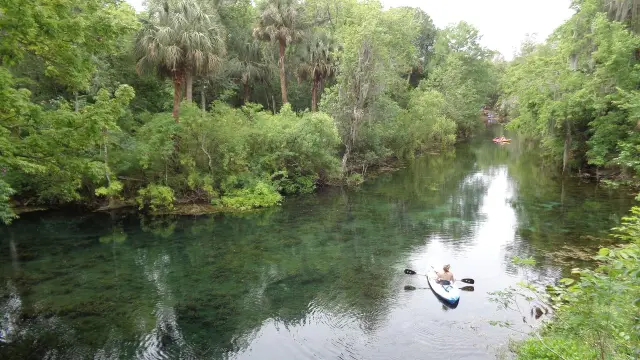
The Indian River Lagoon behind Sebastian Inlet is a bull shark nursery, where pregnant females give birth and the young grow up.
Gilmore describes the lagoon as a bull shark nursery. In the district series he says that when a pregnant bull shark enters the Indian River Lagoon from the ocean she stops eating, and that she releases all of her young in the lagoon, where the mothers do not eat their offspring as they might in the ocean. The district adds that female bulls can weigh 500 pounds and bear between one and 13 pups, and that the mother returns to the ocean after giving birth.
The young stay a long time. According to the same Sebastian Inlet District article, juvenile bull sharks live on their own in the lagoon for five or six years, growing about six feet, before leaving through the inlet for the Atlantic reefs where the cycle continues. Gilmore also points to the Sebastian River among the differences a shark entering the inlet would sense. FWC lists the adult bull shark at a maximum of about 10 to 11 feet, maturing at about 14 to 18 years of age.
Adults are seen at the inlet in the warm months. For the week of August 4, 2025, the district reported a few huge bull sharks around Sebastian Inlet while goliath groupers were herding snook and redfish, and it described a slow bite as a result.
What small sharks do surf anglers catch near Sebastian?
Surf anglers near Sebastian most often catch bonnethead and Atlantic sharpnose sharks, both small species that take shrimp and sandfleas.
| Shark | FWC size group | Minimum size | FWC maximum size |
|---|---|---|---|
| Bonnethead | Group 1 | None | About 4 feet |
| Atlantic sharpnose | Group 1 | None | Rarely over 3.5 feet |
| Blacktip | Group 1 | None | About 6.5 feet |
| Spinner | Group 2 | 54 inches fork length | 7 to 8 feet |
| Bull | Group 2 | 54 inches fork length | About 10 to 11 feet |
| Great hammerhead | Prohibited | Release in the water | About 18 to 19 feet |
The bonnethead is the shark most often named in surf reports. The FWC bonnethead profile calls it the smallest member of the hammerhead family, with a maximum length of about 4 feet, abundant in nearshore Florida waters over shallow sand and mud flats and moving into deeper coastal waters during the colder months. In the week of June 2, 2025, the district logged bonnet head sharks in the south side surf at Sebastian Inlet together with pompano and whiting, on sandfleas and shrimp.
The Atlantic sharpnose is the other regular. FWC's Atlantic sharpnose profile says it rarely grows more than 3.5 feet and can be found near the surf zone as well as in bays and estuaries. The district's report for the week of February 17, 2026, listed a few pesky Atlantic sharp-nosed sharks among the catch on the beachside of the north jetty, taken on live sandfleas and shrimp while the water was still too cold for snook. FWC notes that pregnant sharpnose females migrate offshore after mating in late spring and early summer and return 10 to 11 months later to give birth to 4 to 7 pups in nearshore areas, which helps explain why small sharpnose are caught so close to the Sebastian beaches.
Both small species fall in FWC's Group 1, with no minimum size, but the one-shark-per-person daily bag still applies, and the Shore-based Shark Fishing permit is required to target or keep them from the Sebastian Inlet State Park jetties or the beach.
When do big sharks follow bait to Sebastian Inlet?
Big sharks follow bait to Sebastian Inlet mainly during the fall mullet run, from September into November.
The fall mullet run is the main event. The fifth part of the district series says that every year, from September and well into November, millions of mullet migrate and Sebastian Inlet anglers hope to hook tarpon, snook, redfish, jacks and sharks feeding on them. For the week of September 8, 2025, the district reported that the mullet coming down the beaches north of the jetty had drawn snook, tarpon, big jacks, redfish and sharks.
Two of the species that follow bait are described by FWC in terms that match the scene. The blacktip shark often comes inshore in large schools, particularly in association with Spanish mackerel, and the spinner shark is a fast swimmer often seen breaching the surface in a spinning motion while chasing prey. Both are common enough off the Brevard and Indian River County beaches to be named in the district's fall reports. FWC adds that juvenile blacktips use shallow areas near barrier islands, salt marshes and estuarine systems, the kind of habitat found along the Indian River Lagoon side of the barrier island at Sebastian Inlet.
The great hammerhead is the rarest large visitor in the record. FWC's great hammerhead profile gives a maximum size of about 18 to 19 feet and notes that the species is often associated with inlets and the mouths of bays. For the week of June 1, 2026, the district described a 12-foot great hammerhead chasing a smaller shark about four feet long on the beachside of the north jetty at Sebastian Inlet; the smaller shark escaped. The same report noted shovel-nosed sharks caught on the beach side of the jetty that weekend.
How does FWC say sharks should be released at the jetties?
FWC asks shark anglers at Sebastian Inlet to use heavy tackle, keep the fight short and release unknown or prohibited sharks in the water.
Most sharks hooked at Sebastian Inlet go back in the water, either because they are prohibited, undersized for Group 2, or over the one-fish bag. FWC's Shark-Smart guidance on the shark regulations page recommends heavy tackle of at least 80-pound test, flattened or filed hook barbs, and a short fight. It advises against targeting sharks when the surf is too rough to release them safely, and says to treat any unknown catch as a prohibited species and release it.
The jetties at Sebastian Inlet State Park make the in-water rule a practical problem, since the deck sits well above the water. FWC states that prohibited species must not be brought onto a pier or bridge or onto dry land beyond the surf zone, and that if hook removal will delay release, the hook or leader should be cut as close to the hook as possible. Bolt or cable cutters are named as the kind of device that is required gear when fishing for sharks from shore.
The agency also addresses sharks that take fish off the line, a situation that can arise at the Sebastian Inlet jetties whenever bull sharks or goliath groupers are working the channel. FWC calls these negative shark interactions a side effect of healthy shark populations and says the best response is to move to another area away from the shark activity.
The FWC gear list for shark anglers at Sebastian Inlet, circle hooks, heavy leaders and a cutting tool, can be checked against the shark and surf tackle on Digital Towns Market. Digital Towns Market is our marketplace.
What are the rules for shark fishing at Sebastian Inlet?
Shark fishing from the Sebastian Inlet jetties or beaches requires an FWC course and a free Shore-based Shark Fishing permit, with one shark per person per day.
Shark fishing from the Sebastian Inlet jetties or the beach requires two steps under FWC rules. The FWC shark regulations say anglers who plan to target or keep sharks from shore, including jetties, bridges and piers, must pass an online educational course and then obtain the no-cost Shore-based Shark Fishing permit, renewed annually. The permit applies to all shore-based shark anglers age 16 and older, including those 65 and older who are normally exempt from a fishing license.
The limits are short. FWC sets a bag limit of 1 shark per person per day and a vessel limit of 2. Group 1 sharks, including Atlantic sharpnose, blacktip and bonnethead, have no minimum size; Group 2 sharks, including bull, nurse and spinner, have a 54 inch fork length minimum. The great hammerhead seen off the north jetty in 2026 is a prohibited species, as are the lemon, sandbar and tiger sharks, and FWC requires prohibited sharks to remain in the water with the gills submerged and be released without delay when caught from shore.
Gear rules apply at Sebastian Inlet State Park as everywhere in state waters: non-offset, non-stainless-steel circle hooks with natural bait, a device capable of quickly cutting the leader or hook, and no chumming from the beach. On June 29, 2026, the district reminded anglers fishing for sharks and goliaths that leaving dead baits on the jetty deck to rot is against park and FWC rules. South of the inlet, Indian River County allows fishing at Wabasso Beach Park only outside guarded areas. Last verified: October 10, 2026, on the FWC shark rules page.
Frequently asked questions
Is a permit needed to fish for sharks from the Sebastian Inlet jetties?
Yes. FWC requires an online Shark-Smart course and the no-cost Shore-based Shark Fishing permit for anyone 16 or older targeting or keeping sharks from shore, jetties, bridges or piers. It must be renewed every year.
Can a great hammerhead caught at Sebastian Inlet be kept?
No. FWC lists the great hammerhead as prohibited in state waters. Prohibited sharks must stay in the water with the gills submerged and be released without delay when caught from shore, with the leader cut if hook removal would slow the release.
How long do young bull sharks stay in the Indian River Lagoon?
The Sebastian Inlet District series, quoting biologist Dr. Grant Gilmore, says juveniles stay five or six years in the lagoon, growing about six feet, before leaving through the inlet for Atlantic reefs.
Which small sharks bite in the surf near Sebastian?
District reports from 2025 and 2026 name bonnethead and Atlantic sharpnose sharks, caught on shrimp and sandfleas in the surf and on the jetty beachsides. FWC places both in Group 1, with no minimum size.
Is chumming allowed from the beaches near Sebastian Inlet?
No. FWC prohibits chumming when fishing for any species from the beach, and the district has reminded shark anglers that dead baits may not be left to rot on the jetty decks.
Digital Towns Market
Fishing tackle on Digital Towns Market
 Replacement Heads- 5/0 Screwy Head Jigs$2.79
 Skirted Screwy Head Jigs$15.99
 Beletti$9.99
 5" Tail Clapper$7.99
 Screwy Head Jigs$14.99
 Chovie Jig 3/4oz$8.99
 Replacement Hooks- 5/0 Screwy Head Jigs$3.99
 ABU Ambassadeur 10 pk$89.95
Digital Towns Market is our marketplace.
Sources
- Sharks recreational regulations (FWC) https://myfwc.com/fishing/saltwater/recreational/sharks/ Used for: permit, bag limits, size groups, prohibited species, gear, chumming
- Bull Shark species profile (FWC) https://myfwc.com/wildlifehabitats/profiles/saltwater/sharks/bull-shark/ Used for: size, freshwater tolerance
- Bonnethead Shark species profile (FWC) https://myfwc.com/wildlifehabitats/profiles/saltwater/sharks/bonnethead-shark/ Used for: size, habitat, seasonal movement
- Atlantic Sharpnose Shark species profile (FWC) https://myfwc.com/wildlifehabitats/profiles/saltwater/sharks/atlantic-sharpnose-shark/ Used for: size, surf zone habitat
- Great Hammerhead Shark species profile (FWC) https://myfwc.com/wildlifehabitats/profiles/saltwater/sharks/great-hammerhead-shark/ Used for: size, inlet association
- Blacktip Shark species profile (FWC) https://myfwc.com/wildlifehabitats/profiles/saltwater/sharks/blacktip-shark/ Used for: schools with Spanish mackerel
- Spinner Shark species profile (FWC) https://myfwc.com/wildlifehabitats/profiles/saltwater/sharks/spinner-shark/ Used for: spinning breach
- Part One: Reef Fish Fishery Migrators (Sebastian Inlet District) https://www.sitd.us/part-one-reef-fish-fishery-migrators Used for: bull shark nursery in the lagoon, district creation 1919, lagoon length
- Part 5: Small fish and invertebrates (Sebastian Inlet District) https://www.sitd.us/part-5-small-fish-and-invertebrates-the-little-fish-that-feed-the-bigger-fish Used for: mullet run timing and predators
- Week of June 1 2026 fishing report (Sebastian Inlet District) https://www.sitd.us/week-of-june-1-as-the-water-warms-up-so-should-the-action Used for: great hammerhead sighting
- Week of June 29 2026 fishing report (Sebastian Inlet District) https://www.sitd.us/week-of-june-29-hot-weather-slow-fishing Used for: dead bait rule
- Week of February 17 2026 fishing report (Sebastian Inlet District) https://www.sitd.us/week-of-february-17-slow-fishing-but-blues-and-jacks-were-plentiful-at-the-north-jetty Used for: Atlantic sharpnose
- Week of September 8 2025 fishing report (Sebastian Inlet District) https://www.sitd.us/week-of-september-8-the-great-mullet-migration-has-begun Used for: mullet run predators
- Week of August 4 2025 fishing report (Sebastian Inlet District) https://www.sitd.us/week-of-august-4-the-weather-has-been-hotter-than-the-fishing Used for: bull sharks with goliaths
- Week of June 2 2025 fishing report (Sebastian Inlet District) https://www.sitd.us/week-of-june-2-the-action-is-at-the-south-side-perch-whiting-margate-pompano-blues-jacks-etc Used for: bonnethead in the surf
- Wabasso Beach Park (Indian River County) https://indianriver.gov/business_detail_T21_R33.php Used for: fishing outside guarded areas
How this page was made
Digital Towns uses AI assistance to research and write its guides, and every page is only as good as the sources it cites. Our goal is the most accurate, useful local information possible.
This page was fact-checked twice before publishing.
If you see an error, or anything you can show is false, tell us right away and we will take a third look.
Report an error
Thank you. We'll take a third look and correct the page if it's wrong.