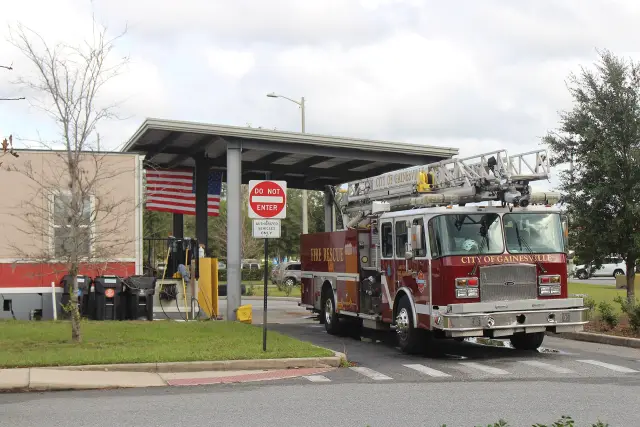
Short answer: No quiet zone exists in Sebastian. The Federal Railroad Administration inventory records no whistle ban at any of the seven open public Florida East Coast Railway crossings in the city, from Main Street to Barber Street, where it records 34 through trains a day and a 110 mph timetable speed. Federal rule requires the horn 15 to 20 seconds before each crossing, and only the city or county can start a quiet zone.
Last verified: October 15, 2026, against the sources listed at the end of this page.
Is there a railroad quiet zone in Sebastian?
No quiet zone covers any Sebastian railroad crossing: the federal crossing inventory records no whistle ban at the city's Florida East Coast Railway crossings, so trains sound horns at every one (FRA crossing inventory, Sebastian).
Crossing records go into the U.S. DOT National Highway-Rail Grade Crossing Inventory on FRA Form F6180.71 (49 CFR Part 222), and each inventory record carries a whistle ban field. For the seven open public crossings the inventory places in Sebastian, five records read whistle ban No and the other two, Sebastian Boulevard crossing 273063H and Barber Street crossing 272974H, leave the field blank rather than recording a ban (FRA crossing inventory, Indian River County).
The picture is the same along the whole Indian River County stretch of the Florida East Coast Railway. The inventory lists 32 open public at grade FEC crossings in the county, from Roseland Road at milepost 212.57 to Highland Drive at milepost 232.85, and 30 of them record whistle ban No, with the two blank Sebastian records making up the rest (FRA). No crossing in Sebastian, Roseland, Wabasso, Winter Beach, Gifford or Vero Beach is recorded as quiet.
Which railroad crossings are in Sebastian?
The FRA inventory lists seven open public at grade crossings of the Florida East Coast Railway in Sebastian: Main Street, two on Sebastian Boulevard, Old Dixie Highway, Schumann Drive, 99th Street and Barber Street (FRA crossing inventory).
| Street (FRA spelling) | Crossing ID | FEC milepost | Vehicles per day (count year) | Gate configuration |
|---|---|---|---|---|
| Main Street | 272161V | 214.42 | 7,500 (2024) | 4 quad |
| Sebastian Blvd | 273063H | 214.83 | 7,100 (2024) | 2 quad |
| Sevastian Boulevard (Sebastian Boulevard) | 272162C | 215.06 | 9,100 (2024) | 2 quad |
| Old Dixie Hwy | 272163J | 216.00 | 462 (2011) | 4 quad |
| Schumann Drive | 272164R | 216.59 | 2,700 (2024) | 4 quad |
| 99th St | 272165X | 217.61 | 3,522 (2011) | 4 quad |
| Barber St | 272974H | 218.030 | 5,587 (2011) | 4 quad |
A former Truman Street crossing at milepost 214.26 also appears in the Sebastian records, but it is marked closed, with its last revision dated February 25, 1985 (FRA). Roseland Road, the next crossing north at milepost 212.57, is filed under Roseland rather than Sebastian (FRA).
The Main Street record lists two main tracks, a four quadrant gate system with four roadway gate arms and four pedestrian gate arms, 13 pairs of flashing lights and four bells, plus a concrete crossing surface, and it notes that the crossing is on a school bus route used by an average of seven buses a day and on an emergency services route (FRA record 272161V).
How many trains pass through Sebastian crossings each day?
The FRA inventory records 34 through trains a day at each Sebastian crossing on the main line, 23 in daylight and 11 at night, including 22 passenger trains, with a maximum timetable speed of 110 mph (FRA crossing inventory).
The Sebastian crossing records carrying those figures were most recently revised between August 17 and October 7, 2026 for the Sebastian crossings (FRA). The Main Street record lists both freight and intercity passenger service and six switching trains a day in addition to through trains (FRA record 272161V).
Brightline lists passenger service between Miami and Orlando with stops in Aventura, Fort Lauderdale, Boca Raton and West Palm Beach (Brightline). Sebastian is not on that stop list.
When must trains sound horns at Sebastian crossings?
Federal rule 49 CFR 222.21 requires the horn to start at least 15 seconds and no more than 20 seconds before a train enters each public crossing in Sebastian, in a pattern of two long blasts, one short and one long (49 CFR Part 222).
The pattern is repeated or prolonged until the locomotive occupies the crossing. Trains traveling faster than 60 mph may not begin sounding the horn more than one quarter mile, 1,320 feet, ahead of the nearest public crossing, even when that gives less than 15 seconds of warning (eCFR). With a 110 mph timetable speed recorded at the Sebastian crossings (FRA), the quarter mile cap is the rule that governs the fastest trains here.
Horns can sound even where a quiet zone exists. Part 222 lets an engineer sound the horn in an emergency to warn animals, drivers, pedestrians, trespassers or crews on other trains when, in the engineer's judgment, it prevents imminent injury, death or property damage (49 CFR Part 222). A Sebastian quiet zone would end routine horn use, not every horn. Part 222 also leaves horn use open when a wayside horn is malfunctioning, so equipment failures at a crossing bring the train horn back (eCFR).
How could Sebastian get a railroad quiet zone?
Only a public authority, the city or county responsible for traffic control at the crossings, can establish a quiet zone under Part 222, and it must meet federal length, equipment and notice rules before Sebastian horns go silent (49 CFR Part 222).
The rule sets out the steps any Sebastian quiet zone would follow. A new quiet zone must be at least one half mile long along the railroad right of way. Every public crossing in it must have flashing lights and gates that meet the MUTCD by the implementation date. The public authority mails a Notice of Intent to the railroad and state agencies, then a Notice of Quiet Zone Establishment at least 60 days later, unless every railroad and state agency has already answered in writing (eCFR).
| Requirement under 49 CFR Part 222 | Sebastian record today |
|---|---|
| At least one half mile of rail line | Seven crossings from milepost 214.42 to 218.030 |
| Flashing lights and gates at every public crossing | Gates recorded at all seven open crossings |
| Notice of Intent, then Notice of Establishment 60 or more days later | No quiet zone recorded on any crossing |
| Partial option: horns silenced 10 p.m. to 7 a.m. only | Not recorded |
Part 222 also allows a New Partial Quiet Zone, where horns are not routinely sounded between 10 p.m. and 7 a.m. but sound the rest of the day (49 CFR Part 222). Communities can add supplementary safety measures from Appendix A, such as a four quadrant gate system that fully blocks highway traffic from entering the crossing when the gates are down. Five of the seven Sebastian crossings are already recorded with four quadrant gates; the two Sebastian Boulevard crossings are recorded with two quadrant gates (FRA crossing inventory).
What should Sebastian residents know about the crossing records?
The Sebastian crossing records are current on trains and gates but carry some stale traffic counts, and each crossing posts an emergency number for reporting a problem (FRA crossing inventory).
Three of the seven records, Old Dixie Highway, 99th Street and Barber Street, still carry 2011 vehicle counts, while the other four were updated with 2024 counts (FRA). The Barber Street figure of 5,587 vehicles a day is therefore 13 years older than the Main Street figure of 7,500. One Sebastian Boulevard record is filed under the misspelling Sevastian Boulevard, which matters when searching the federal database by street name (FRA).
Every open Sebastian crossing is recorded with an Emergency Notification System sign, and the inventory lists 800-588-7223 as the emergency telephone number for all seven (FRA crossing inventory). Federal rule requires each such sign to show white text on a blue background with the railroad's reporting number and the crossing's inventory number, and the railroad must take calls about a warning system malfunction or a disabled vehicle blocking the track (49 CFR Part 234, Subpart E). A stuck gate or a stalled car at Main Street or Barber Street is reported to that number with the crossing ID from the sign. Last verified: October 14, 2026, on the FRA crossing inventory.
Frequently asked questions
Is there a quiet zone in Sebastian, Florida?
No. The Federal Railroad Administration crossing inventory records no whistle ban at any of the seven open public Florida East Coast Railway crossings in Sebastian, and none of the 32 open public at grade FEC crossings in Indian River County is recorded as quiet.
Why do trains blow their horns in Sebastian at night?
Federal rule 49 CFR 222.21 requires the horn at every public crossing outside a quiet zone, day and night, starting 15 to 20 seconds before the crossing. The FRA inventory records 11 nighttime through trains a day at the Sebastian crossings.
How fast do trains go through Sebastian?
The FRA crossing inventory lists a maximum timetable speed of 110 mph at the Sebastian main line crossings, including Main Street, Schumann Drive and Barber Street. Trains above 60 mph start the horn no more than a quarter mile before the crossing.
Does Brightline stop in Sebastian?
No. Brightline lists service between Miami and Orlando with stops in Aventura, Fort Lauderdale, Boca Raton and West Palm Beach. Sebastian is not on that list, and the FRA inventory records 22 passenger trains a day at the Sebastian crossings.
Who do I call about a stuck railroad gate in Sebastian?
The FRA inventory records an Emergency Notification System sign at each open Sebastian crossing, and federal rule requires that sign to show the crossing's inventory number and the railroad's reporting number. The FRA inventory lists 800-588-7223 as the emergency number for all seven open crossings, including Main Street (272161V) and Barber Street (272974H).
Sources
- FRA Crossing Inventory (Form 71) current, Sebastian, Indian River County records https://data.transportation.gov/resource/m2f8-22s6.json?$select=crossingid,street,crossingtype,whistleban,numberpassengertrainperday,totaldaylightthrutrains,totalnighttimethrutrains,maximumtimetablespeed,revisiondate,railroadmilepostnumber,annualaveragedailytrafficcount,countroadwaygatearms,crossingclosed&countyname=INDIAN%20RIVER&cityname=SEBASTIAN&$order=railroadmilepostnumber Used for: crossing list, whistle ban field, train counts, speeds, revision dates, AADT
- FRA Crossing Inventory, open public at-grade FEC crossings in Indian River County https://data.transportation.gov/resource/m2f8-22s6.json?$select=crossingid,street,cityname,whistleban,railroadmilepostnumber&countyname=INDIAN%20RIVER&railroadcode=FEC&crossingtype=Public&crossingclosed=No&crossingposition=At%20Grade&$order=railroadmilepostnumber Used for: 32 county crossings, whistle ban field, Roseland Road milepost
- FRA Crossing Inventory, Sebastian gates, ENS and AADT year https://data.transportation.gov/resource/m2f8-22s6.json?$select=crossingid,street,gateconfiguration,countpedestriangatearms,enssigndisplayed,emergencytelephonenumber,annualaveragedailytrafficyear&countyname=INDIAN%20RIVER&cityname=SEBASTIAN&crossingclosed=No&$order=railroadmilepostnumber Used for: gate configuration, pedestrian gates, ENS sign, emergency phone, AADT year
- FRA Crossing Inventory record 272161V, Main Street https://data.transportation.gov/resource/m2f8-22s6.json?crossingid=272161V Used for: tracks, gates, lights, bells, school bus route, service types
- 49 CFR Part 222, Use of Locomotive Horns at Public Highway-Rail Grade Crossings (eCFR) https://www.ecfr.gov/current/title-49/subtitle-B/chapter-II/part-222 Used for: horn timing and pattern, 60 mph rule, quiet zone length, gates, notices, partial quiet zone, public authority, emergency use, four-quadrant gates
- Brightline home page https://www.gobrightline.com/ Used for: route Miami to Orlando and stop list
- 49 CFR Part 234, Subpart E, Emergency Notification Systems (eCFR) https://www.ecfr.gov/current/title-49/subtitle-B/chapter-II/part-234/subpart-E Used for: ENS sign content and colors, reportable conditions
How this page was made
Digital Towns uses AI assistance to research and write its guides, and every page is only as good as the sources it cites. Our goal is the most accurate, useful local information possible.
This page was fact-checked twice before publishing.
If you see an error, or anything you can show is false, tell us right away and we will take a third look.
Report an error
Thank you. We'll take a third look and correct the page if it's wrong.