Short answer: Fort De Soto Park, southwest of St. Petersburg in Tierra Verde, is a 1,136 acre Pinellas County park on five interconnected keys with beach plants, mangroves, wetlands, palm hammocks and hardwoods. Ornithologists have documented more than 328 bird species there, loggerhead sea turtles nest from April to September, and posted shorebird nesting areas are off-limits. County rules ban feeding or removing wildlife, plants and sand; parking is $6, and the park is open 7 a.m. to sunset.
Last verified: October 18, 2026, against the sources listed at the end of this page.
What ecosystems does Fort De Soto Park protect near St. Petersburg?
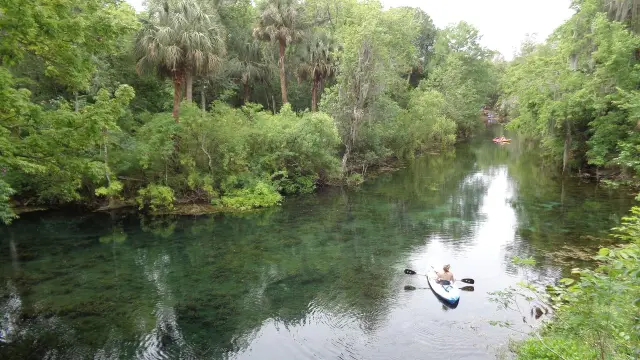
Fort De Soto Park protects five interconnected keys southwest of St. Petersburg that are home to beach plants, mangroves, wetlands, palm hammocks, hardwoods and scores of native plants.
Pinellas County describes the park as the largest in its system, 1,136 acres made up of five interconnected islands (keys), and lists the habitats as beach plants, mangroves, wetlands, palm hammocks, hardwoods and scores of native plants (Pinellas County). The shoreline is long for the land area: over 7 miles of waterfront, including almost three miles of white sand beach. The entrance is at 3500 Pinellas Bayway South in Tierra Verde.
The water around the keys matters as much as the land. The state birding trail page notes mudflats among the park's habitats and describes Roseate Spoonbills and Reddish Egrets feeding on the flats while both night-herons hunt for fish and crabs in the wetlands and mangroves (Florida Fish and Wildlife Conservation Commission). Nearby, the 1,800 acre Shell Key Preserve adds one of Pinellas County's largest undeveloped barrier islands as well as numerous mangrove islands and expansive seagrass beds, and the county keeps a central core of Shell Key closed to the public for conservation (Pinellas County).
Visitors can see these systems from marked routes: a 2.25-mile recreational canoe trail, a 1-mile nature trail in the Arrowhead picnic area, a 3/4 mile nature trail in the Soldiers' Hole area, and a 2,200 foot Barrier-Free Nature Trail built as a self-guided interpretive route for visitors of any physical ability (Pinellas County).
Which birds and sea turtles depend on Fort De Soto?
Fort De Soto is one of the most popular birding destinations in the United States, in the state birding trail's words, with more than 328 bird species documented over 60 years, beach-nesting shorebirds in posted areas, and loggerhead sea turtles nesting from April to September.
The county says ornithologists have documented more than 328 species of birds over a 60-year span, with new species added every year, and that the beach provides refuge to the loggerhead sea turtle, which nests between April and September (Pinellas County). The state birding trail adds that more than 20 species of shorebird have been recorded, that Roseate Spoonbills and Reddish Egrets feed on the flats, and that posted nesting areas are off-limits to humans; it names Black Skimmer, Magnificent Frigatebird, Painted Bunting, Reddish Egret and Snowy Plover as species highlights (FWC Great Florida Birding and Wildlife Trail).
Nesting results are tracked season by season. Audubon Florida's 2024 beach-nesting season summary calls Fort De Soto Park a productive nesting site where staff recorded multiple Wilson's Plover fledges, one Snowy Plover fledge and three American Oystercatcher fledges, and it says a rise in Snowy Plover nesting attempts speaks to the successful habitat management at the park (Audubon Florida). Those are Audubon's own monitoring figures.
Shell Key, served by a ferry from the Fort De Soto boat ramp, is one of the state's most important areas for shorebird nesting and wintering and serves as a study area for those species, according to Pinellas County, which limits the public to the island's northern and southern ends (Pinellas County).
Why do official Fort De Soto figures disagree?
Pinellas County, which the state trail page lists as the park's manager, and the state birding trail publish different Fort De Soto figures for acreage, beach length, bird species and hours.
| Item | Pinellas County park page | FWC birding trail page |
|---|---|---|
| Size | 1,136 acres | 1,068 acres |
| Sandy beach | Almost three miles (over 7 miles of waterfront) | Nearly 6 miles |
| Bird species | More than 328 over 60 years | More than 330 sighted |
| Hours | 7 a.m. to sunset, 7 days a week | Dawn to dusk, all year |
| Phone | (727) 582-2100 (Parks and Conservation Resources) | (727) 582-2100 |
The county page gives the acreage, beach length and hours in the first column (Pinellas County); the state page gives the second column (FWC). Neither page explains how it measured beach length, so both figures are shown as published. Even the county page is not fully consistent: it describes a 6.8 mile asphalt recreation trail in one list and seven miles of paved trail in another (Pinellas County).
What rules protect wildlife and plants at Fort De Soto?
Pinellas County rules at Fort De Soto forbid feeding, disturbing or removing wildlife, plants, sand or artifacts, keep pets off the beach outside the dog beach, and ban drones and alcohol.
The county's park rules list as prohibited: feeding, disturbing or removing wildlife, plant life, natural materials (sand, pine straw, etc.) or historic artifacts; release or transplant of any animals or plant life; pets on beaches, boardwalks, fishing piers, playgrounds and picnic tables; remote-controlled devices such as drones; and possession or consumption of alcoholic beverages (Pinellas County). Balloons of any kind are banned from all county parks and preserves, and pets elsewhere in a park must be on a leash no longer than six feet.
Fort De Soto is the exception for dogs: no other county dog park lets dogs onto a designated stretch of beach, and two fenced-in areas with water stations, one for large dogs and one for small, sit near that beach (Pinellas County). On Shell Key, dogs and alcohol are not allowed (Pinellas County).
State wildlife officials add their own requests for beach-nesting season. The Florida Fish and Wildlife Conservation Commission asks beachgoers to never enter areas posted with shorebird/seabird signs, keep dogs on a leash and away from nesting areas, dispose of trash so predators stay away, and not fly kites near nesting birds; the agency adds that when birds are aggravated, people are too close (FWC). A fishing license is required throughout Fort De Soto, including on both piers (Pinellas County).
What does it cost to visit Fort De Soto, and when is it open?
Fort De Soto charges a $6 Pinellas County parking fee and is open 7 days a week from 7 a.m. to sunset, with fishing piers on the same hours.
The county says the $6 fee can be paid by mobile parking app, pay-by-text, the park's parking terminals or an annual pass, with a $0.35 convenience fee for app or text payments; Visa, Mastercard and American Express are accepted (Pinellas County). The flat $6 per vehicle daily rate took effect January 1, 2025, the first increase in more than 14 years (Pinellas County, January 7, 2025), and it is due to change again: the county's park updates page, last updated October 15, 2026, says that beginning December 1, 2026 beach parking will be $3.50 per hour, capped at $12 per day, and boat ramp parking $12 per day, plus tax (Pinellas County). Annual park attendance averages more than 2.7 million visitors. Concessions and rentals, including kayaks, bicycles and beach chairs, are run by a partner vendor and are cashless.
Overnight stays are possible in the 236-site family campground, and two ferries leave from the park: one to Egmont Key and one to Shell Key, the preserve that the county says is accessible only by boat (Pinellas County). Parks and Conservation Resources answers park questions at (727) 582-2100 from its office at 12520 Ulmerton Road in Largo (Pinellas County).
Last verified: October 18, 2026, on the Pinellas County Parks and Conservation Resources website.
What is still under repair at Fort De Soto after the 2024 hurricanes?
Two years after Hurricanes Helene and Milton, Fort De Soto still has the far end of its bay pier closed and new boat ramp docks waiting to be built, with road and trail repaving expected to run into early 2027.
The storms closed the historic fort, dog beach and both fishing piers in September 2024; Pinellas County reopened them on Monday, January 6, 2025, after the causeway, boat ramp, East Beach and Area 3 of the campground had reopened late in 2024 (Pinellas County, January 7, 2025).
The county's park updates page, read October 18, 2026, says the far end of the bay pier is closed for hurricane repairs that resume once boat ramp construction is complete, expected in late 2026; that all floating docks are out of service except one while new docks go in over two phases of about a month each, with the full reopening expected by late December 2026; and that paving of about 7 miles of road along Pinellas Bayway South and Anderson Boulevard and about 6.6 miles of trail was expected to begin in September 2026, with completion anticipated in early 2027 (Pinellas County).
Race mornings also matter for early birders and anglers: the same page lists park closures until 9 a.m. for the Fort De Soto Tri on October 18, 2026, the Halloween Distance Classic on October 31, 2026 and the Last Chance Tri on November 14, 2026 (Pinellas County).
Frequently asked questions
How big is Fort De Soto Park?
Pinellas County gives the size as 1,136 acres on five interconnected keys, the largest park in its system, with over 7 miles of waterfront and almost three miles of sandy beach. The state birding trail page lists 1,068 acres and nearly 6 miles of beach.
How much is parking at Fort De Soto?
Pinellas County charges $6 per vehicle, paid by mobile app, pay-by-text, the park terminals or an annual pass, with a $0.35 fee for app and text payments. The county's park updates page says beach parking becomes $3.50 per hour, capped at $12 per day, plus tax, on December 1, 2026.
Are dogs allowed on the beach at Fort De Soto?
Only in the designated dog beach area. County rules otherwise bar pets from beaches, boardwalks, fishing piers and playgrounds, and require a leash no longer than six feet. Its dog park is the only one the county lists with a designated beach area for dogs, and it adds fenced-in areas for large and small dogs.
When do sea turtles nest at Fort De Soto?
Pinellas County says loggerhead sea turtles nest on the Fort De Soto beach between April and September. County rules forbid disturbing wildlife, and posted shorebird nesting areas on the beach are off-limits to people, according to the state birding trail.
What birds can be seen at Fort De Soto?
More than 328 species have been documented over 60 years, according to Pinellas County. The FWC birding trail lists Roseate Spoonbills, Reddish Egrets, both night-herons and more than 20 shorebird species, with Black Skimmer, Snowy Plover and Painted Bunting among its highlights.
Sources
- Fort De Soto Park, Pinellas County Parks and Conservation Resources https://www.pinellas.gov/park/fort-de-soto-park/ Used for: acreage, five keys, habitats, 328 bird species, loggerhead nesting, attendance, parking fee, amenities, trails, hours, address
- Park Rules, Pinellas County https://pinellas.gov/park-rules/ Used for: wildlife, plant and sand removal ban, pets, drones, alcohol, balloons, leash rule
- County Parks: Know Before You Go, Pinellas County https://pinellas.gov/county-parks-know-before-you-go/ Used for: bay pier, boat ramp docks, paving, special event closures in fall 2026, parking rates from December 1, 2026
- Fort De Soto Park fort, dog beach, fishing piers reopen (Pinellas County, January 7, 2025) https://pinellas.gov/news/fort-de-soto-park-fort-dog-beach-fishing-piers-reopen/ Used for: Helene and Milton closures and January 6, 2025 reopening, $6 per vehicle flat rate since January 1, 2025
- Shell Key Preserve, Pinellas County https://pinellas.gov/parks/shell-key-preserve/ Used for: shorebird nesting and wintering importance, closed core area, boat-only access, ferry from Fort De Soto
- Fort De Soto Park, Great Florida Birding and Wildlife Trail (Florida Fish and Wildlife Conservation Commission) https://floridabirdingtrail.com/?p=1987 Used for: bird species, shorebirds, spoonbills, posted nesting areas, state listing figures
- Shorebirds and Seabirds, Florida Fish and Wildlife Conservation Commission https://myfwc.com/conservation/you-conserve/wildlife/shorebirds/ Used for: how to protect beach-nesting birds
- 2024 Audubon Florida Beach-nesting Birds Nesting Season Summary (Audubon Florida) https://www.audubon.org/florida/news/2024-audubon-florida-beach-nesting-birds-nesting-season-summary Used for: Audubon staff 2024 fledge records at Fort De Soto, attributed
How this page was made
Digital Towns uses AI assistance to research and write its guides, and every page is only as good as the sources it cites. Our goal is the most accurate, useful local information possible.
This page was fact-checked twice before publishing.
If you see an error, or anything you can show is false, tell us right away and we will take a third look.
Report an error
Thank you. We'll take a third look and correct the page if it's wrong.