Short answer: St. Petersburg's native plant communities, from mangrove forest to pine flatwoods and maritime and xeric hammocks, are best seen on the free trails of Weedon Island Preserve and at the city's 400 acre Boyd Hill Nature Preserve on Lake Maggiore. UF/IFAS Extension Pinellas answers plant questions at [email protected] and at Weedon Island each third Saturday. Mangroves need an exemption or Pinellas County permit to trim, and Brazilian pepper may not be sold or planted.
Last verified: October 18, 2026, against the sources listed at the end of this page.
Which native plant communities grow in St. Petersburg?
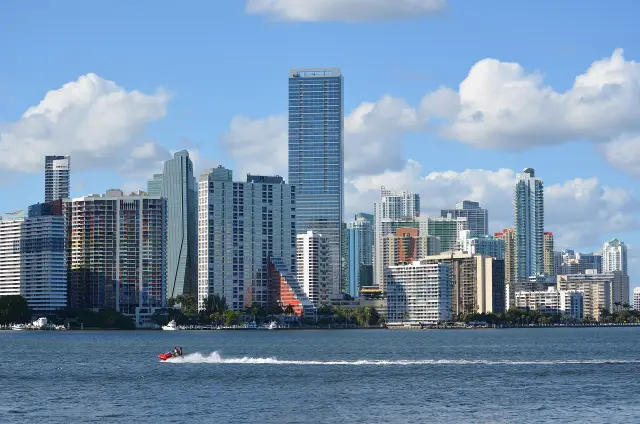
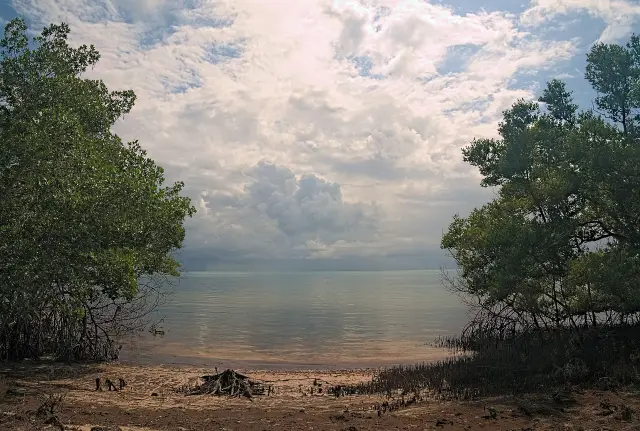
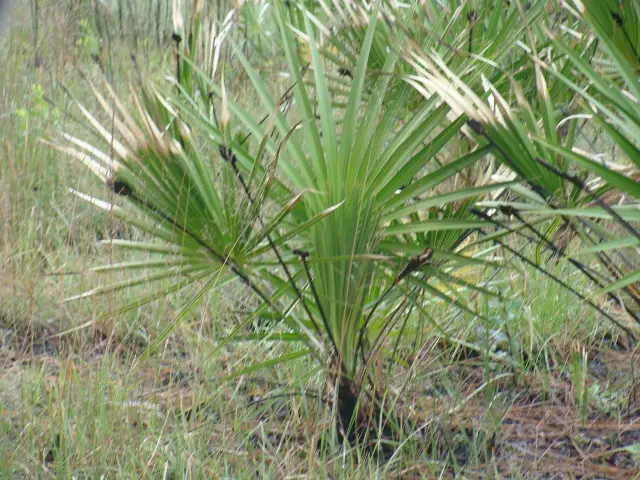
St. Petersburg's surviving native plant communities run from mangrove forest and tidal flats on the bay edge to pine flatwoods and maritime and xeric hammocks on the higher ground, all visible along the Weedon Island Preserve trails.
Weedon Island shows the range in one walk: its one-mile Boy Scout Loop crosses pine flatwoods and maritime and xeric hammocks and connects to another 1.7 miles of trail, and its boardwalks extend through tidal flats and mangrove forests (Weedon Island Preserve). The preserve, on the northwest shore of Old Tampa Bay, is dominated by aquatic and wetland ecosystems; its upland ecosystems make up the remaining 1,100 acres of relatively flat, dry land, and Indian mounds and relic dune ridges occupy its highest ground (Weedon Island ecosystems).
South of the city, the five keys of Fort De Soto carry beach plants, mangroves, wetlands, palm hammocks and hardwoods, the barrier island version of the same coastal mix (Pinellas County).
Two deeper St. Petersburg native plant guides pick up from here: the St. Petersburg coastal hammock guide (the native trees of the oak and palm hammocks and where to walk them) and the St. Petersburg mangrove guide (the three mangrove species, Weedon Island's mangrove forest and the trimming rules).
Where can native plants be seen in St. Petersburg?
Weedon Island Preserve in north St. Pete and Boyd Hill Nature Preserve on Lake Maggiore are the two places inside St. Petersburg where native Florida plant communities can be walked on public trails and boardwalks.
| Preserve | Run by | Hours and cost | What the trails cross |
|---|---|---|---|
| Weedon Island Preserve, 1800 Weedon Drive NE | Pinellas County | Daily 7 a.m. to sunset; free | Pine flatwoods, maritime and xeric hammocks, tidal flats, mangrove forests |
| Boyd Hill Nature Preserve, 1101 Country Club Way S. | City of St. Petersburg | $3 adults, $1.50 ages 3 to 16, under 3 free | 400 acre preserve that connects to Lake Maggiore |
| Fort De Soto Park | Pinellas County | County park on five keys | Beach plants, mangroves, wetlands, palm hammocks, hardwoods |
Admission is free at Weedon Island, both on the trails and inside the Cultural and Natural History Center, though the center is open fewer days than the trails: 9 a.m. to 4 p.m. from Thursday through Saturday, 11 a.m. to 4 p.m. on Sunday, and closed from Monday through Wednesday and on county holidays, phone (727) 453-6500 (Weedon Island Preserve). Trails are day use only, and a 45-foot tower on the west boardwalk loop looks across Tampa Bay to St. Petersburg and Tampa (Weedon Island trails).
Two Pinellas County sources disagree on how big Weedon Island is. The county parks page gives 3,000 acres (Pinellas County parks), while the preserve's own ecosystems page gives approximately 3,195 acres, more than half north of Gandy Boulevard (Weedon Island ecosystems).
Boyd Hill, at 1101 Country Club Way S. on Lake Maggiore, covers 400 acres, phone (727) 893-7326 (St. Petersburg Parks and Recreation). Boyd Hill belongs to the Great Florida Birding Trail by the city's account, which also counts more than 60 amphibian and reptile species, 50 butterfly species and 165 bird species there (Lake Maggiore Environmental Education Center).
Where can St. Petersburg residents get native plant advice?
UF/IFAS Extension Pinellas County answers St. Petersburg plant questions by email at [email protected] and, once a month, in person at Weedon Island Preserve through Ask a Master Gardener.
The Weedon Island table runs the third Saturday of each month from 10:30 a.m. to 12:30 p.m., and volunteers will look at samples or photos brought in for identification. The main Extension office is at 12520 Ulmerton Rd. in Largo; the Extension posts new days and hours starting September 2026, Monday to Thursday, 9 a.m. to 12 p.m. and 1 to 4 p.m., with sample drop-off Monday to Thursday from 8 a.m. to 5 p.m., although the contact block lower on the same page still reads Monday to Friday, 8 a.m. to 5 p.m. Soil tests are not done locally; samples are mailed to the UF/IFAS labs (UF/IFAS Extension Pinellas County).
The city's Water Resources page gives two Pinellas County numbers: 727-582-2110 for the Extension office's horticulture answers specific to Pinellas County, and 727-453-6524 for the Pinellas County Florida-Friendly Landscaping program (City of St. Petersburg). The Extension's own page lists (727) 582-2100, so the two pages give different numbers for the same Largo office (UF/IFAS Extension). For native plant education, the city page points to the Pinellas chapter of the Florida Native Plant Society, which it says promotes the preservation and restoration of native plants and plant communities through public education.
What does the City of St. Petersburg offer for Florida-friendly yards?
St. Petersburg Water Resources offers free virtual Rainwater Guardian classes with required pre-registration, and its specialists give talks to community groups on topics including Florida-Friendly Landscaping, booked through 727-892-5688 or [email protected].
The city page lists two Rainwater Guardian sessions, Tuesday, November 3, from 6 to 7:30 p.m. and Saturday, December 12, from 9:30 to 11 a.m., covering rain barrels and shallow rain gardens; eligible St. Pete utility customers who fully attend can later register for a free rain barrel (City of St. Petersburg workshops). The page lists those dates without a year. The same page sends residents to the Tampa Bay Estuary Program's Be Floridian campaign on skipping summer fertilizer, and to the Tampa Bay Community Water-Wise Awards for yards built on Florida-Friendly Landscaping principles.
For a St. Petersburg yard, the practical sequence is to ask the Extension which native fits the site, plan irrigation around the city's micro irrigation and rain garden classes, and save the city's Water Resources line for group talks rather than single-yard questions (City of St. Petersburg Water Resources).
Can mangroves on a St. Petersburg shoreline be trimmed?
Only with a qualifying exemption or a permit: mangroves along St. Petersburg seawalls and shorelines are protected by the state Mangrove Trimming and Preservation Act, and Pinellas County administers the trimming rules.
Pinellas County biologists and arborists check trimming against the county ordinance for Mangrove Trimming and Preservation, Chapter 58, Article XVI, and the county's Water and Navigation line for questions is (727) 453-3385. The county also publishes a homeowner guide in English and Spanish and a list of registered mangrove trimmers (Pinellas County mangroves). The St. Petersburg mangrove guide explains the height and exemption rules in detail.
Which invasive plant threatens St. Petersburg's native plant communities?
Brazilian peppertree is the invasive that UF/IFAS describes overrunning the same hammocks, pine flatlands and mangrove forests found at St. Petersburg's preserves, and selling or deliberately planting it is illegal in Florida.
Brought from South America in the 1840s, it spread into natural areas and was once nicknamed Florida holly for its red berries. UF/IFAS advises care when removing one because the leaves and sap can irritate skin, and it lists American, Yaupon and Dahoon hollies, plus the East Palatka hybrid, as native red-berried substitutes (UF/IFAS Gardening Solutions). For a St. Petersburg lot, those hollies are the straight swap for a hedge of pepper.
What native habitat is the Tampa Bay region trying to restore?
The Tampa Bay Estuary Program's Habitat Master Plan sets 2050 goals that include 15,300 acres of mangrove forests and 142,100 acres of native uplands, including coastal hammocks and pine flatwoods, across the watershed St. Petersburg drains to.
The plan also targets 4,219 acres of coastal uplands and pairs 10-year targets for 2030 with the 30-year goals for 2050. It maps a coastal stratum from the existing mean low water line to the approximate 5-foot contour, projected to directly experience the effects of sea level rise by 2050, as the primary focus area for coastal habitat protection and restoration (Tampa Bay Estuary Program).
Last verified: October 18, 2026, against the Pinellas County, City of St. Petersburg, UF/IFAS Extension and Tampa Bay Estuary Program pages linked in each section.
Frequently asked questions
Is Weedon Island Preserve free to visit?
Yes. Weedon Island Preserve in St. Petersburg has free admission at the preserve and at its Cultural and Natural History Center. The preserve is open daily from 7 a.m. to sunset, and the trails are for day use only.
Where can native plants be identified in St. Petersburg?
UF/IFAS Extension Pinellas County holds Ask a Master Gardener at Weedon Island Preserve on the third Saturday of each month, 10:30 a.m. to 12:30 p.m., where volunteers look at samples or photos. Questions with photos can also go to [email protected].
Is it illegal to plant Brazilian pepper in St. Petersburg?
UF/IFAS states that it is against the law to sell or purposely plant Brazilian peppertree in Florida, which includes St. Petersburg. Native American, Yaupon and Dahoon hollies are the substitutes UF/IFAS suggests for its red berries.
Who answers mangrove trimming questions in St. Petersburg?
Pinellas County administers mangrove trimming under its Chapter 58, Article XVI ordinance and the state Mangrove Trimming and Preservation Act. Questions go to the county Water and Navigation line at (727) 453-3385.
What is the admission fee at Boyd Hill Nature Preserve?
Adult admission to the city-run Boyd Hill Nature Preserve is $3, the fee for ages 3 to 16 is $1.50, and there is no charge under age 3. The 400 acre preserve is at 1101 Country Club Way S. on Lake Maggiore, phone (727) 893-7326.
Sources
- Ecosystems, Weedon Island Preserve (Pinellas County) https://www.weedonislandpreserve.org/ecosystems.htm Used for: about 3,195 acres, Old Tampa Bay shore, 1,100 upland acres, mounds and dune ridges, state ownership and county management
- Boardwalks and Trails, Weedon Island Preserve (Pinellas County) https://www.weedonislandpreserve.org/boardwalks-trails.htm Used for: Boy Scout Loop through pine flatwoods and maritime and xeric hammocks, 1.7 more miles, boardwalks through mangrove forests, 45-foot tower, day use only
- Weedon Island Preserve home (Pinellas County) https://www.weedonislandpreserve.org/ Used for: preserve hours, center hours, free admission, center phone
- Weedon Island Preserve, Pinellas County parks https://pinellas.gov/parks/weedon-island-preserve Used for: 3,000-acre figure, north St. Petersburg location, address
- Boyd Hill Nature Preserve, St. Petersburg Parks and Recreation https://www.stpeteparksrec.org/parks___facilities/boyd_hill.php Used for: 400 acres, Lake Maggiore, address, admission, phone
- Lake Maggiore Environmental Education Center, St. Petersburg Parks and Recreation https://www.stpeteparksrec.org/parks___facilities/lmec.php Used for: species counts, Great Florida Birding Trail
- Fort De Soto Park, Pinellas County https://pinellas.gov/parks/fort-de-soto-park/ Used for: five keys with beach plants, mangroves, wetlands, palm hammocks, hardwoods
- Contact Us for Help, UF/IFAS Extension Pinellas County https://sfyl.ifas.ufl.edu/pinellas/lawn-and-garden/contact-us-for-help/ Used for: gardenhelp email, Largo office hours from September 2026, Weedon Island Ask a Master Gardener schedule, footer hours and phone
- Workshops and Resources, City of St. Petersburg Water Resources https://www.stpete.org/waterworkshops Used for: Rainwater Guardian classes, Florida-Friendly Landscaping contacts, Extension phone, Pinellas chapter of the Florida Native Plant Society, Be Floridian
- Mangroves, Pinellas County https://pinellas.gov/mangroves/ Used for: state act protection, exemption or permit, county ordinance chapter, phone
- Brazilian Peppertree, UF/IFAS Gardening Solutions https://gardeningsolutions.ifas.ufl.edu/plants/trees-and-shrubs/shrubs/brazilian-pepper/ Used for: 1840s import, takes over hammocks, flatlands and mangroves, illegal to sell or plant, native holly alternatives
- Habitat Master Plan Update, Tampa Bay Estuary Program https://tbep.org/habitat-master-plan-update/ Used for: 2050 goals for mangrove forests, coastal uplands, native uplands including coastal hammocks and pine flatwoods
How this page was made
Digital Towns uses AI assistance to research and write its guides, and every page is only as good as the sources it cites. Our goal is the most accurate, useful local information possible.
This page was fact-checked twice before publishing.
If you see an error, or anything you can show is false, tell us right away and we will take a third look.
Report an error
Thank you. We'll take a third look and correct the page if it's wrong.