Short answer: St. Petersburg began in 1875, when John Constantine Williams of Detroit came to the Pinellas Peninsula and bought land, and took shape in 1888, when Peter Demens extended the Orange Belt Railroad there and named the town for Saint Petersburg, Russia. It incorporated as a town on February 29, 1892, and as a city in 1903. The city puts the purchase at 2,500 acres; a National Park Service record says 1,600.
Last verified: October 15, 2026, against the sources listed at the end of this page.
When did St. Petersburg begin, and in what year did John C. Williams buy the land?
St. Petersburg began with land John Constantine Williams of Detroit acquired in or shortly after 1875, the year both the City of St. Petersburg and a National Park Service record give for his arrival.
The city's own history dates the purchase to 1875: Williams moved to Tampa that year and bought 2,500 acres of waterfront land that later became St. Petersburg (City of St. Petersburg). The 1975 National Register nomination for his house tells it slightly differently. It says Williams, born in Detroit in 1817, first visited the Pinellas Peninsula in 1875 and shortly thereafter purchased 1,600 acres from the State of Florida and W. F. Sperling (National Park Service).
The two official St. Petersburg accounts agree on 1875 and disagree on acreage, 2,500 against 1,600. Neither gives 1876, so this guide uses 1875 and states both acreage figures; no source fetched for this page explains the gap.
Thirteen years passed between the 1875 purchase and the first train. The city puts that turning point in 1888, when Williams handed part of his tract to Peter Demens and Demens, in return, extended the Orange Belt Railroad to the Williams settlement (City of St. Petersburg).
Who was farming the St. Petersburg area before the town existed, and where did citrus fit in?
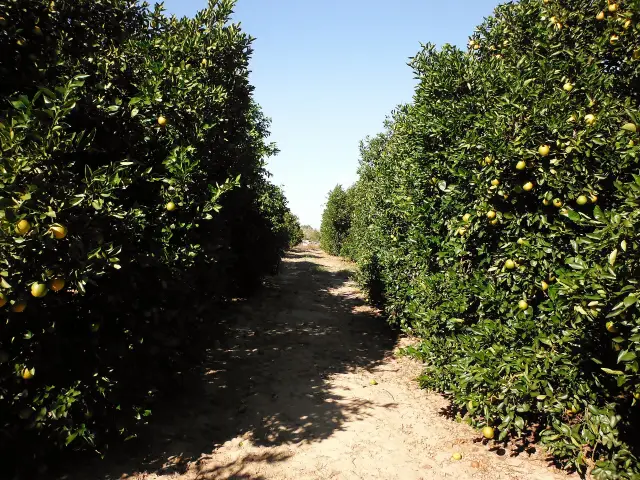
Before St. Petersburg had a name, people moving to the area in the 1830s and 1840s set up homesteads, planted citrus and other crops, and raised animals.
Pinellas County traces the peninsula name to the Spanish Punta Pinal, point of pines, and says Panfilo de Narvaez discovered the area in 1528 (Pinellas County). The city history adds that the Tampa Bay area was home to generations of Indigenous tribes before the first White settlers arrived, and that people began moving to the area in the 1830s and 1840s, setting up homesteads, planting citrus and other crops, and raising animals (City of St. Petersburg).
After the Civil War more settlers came. John Donaldson and Anna Germain, the first Black settlers in the area, arrived in 1868 and built a homestead near what is now 18th Ave. South and 31st St. South; for 20 years theirs was the only African American family in present day St. Pete (City of St. Petersburg).
Citrus also appears in Safety Harbor's early record. The City of Safety Harbor says that in 1889 a family home was moved from Odet Philippe's citrus grove to Grand Central Avenue, where it held the town's first post office and country store from 1890 (City of Safety Harbor).
How did the Orange Belt Railroad turn the Williams tract into a town?
The Orange Belt Railroad turned the Williams tract into a town in 1888, when Peter Demens extended the line from Sanford to the west coast of Florida and the first train arrived.
The state historical marker at Demens Landing says Demens was a Russian nobleman, Pyotr Dementyev, who left Russia in 1881, invested in a sawmill and a construction company in Longwood, then took control of the Orange Belt Railroad and extended it from Sanford to the west coast of Florida in 1888 (Florida Division of Historical Resources). The National Park Service nomination gives his name differently, as Peter A. Demens (Petrovich Demenscheff), a Russian exile who headed the Orange Belt and reached an agreement with Williams to develop a townsite on the Gulf (National Park Service); the two official sources disagree on his original name. The first train into St. Petersburg carried empty freight cars and one passenger (City of St. Petersburg).
The street grid dates from the same year. A. L. Hunt, chief engineer of the Orange Belt, surveyed and platted the townsite in 1888, and Williams is said to have insisted on unusually wide streets of 100 feet and a large central park, today Williams Park (National Park Service). Demens built the first railroad pier in 1889 on the waterfront site now called Demens Landing (Florida Division of Historical Resources).
The railroad also brought St. Petersburg its first Black neighborhood. African American men came with the Orange Belt in 1888 to build the beds and lay the rails, and Peppertown, near 3rd and 4th Avenues South just east of Dr. Martin Luther King Jr. St., is credited as the first of several predominantly Black neighborhoods (City of St. Petersburg).
How did St. Petersburg get its name, and who built the Detroit hotel?
St. Petersburg is named for Saint Petersburg, Russia, the city Peter Demens chose; the City of St. Petersburg repeats a legend that he won the right to name it in a coin toss with Williams.
The city calls the coin toss a legend and says Williams, having lost it, named the first hotel after his birthplace, Detroit (City of St. Petersburg). The Florida Division of Historical Resources marker skips the coin and says only that Demens extended the railroad to a town he had named St. Petersburg in honor of the capital city of Imperial Russia (Florida Division of Historical Resources).
Credit for the Hotel Detroit is split three ways in the official record. The National Park Service nomination says Williams built the first hotel in St. Petersburg in 1888, named it for his birthplace, and that it still stood, drastically modified, at 215 Central Avenue when the nomination was written (National Park Service). The state marker says Demens built the Detroit and the first railroad depot in 1888 (Florida Division of Historical Resources). A USF postcard record credits the Hotel Detroit at 215 Central Avenue to both men (USF Digital Commons).
The National Park Service nomination and the state marker agree that the Detroit was St. Petersburg's first hotel and date it to 1888; they disagree on who built it, and this guide does not choose between them.
When was St. Petersburg incorporated as a town, and when did it become a city?
St. Petersburg incorporated as a town on February 29, 1892, and reincorporated as a city in 1903, when it still had only a few hundred residents (City of St. Petersburg).
Williams did not see much of the new town. He began building his Fifth Avenue house in 1891 and died in April 1892, after the February incorporation, having lived in the house only briefly (National Park Service). USF St. Petersburg calls him General John C. Williams, one of the co-founders of St. Petersburg (USF St. Petersburg), and the National Park Service nomination says he is credited with the founding of the City of St. Petersburg (National Park Service).
St. Petersburg was not the first town on the peninsula to incorporate: Pinellas County records Tarpon Springs as its first incorporated city, in 1887 (Pinellas County). Until 1912, St. Petersburg was in Hillsborough County: Pinellas became Florida's 48th county on January 1, 1912, after a local referendum to separate from Hillsborough (Pinellas County).
Where can the Williams and Demens era still be seen in St. Petersburg?
Five St. Petersburg sites tie back to the years between 1875 and 1903: Williams Park, Demens Landing, the Williams House, the Hotel Detroit site on Central Avenue and the Peppertown area.
| Place | Where | Link to the period | Source |
|---|---|---|---|
| Williams Park | 4th St. N. and 1st Ave. N.; open 30 minutes before sunrise to 11:00 pm | Central park in the 1888 plat, credited to Williams | St. Petersburg Parks and Recreation; National Park Service |
| Demens Landing | Bayshore Dr. SE and Demens Landing SE | Site of the first railroad pier, 1889; city park since 1977; state marker 2000 | Florida Division of Historical Resources |
| Williams House | 511 2nd Street South, USF St. Petersburg campus (moved there in 1995) | Built 1891 by Williams; National Register 1975 | USF St. Petersburg |
| Hotel Detroit site | 215 Central Avenue | First hotel, 1888; standing, drastically modified, when the National Register nomination was written | National Park Service; USF Digital Commons |
| Peppertown area | Near 3rd and 4th Avenues South, east of Dr. Martin Luther King Jr. St. | First Black neighborhood, founded by Orange Belt rail workers | City of St. Petersburg |
Williams Park sits at 4th St. N. and 1st Ave. N., opens 30 minutes before sunrise, closes at 11:00 pm and has a performance stage; the park page lists phone (727) 893-7441 (St. Petersburg Parks and Recreation). The park page says nothing about Williams, so the National Park Service nomination is the source that ties the park to his 1888 plan.
Demens Landing on Bayshore Dr. SE was dedicated as a city park in 1977, and the state marker there went up in 2000 (Florida Division of Historical Resources). The Williams House is not where the National Register nomination put it: that form describes Williams's Fifth Avenue home, and USF St. Petersburg says the house moved to 511 2nd Street South in 1995 and has housed offices for departments such as History and Philosophy (National Park Service; USF St. Petersburg).
On October 13, 2022, USF St. Petersburg announced a preservation grant that, with matching funds, puts more than $561,280 toward restoration, with work that includes foundation work, a new roof and hurricane panels; the article names the decorative railing around the widow's walk among the items that need repair (USF St. Petersburg).
Frequently asked questions
Who founded St. Petersburg, Florida?
Official sources credit two men. The City of St. Petersburg says John Constantine Williams of Detroit bought the land in 1875, and Peter Demens brought the Orange Belt Railroad in 1888. The National Park Service nomination says Williams is credited with the founding of the city, USF St. Petersburg calls him a co-founder, and the Florida Division of Historical Resources says Demens is considered one of the founders.
Did John C. Williams buy the St. Petersburg land in 1875 or 1876?
The City of St. Petersburg dates the purchase to 1875, and the National Park Service nomination for the Williams Mansion says Williams first visited the Pinellas Peninsula in 1875 and bought land shortly after. Neither source gives 1876.
Why is St. Petersburg named after a Russian city?
Peter Demens, who extended the Orange Belt Railroad to the town in 1888, came from Russia and named it for Saint Petersburg. The city repeats a legend that he won the naming in a coin toss with Williams, who then named the first hotel Detroit.
When did St. Petersburg become a city?
St. Petersburg incorporated as a town on February 29, 1892, and reincorporated as a city in 1903, when it had only a few hundred residents, according to the City of St. Petersburg history page.
Was St. Petersburg always in Pinellas County?
No. Pinellas County did not exist until January 1, 1912, when it became Florida's 48th county after a local referendum to separate from Hillsborough County. Before that, St. Petersburg was part of Hillsborough County.
Sources
- City of St. Petersburg, History of St. Pete https://www.stpete.org/visitors/history.php Used for: homesteads and citrus in the 1830s and 1840s, Donaldson and Germain 1868, Williams 1875 and 2,500 acres, land transfer to Demens, first train 1888, coin toss legend, Detroit hotel naming, incorporation 1892, reincorporation 1903, rail workers and Peppertown
- National Park Service, National Register of Historic Places nomination, Williams Mansion https://npgallery.nps.gov/GetAsset/d20ce8bf-46ac-457e-9e1d-d6259ee64e86 Used for: Williams birth 1817, 1875 first visit, 1,600 acre purchase, A. L. Hunt plat, 100 foot streets, Williams Park, Detroit hotel at 215 Central Avenue, Fifth Avenue house 1891, Williams death April 1892
- Florida Division of Historical Resources, Demens Landing historical marker https://markers.flheritage.com/home/details/595 Used for: Demens biography, Orange Belt Railroad from Sanford in 1888, naming for the capital of Imperial Russia, first hotel and depot, first railroad pier 1889, park 1977, marker 2000
- Pinellas County, About Pinellas facts https://pinellas.gov/about-pinellas-facts/ Used for: Punta Pinal name, Narvaez 1528, Tarpon Springs incorporated 1887, Pinellas County created 1912
- USF St. Petersburg, New preservation grant for the Williams House https://www.stpetersburg.usf.edu/news/2022/williams-house-restoration-larger-grant.aspx Used for: Williams House built 1891, National Register 1975, moved in 1995 to 511 2nd Street South, 2022 restoration funding
- USF Digital Commons, Hampton Dunn postcard, Hotel Detroit https://digitalcommons.usf.edu/dunn_postcards/1150/ Used for: Hotel Detroit at 215 Central Avenue credited to Demens and Williams
- City of Safety Harbor, Historical Marker Unveiling https://www.cityofsafetyharbor.com/CivicSend/ViewMessage/message/227794 Used for: Odet Philippe citrus grove and the 1889 relocation of the family home
- St. Petersburg Parks and Recreation, Williams Park https://www.stpeteparksrec.org/parks___facilities/williams_park.php Used for: Williams Park location and hours today
How this page was made
Digital Towns uses AI assistance to research and write its guides, and every page is only as good as the sources it cites. Our goal is the most accurate, useful local information possible.
This page was fact-checked twice before publishing.
If you see an error, or anything you can show is false, tell us right away and we will take a third look.
Report an error
Thank you. We'll take a third look and correct the page if it's wrong.