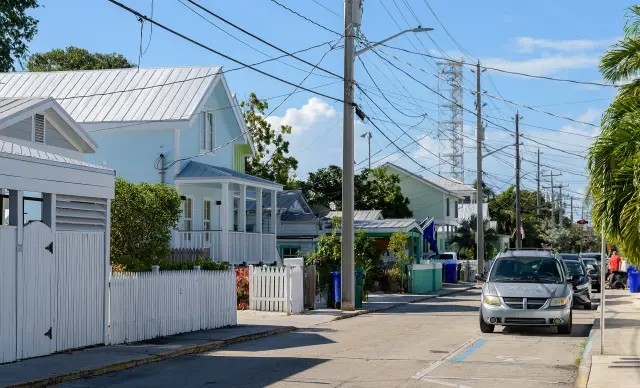
Short answer: Sunken Gardens began when plumber George Turner Sr. bought and drained a pond on St. Petersburg's 4th Street North, in 1903 by a city preservation report or 1911 by the garden's own timeline. It opened officially as an attraction in December 1936, stayed with three generations of Turners, was designated a local landmark in 1998, and was sold to the City of St. Petersburg in 1999.
Last verified: October 19, 2026, against the sources listed at the end of this page.
When did Sunken Gardens in St. Petersburg begin, and why do the dates disagree?
Sunken Gardens began when plumber George Turner Sr. bought land on what is now 4th Street North in St. Petersburg, in 1903 according to a city preservation report and in 1911 according to the city-run garden's own timeline.
The 1903 date comes from the City of St. Petersburg Cultural Landscape Report of August 8, 2011, excerpted in a January 12, 2021 staff report to the Community Planning and Preservation Commission, which says the area was pioneer country not long before George T. Turner's purchase of the land in 1903 (City of St. Petersburg, 2021). The Sunken Gardens history page, run by the city, opens its timeline with 1911, when Turner, a plumber, avid gardener and real estate prospector, bought the 4.1 acres (Sunken Gardens history).
| Question | City preservation report (2011 text) | Sunken Gardens timeline | National Register nomination |
|---|---|---|---|
| Land purchase | 1903 | 1911, 4.1 acres | Not stated |
| Size of the attraction | 5 acres | 4.1 acres bought | About 4 acres |
| Earliest entrance building | 1940s entrance on 18th Avenue North | 1940 entrance and gift shop | Original entrance from 1924 |
| Market building date | Not stated | Main entrance established in 1926 | Designed in 1926, opened June 1927 |
| Market building becomes the gardens' entrance | Not stated | 1966 | Sold to Sunken Gardens in 1967 |
| National Register listing | Not stated | Main entrance, 1999 | NPGallery date published 6/27/2002 |
None of the city or federal pages fetched for this guide reconciles these figures, so the table keeps each source's number. The same 2011 report says Turner built his family a house on the site around 1910, which fits either purchase year (City of St. Petersburg, 2021).
How did a drained pond in St. Petersburg become a roadside attraction?
Turner drained a marshy pond on his St. Petersburg land, farmed the muck, and around 1930 turned the plot into a paid garden attraction that opened officially for the winter season of December 1936.
The 2011 Cultural Landscape Report describes the site as a large pond with a marshy fringe that neighbors' horses and cows kept getting stuck in; Turner installed a pipe system, drained it, and grew fruits, vegetables, flowers and ornamental plants on the mucky flats and sandy uplands (City of St. Petersburg, 2021). It says he hit on the idea of a garden attraction around 1930 as a way to survive the economic collapse of the early 1930s, and that he and his son Ralph spent much of the next six years building and planting it, with George Turner Jr. joining soon after.
The garden's own timeline tells the same years with different detail: in the early 1930s Turner drained the sinkhole known as Curlew Pond through a maze of clay tiles, and neighbors enjoyed walking through the sunken garden so much that tours cost fifteen cents by the early 1930s (Sunken Gardens history). It credits his wife, Eula Turner, with a large role in establishing the gardens as a landmark, and dates hard times to 1926, when Florida's land bust hit and tough economic times followed two hurricanes and record freezes.
The 1936 opening put Turner's Sunken Gardens early in a statewide trend. The city report says roadside attractions multiplied in Florida from the 1930s to the 1960s and calls Sunken Gardens one of the earliest, most successful and longest-lived examples (City of St. Petersburg, 2021).
What changed at Sunken Gardens during the Turner family peak years, 1940 to 1989?
From 1940 to 1989 the Turners added two entrance buildings, flamingos, an aviary and about two dozen animal pens at Sunken Gardens, hit record attendance in 1972, and then put the St. Petersburg property up for sale in 1989.
In 1940 the Turners built their first official entrance and gift shop, the building that now holds the History Center, and in the 1940s and 1950s the gardens were a social center for weddings, teas, beauty contests, garden clubs and fashion shows (Sunken Gardens history). The Turner sons took over after serving in World War II and brought the first flock of flamingos in 1955; a large walk-through aviary followed in 1965.
George Sr. retired in 1952, and a new, larger entrance and gift shop was built facing 4th Street, replacing the old Turner house (City of St. Petersburg, 2021). The National Register nomination names the architect of that 1952 entrance as William B. Harvard Sr., the St. Petersburg architect who also designed the Williams Park Band Shell and the St. Petersburg Municipal Pier (National Park Service). From 1967 the Turners' staff built faux stone enclosures by spraying a cement mixture over hand-formed steel and mesh frames, and by the mid 1970s the garden had about two dozen pens and aviaries.
The decline came with the highways. The city timeline says 1972 brought the highest attendance yet, just as Walt Disney World opened in Orlando, while new highways pulled traffic away from roadside attractions; the Turner grandsons took over management in 1979 and offered the gardens for sale in 1989 (Sunken Gardens history).
What is the history of the old market building at Sunken Gardens on 4th Street North?
The large building at the front of Sunken Gardens on 4th Street North opened in June 1927 as the Sanitary Public Market, then served the American Legion and a Coca-Cola bottling plant before the gardens bought it in 1967.
The 2002 National Register nomination says architect Albert Lee Hawes designed the market in 1926 in the Mediterranean Revival style, which held about 38,000 square feet, counter space for 26 merchants and ten arcade stores on 4th Street North; the St. Petersburg Evening Independent called it one of the largest markets in the South (National Park Service). The market failed in the land bust and closed less than three years after opening. The St. Petersburg American Legion post bought it in 1931 as its armory, and the St. Petersburg Coca-Cola Bottling Company bought it in 1940.
Coca-Cola outgrew the building and sold it to neighboring Sunken Gardens in 1967. The Turners turned the old Main Market into the jungle-themed World's Largest Gift Shop with a new main entrance, used the former auditorium for the King of Kings Wax Museum, enclosed the loggia and plastered over most windows (National Park Service). Sunken Gardens occupied the building until 1995, then kept only the east portion for veterinary and horticulture uses. The city timeline dates the start of that transformation to 1966 and says the main entrance was established in 1926 (Sunken Gardens history), against 1967 and a June 1927 opening in the nomination.
The building is listed on the National Register as the Sanitary Public Market, record 02000680, at 1825 4th St. N, in the Mission/Spanish Revival style, with a publication date of 6/27/2002 (National Park Service NPGallery).
How did the City of St. Petersburg come to own Sunken Gardens?
St. Petersburg designated Sunken Gardens a local historic landmark in 1998, voters approved a citizen-sponsored referendum and one-time tax in 1999, and the Turner family sold the garden to the city that year.
The National Register nomination says years of deferred maintenance had damaged the market building, falling attendance left little money for repairs, and the owners looked for a buyer; the building and complex were saved from demolition by local historic designation in 1998 and a referendum approved in 1999 (National Park Service). The city timeline adds that local citizens voted for a one-time tax increase to save the gardens (Sunken Gardens history).
Sunken Gardens is an individually listed landmark of the St. Petersburg Register of Historic Places, file 98-03, owned by the City of St. Petersburg (City of St. Petersburg, 2021). Since the 1999 sale it has run as a municipally owned botanical garden. The city report records that the city removed the cave and waterfall rockwork on the Main Building, demolished the 1952 entrance building and cleared some animal enclosures, shifting the site toward plants and education.
Preservation work is still moving. At its January 12, 2021 meeting the Community Planning and Preservation Commission reviewed a Certificate of Appropriateness to rehabilitate the 1940 entrance house, several faux rock structures and historic pathways, which the staff report calls among the most historic and character-defining resources left at Sunken Gardens (City of St. Petersburg, 2021).
Where can Sunken Gardens history be seen today?
The Sunken Gardens History Center, opened October 22, 2022 inside the restored 1940 entrance building, holds the photographs, home movies and oral histories of the Turner years.
The City of St. Petersburg says the History Center restoration, exhibits, plaza seating and orchid arbor were paid for by the Florida Division of Historical Resources, the city, Penny for Pinellas and the Sunken Gardens Forever Foundation, and that the 1940 building had held the garden's tropical birds at night before the work (City of St. Petersburg, 2022).
The surviving pieces of the Turner era to look for on the grounds are the 1940 entrance, the faux stone enclosures and the old paths, the three resources the 2021 staff report singled out (City of St. Petersburg, 2021). Hours, admission and parking are in the Digital Towns Visiting Sunken Gardens, St. Petersburg guide in the landmarks section.
Last verified: October 18, 2026, against the city-run Sunken Gardens history page, the 2022 History Center release, the 2021 St. Petersburg preservation staff report, and the National Park Service record and nomination for the Sanitary Public Market.
Frequently asked questions
Who started Sunken Gardens in St. Petersburg?
George Turner Sr., a plumber and gardener, started it by draining a pond on his land on 4th Street North. City records say he and his son Ralph spent about six years building the attraction from around 1930, and three generations of the Turner family owned it until the 1999 sale to the City of St. Petersburg.
When did Sunken Gardens open to the public?
A City of St. Petersburg preservation report says Sunken Gardens opened officially for the winter season in December 1936. The garden's own timeline says Turner was already charging fifteen cents for tours by the early 1930s, so paying visitors came before the official opening.
Why did the City of St. Petersburg buy Sunken Gardens?
The Turner grandsons put the gardens up for sale in 1989 as attendance fell. The National Park Service nomination says the complex was saved from demolition by local historic designation in 1998 and a citizen-sponsored referendum approved by voters in 1999, and the family sold it to the city that year.
Which part of Sunken Gardens is on the National Register?
The front building is. NPGallery lists the Sanitary Public Market at 1825 4th St. N as record 02000680 with a publication date of June 27, 2002. The garden itself is an individually listed landmark of the St. Petersburg Register of Historic Places, file 98-03.
What was the World's Largest Gift Shop at Sunken Gardens?
After buying the old Sanitary Public Market from the Coca-Cola Bottling Company in 1967, the Turners turned its main hall into a jungle-themed gift shop they billed as the World's Largest Gift Shop, with the King of Kings Wax Museum in the former auditorium. It operated there until 1995.
Sources
- Sunken Gardens (City of St. Petersburg), History https://sunkengardens.org/history/ Used for: timeline: 1911 purchase of 4.1 acres, 1926 land bust, early 1930s draining of Curlew Pond and fifteen cent tours, 1940 entrance and gift shop now the History Center, 1955 flamingos, 1965 aviary, 1966 main entrance change, 1972 attendance, 1979 grandsons, 1989 for sale, 1998 Local Historic Landmark, one-time tax, 2022 History Center
- City of St. Petersburg, Community Planning and Preservation Commission staff report, case 20-90200120 (January 12, 2021) https://www.stpete.org/Government/Government/Agendas%20and%20Documents/Agendas%20and%20Documents/CPPC/2021/2021-01-12%20Package%2020-90200120.pdf Used for: St. Petersburg Register landmark 98-03, owner City of St. Petersburg, 2011 Cultural Landscape Report excerpt: 1903 purchase, pond drained, house c. 1910, attraction idea around 1930, official opening December 1936, 1940s entrance, 1952 entrance, 1967 faux stone technique, 1999 sale to the city, later removals, 1940 entrance house rehabilitation proposal
- National Park Service, National Register nomination, Sanitary Public Market (2002) https://npgallery.nps.gov/GetAsset/6e41bf3e-5965-4b30-95fb-92aa67a89895 Used for: June 1927 opening, architect Albert Lee Hawes, 38,000 square feet, closed under three years, American Legion 1931, Coca-Cola 1940, William B. Harvard Sr. and 1952 entrance, 1967 sale to Sunken Gardens and World's Largest Gift Shop, King of Kings Wax Museum, use until 1995, 1998 designation and 1999 referendum, original 1924 entrance
- National Park Service NPGallery, Sanitary Public Market record 02000680 https://npgallery.nps.gov/AssetDetail/NRIS/02000680 Used for: National Register ID 02000680, Mission/Spanish Revival, date published 6/27/2002, 1825 4th St. N, significant years 1927 and 1940
- City of St. Petersburg, Sunken Gardens Opens New History Center (2022) https://www.stpete.org/news_detail_T30_R503.php Used for: History Center in the original 1940 entrance and gift shop, opened October 22, 2022, funding from the Florida Division of Historical Resources, the city, Penny for Pinellas and the Sunken Gardens Forever Foundation, three generations of Turner ownership
- Sunken Gardens (City of St. Petersburg), Plan Your Visit https://sunkengardens.org/plan-your-visit/ Used for: hours, last admission 4 p.m., closed Thanksgiving, Christmas Eve and Christmas Day, admission $18, $15, $8, nearly 200 free parking spaces, overflow at Crescent Lake Park, phone 727-551-3102
How this page was made
Digital Towns uses AI assistance to research and write its guides, and every page is only as good as the sources it cites. Our goal is the most accurate, useful local information possible.
This page was fact-checked twice before publishing.
If you see an error, or anything you can show is false, tell us right away and we will take a third look.
Report an error
Thank you. We'll take a third look and correct the page if it's wrong.