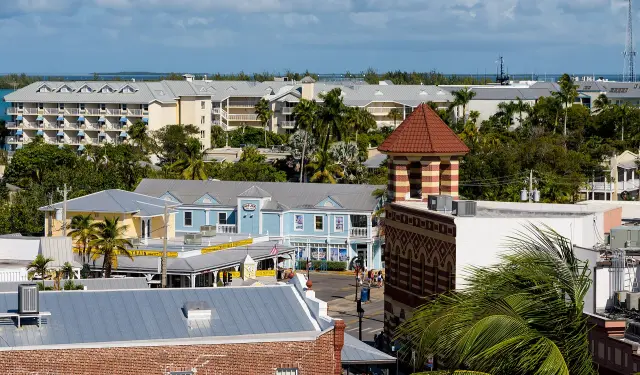
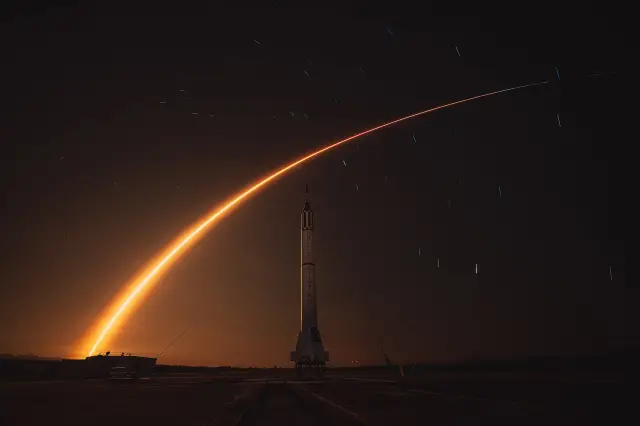
Short answer: Radiation, Inc. was a Melbourne electronics company founded in 1950 by engineers Homer Denius and George Shaw, first housed in an old Naval building at the Melbourne Airport. It built PCM telemetry, tracking antennas and spacecraft electronics for the space program and defense missiles, grew to several thousand employees, and merged with Harris-Intertype Corporation on July 12, 1967, a lineage Florida Tech traces to today's L3Harris.
Last verified: October 16, 2026, against the sources listed at the end of this page.
What was Radiation, Inc.?
Radiation, Inc. was an electronics engineering company founded in Melbourne in 1950 that, by Florida Tech's account, became Harris Corp., today L3Harris Technologies.
The Florida Tech archives collection guide states that Homer Denius and George Shaw founded it in 1950, that it was first located in an old Naval building at the Melbourne Airport, and that it focused on developing PCM telemetry systems, digital data communications systems and tracking antennas. Seventeen years later it merged with Harris-Intertype Corporation.
The Evans Library annual-report exhibit dates the merger to July 12, 1967, and says the legacy of Radiation Inc. and its founders lies in the success and global reputation of today's Harris Corporation in communication and technology markets. This page covers the Melbourne company from its founding at the airport to that 1967 merger and what it left behind.
| Year | Event |
|---|---|
| 1949 | Homer Denius and George Shaw leave their jobs and move to Melbourne |
| 1950 | Radiation, Inc. founded, first located in an old Naval building at the Melbourne Airport |
| 1958 | Denius and Shaw back Jerome Keuper's plan for Brevard Engineering College |
| 1960 | Denius forms the Denius Foundation to support the college |
| 1961 | Denius transfers 1,000 shares of Radiation stock to the college |
| July 12, 1967 | Radiation officially merges with Harris-Intertype Corporation |
| February 22, 1969 | Homer R. Denius Student Center dedicated at Florida Tech |
| 1996 | Former employees begin holding Radiation Old Timer reunions |
Who founded Radiation, Inc., and why in Melbourne?
Both founders were engineers who moved to Melbourne in 1949 to bet on government contracts at the new Cape Canaveral missile range.
A Florida Tech News history by Gordon Patterson (August 24, 2020) reports that Homer Denius was born in 1914 in Appomattox, Virginia, built his first radio at age 10, earned an electrical engineering degree from the University of Cincinnati and went to work for Melpar Corp. in Alexandria, Virginia, after World War II. In 1949 Denius and his friend George Shaw gave up their jobs, sold their Washington homes and moved to what Patterson calls a sleepy east-central Florida town called Melbourne.
The bet was on the missile range. Patterson writes that the two men believed there was a future in government contracts supporting the missile test project taking shape at Cape Canaveral. The Melbourne building they started in had a wartime past: the state's Naval Air Station Melbourne marker records a 129-building Navy station at the Melbourne Municipal Airport from 1942 to 1946, and the Museum of Florida History says that when the station closed in February 1946 it reverted to the local municipality for civilian use.
What did Radiation, Inc. build in Melbourne?
In Melbourne, Radiation built tracking and telemetry electronics that let rockets, missiles and satellites report back to the ground.
The Radiation Inc. Archives at Florida Tech's Evans Library describe the Melbourne engineers as pioneers of electronics for the space and defense industries, specializing in PCM telemetry, satellite earth stations, spacecraft electronics, electronic surveillance and satellite reconnaissance. The annual-report exhibit says Radiation products were used on the first weather and communication satellites and on defense missile programs, and lists programs including Courier, which it calls the first U.S. space satellite, Doppler radar, Apollo, Saturn, Titan, Minuteman, the Lunar Excursion Module and the Orbiting Astronomical Observatory.
The engineers' own records fill in the detail. Item descriptions in the online Melbourne archive show Radiation staff designing components for Doppler navigation radar, building a timing unit for the Apollo and Saturn data processing systems, developing PCM telemetry equipment for Minuteman, supervising the test lab during Titan I and Titan II, and packaging electronics for the Nimbus and Orbiting Astronomical Observatory satellites and for Atlas telemetry.
Radiation's customers reached far beyond Brevard County. The ArchivesSpace guide lists contracts with Boeing, Northrop Grumman, the Radio Corporation of America, General Electric and General Motors, and photographs of overseas installation projects in the United Kingdom, Germany, Guam and Asmara, Eritrea. The Florida Tech radio telemetry subject listing describes the company in two archived collections as an engineering company based in Melbourne that focused on communications electronics from 1950 to 1967.
How large did Radiation grow before 1967?
Radiation grew from its airport start to facilities in Palm Bay and Orlando, along with expansions throughout Melbourne, according to the Florida Tech collection guide.
Sources at Florida Tech give two different headcounts for the merger year. The ArchivesSpace guide says Radiation had over 3,000 employees when it merged with Harris-Intertype in 1967, while the Evans Library digital collection states that only seventeen years after its founding the Melbourne company had grown to 5,000 employees and was acquired by Harris Corporation. Neither page explains the difference, so both figures are given here as published.
The guide also notes that the Melbourne company presented its research and products at conferences and expositions such as the National Symposium on Telemetering, the National Telecommunications Conference and Space Congress, and that its prime years ran from 1953 to 1967.
How did Radiation, Inc. become Harris?
Radiation merged with Harris-Intertype Corporation on July 12, 1967, the date the Evans Library annual-report exhibit gives for the official merger.
The exhibit says the Melbourne company's success attracted the attention of large national corporations before that merger. Florida Tech's collection guide records that the camaraderie of Radiation's early days persisted throughout the merger with Harris Corp in 1967 and the eventual discontinuation of Radiation branding. Florida Tech News sums up the lineage: seventeen years after its founding, Radiation Inc. would become Harris Corp., today L3Harris Technologies.
The company still has its headquarters in Melbourne. L3Harris lists its corporate headquarters at 1025 W. NASA Boulevard in Melbourne on its corporate overview page.
What did Radiation leave behind in Melbourne?
Radiation helped found Melbourne's university, Florida Tech, and left its records on that campus.
Florida Tech News reports that Denius and Shaw backed Jerome Keuper's 1958 idea for Brevard Engineering College, now Florida Tech, and offered classroom space in Radiation Inc. Building No. 1. Denius formed the Denius Foundation in 1960, and in 1961, after the college acquired 40-plus acres off Country Club Road in Melbourne, he transferred 1,000 shares of Radiation stock to it. In 1964 the college awarded Denius and Wernher von Braun honorary doctorates in space science, and two years later Denius was named chairman of its board of trustees. The Homer R. Denius Student Center was dedicated on February 22, 1969, and Denius died in April 2006 at age 92.
The company's paper trail sits on the same Melbourne campus. The Harry P. Weber University Archives hold the Radiation, Inc. Small Collections, 2.51 cubic feet in seven boxes, and the online Radiation Inc. Archives list 782 items, including manuals, photographs, correspondence and physical objects. The collection guide notes that former employees began holding Radiation Old Timer reunions in 1996, and many of the donated items came from those gatherings.
Last verified: October 15, 2026, by re-reading the Radiation, Inc. collection guide, subject listing, digital collection and annual-report exhibit at Florida Tech, Patterson's Denius Student Center history, the state's Naval Air Station Melbourne marker, the Museum of Florida History entry and the L3Harris corporate overview page.
Frequently asked questions
When was Radiation, Inc. founded?
Homer Denius and George Shaw founded Radiation, Inc. in 1950, according to the Florida Tech archives. The two engineers had moved to Melbourne in 1949 and started the company in an old Naval building at the Melbourne Airport.
Is Radiation, Inc. the same company as L3Harris?
Radiation, Inc. merged with Harris-Intertype Corporation on July 12, 1967, and Florida Tech News describes the Melbourne company's descendant today as L3Harris Technologies, which lists its corporate headquarters on W. NASA Boulevard in Melbourne.
How many people worked at Radiation, Inc.?
Florida Tech's sources differ for 1967. The archives collection guide says over 3,000 employees at the Harris-Intertype merger, while the Evans Library digital collection says the company had grown to 5,000 employees by then.
What did Radiation, Inc. make in Melbourne?
The Evans Library archives list PCM telemetry, satellite earth stations, spacecraft electronics, electronic surveillance and satellite reconnaissance, and the annual-report exhibit names programs such as Courier, Apollo, Saturn, Titan and Minuteman.
Where are the Radiation, Inc. records kept?
Florida Tech's Harry P. Weber University Archives and Special Collections in Melbourne hold the Radiation, Inc. Small Collections and several employee paper collections, and the Evans Library hosts an online Radiation Inc. Archives with 782 items.
Sources
- Radiation, Inc. Small Collections, SC-RAD010 (Florida Tech Harry P. Weber University Archives and Special Collections) https://ais.lib.fit.edu/repositories/3/resources/75 Used for: founding by Denius and Shaw in 1950, old Naval building at the Melbourne Airport, Palm Bay and Orlando facilities, over 3,000 employees at the 1967 Harris-Intertype merger, PCM telemetry and tracking antennas, customers, overseas installations, Old Timer reunions from 1996
- Radiation Inc. Archives (John H. Evans Library Digital Collections, Florida Tech) https://digcollections.lib.fit.edu/collections/show/5 Used for: specialties in PCM telemetry, satellite earth stations and spacecraft electronics; 5,000 employees by 1967; 782 catalogued items
- Radiation, Inc. Archives: Reports 1956-1969 (Evans Library Digital Collections, Florida Tech) https://digcollections.lib.fit.edu/exhibits/show/1956-1969_annual_reports Used for: July 12, 1967 merger date; Courier, Apollo, Saturn, Titan, Minuteman, LEM and OAO programs
- Radio Telemetry subject listing (Florida Tech ArchivesSpace) https://ais.lib.fit.edu/subjects/485 Used for: Frank A. Perkins and Nancye Meyers papers describing Radiation, Inc. (1950-1967) as a Melbourne engineering company focused on communications electronics
- Secret History of the Homer R. Denius Student Center (Florida Tech News, Gordon Patterson, August 24, 2020) https://news.fit.edu/campus/secret-history-of-the-homer-r-denius-student-center/ Used for: Denius biography, 1949 move to Melbourne, Cape Canaveral missile project rationale, Radiation Building No. 1 classrooms for Brevard Engineering College, 1,000 shares of stock, 1969 student center dedication, Denius death 2006
- Naval Air Station Melbourne, Florida Historical Marker (Florida Department of State, 2001) https://markers.flheritage.com/home/details/22 Used for: wartime Navy station at the Melbourne Municipal Airport, 1942 to 1946
- NAS Melbourne, World War II Historical Sites (Museum of Florida History) https://museumoffloridahistory.com/explore/exhibits/permanent-exhibits/world-war-ii/historical-sites/eastcentral-listing/nas-melbourne/ Used for: station reverted to the local municipality for civilian use in 1946
- Who We Are (L3Harris Technologies) https://www.l3harris.com/who-we-are Used for: corporate headquarters at 1025 W. NASA Boulevard, Melbourne
How this page was made
Digital Towns uses AI assistance to research and write its guides, and every page is only as good as the sources it cites. Our goal is the most accurate, useful local information possible.
This page was fact-checked twice before publishing.
If you see an error, or anything you can show is false, tell us right away and we will take a third look.
Report an error
Thank you. We'll take a third look and correct the page if it's wrong.