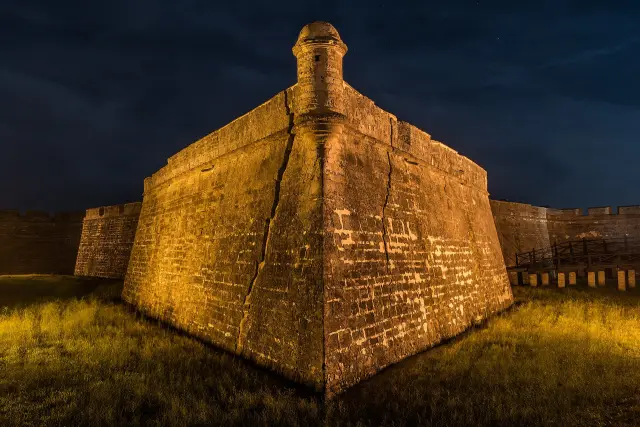
Short answer: Vizcaya Museum and Gardens is James Deering's 1914 to 1916 Biscayne Bay estate at 3251 South Miami Avenue in Miami. Miami-Dade County has owned it since buying the house and gardens in 1952, and a nonprofit has run it since a 2017 county ordinance. The operator opens it daily except Tuesdays from 9:30 a.m. to 4:30 p.m., and Vizcaya Metrorail Station is about a 10-minute walk away.
Last verified: October 19, 2026, against the sources listed at the end of this page.
What is Vizcaya, and who owns it?
Vizcaya is James Deering's 1914 to 1916 winter estate at 3251 South Miami Avenue on Biscayne Bay in Miami, owned by Miami-Dade County and run by a nonprofit trust.
The National Park Service landmark nomination describes a palatial 70-room mansion on the west shore of Biscayne Bay, an Italian Renaissance-style villa with coral rock and limestone loggias and arcades under a red barrel tile roof (National Park Service, Vizcaya NHL nomination). When it was built, 180 acres were landscaped and included a working farm called the village; the estate is much smaller today (NPS).
Ownership is public. Miami-Dade Ordinance 17-42, adopted on July 6, 2017, describes a partnership in which the county retains sole ownership of Vizcaya's grounds, buildings and art collections, while management and operations, including personnel, are overseen by Vizcaya Museum and Gardens Trust, Inc., a 501(c)(3) organization, under an agreement with the county (Miami-Dade Legislative File 171827). The operator's own site repeats that Vizcaya is owned and supported by Miami-Dade County (Vizcaya).
What are Vizcaya's hours, and what do tours cost?
Vizcaya is open daily except Tuesdays from 9:30 a.m. to 4:30 p.m., according to the operator of the Miami estate, which sells admission through its online ticketing.
| Option | Price or status | Notes |
|---|---|---|
| Museum and gardens, daily except Tuesdays | Online tickets | 9:30 a.m. to 4:30 p.m. |
| Preservation Pass | $75 | Unlimited admission for two, all year |
| Vizcaya Village guided tour | $6 adults; free for children 12 and under and members | 30 minutes, during the weekly farmers market, from the tent at 3250 S. Miami Ave |
| Main House guided tours | On hold | Until further notice; garden tours seasonal |
| Audio tour | Free with museum admission | In the Vizcaya app or a web browser |
Sources: Vizcaya tickets page for the first two rows; Vizcaya, visit planning page for the rest.
The general admission price itself was not printed on the visitor pages read on October 18, 2026, so the checkout page is the place to confirm it (Vizcaya). The operator offers complimentary admission to visitors identifying as disabled and an accompanying caregiver, and its phone line is 305-250-9133 (Vizcaya; Vizcaya).
Practical warnings from the operator: footwear is required, and the Main House, gardens and grounds have many steps and uneven floors; accessible parking is in the main lot and in the service area on the south side of the Main House, which has a wheelchair lift (Vizcaya).
How is Vizcaya reached by Metrorail, trolley or car?
The Vizcaya Metrorail Station is about a 10-minute walk from the Miami estate's entrance, by the pedestrian overpass over US1 to SW 32nd Road and east to South Miami Avenue, the operator says.
The operator lists the Brickell Trolley, which stops on South Miami Avenue at stop #39 northbound and #15 southbound, plus the Coral Way Trolley and Metrobus Routes 17 and 24 Coral Way Limited at the Metrorail station (Vizcaya directions and parking). The City of Miami's own trolley page confirms Vizcaya Metrorail Station as a Coral Way Trolley stop, with service Monday to Saturday from 6:30 AM to 11:00 PM and Sundays from 8:00 AM to 8:00 PM (City of Miami trolley routes).
By car, the operator puts the estate a quarter mile off I-95, one mile from downtown Miami and 10 miles from south Miami Beach (Vizcaya). Vizcaya Village is a separate stop on the west side of South Miami Avenue, across from the Main House, and buses or other large vehicles need advance arrangements at 305-860-8442 (Vizcaya).
Who built Vizcaya, and when?
Vizcaya was built from 1914 to 1916 for industrialist James Deering, with designer Paul Chalfin advising him and Diego Suarez designing the gardens, according to the National Park Service.
The NPS nomination says Deering, born November 12, 1859, in South Paris, Maine, was the second son of William Deering, developer of the Deering harvester machine; his holdings on the Miami shore comprised some 180 acres of shoreline, hammock and pineland (National Park Service). Chalfin, a New York painter and designer, brought in architect F. Burrall Hoffman, Jr. (1884 to 1980), who began his drawings while visiting the site in 1913, and in 1914 Suarez (1888 to 1974), educated as an architect in Florence, was commissioned for the gardens, laying out the main garden in a fan-shaped plan (NPS).
Vizcaya opened its doors on Christmas of 1916 with a pageant arranged by Chalfin, the nomination says, and Deering wintered there each season until he died in September 1925 aboard ship returning from France (National Park Service). The 1914 to 1916 dates and the 1916 opening are for the house; the same form notes that, with the interruption of World War I, the gardens took seven years to complete to Suarez's designs (NPS).
How did Vizcaya become a Miami-Dade County museum?
Dade County bought Vizcaya's house and gardens in 1952 for $1,000,000 in bonds, and the estate opened in 1953 as the Dade County Art Museum, according to federal and county records.
After Deering's death his brother's children inherited Vizcaya and sold off some of the original acreage; in 1952 the county purchased the house and gardens and the family donated the furnishings and art work (National Park Service). Miami-Dade County's Historic Resource Guide dates the opening as the Dade County Art Museum to 1953 and calls it a monumental moment in the county's preservation history (Miami-Dade County Historic Resource Guide).
The landmark nomination describes the estate as then operated by the Dade County Park and Recreation Department as a decorative arts museum, and the 2017 ordinance moved day-to-day management to the nonprofit while the county kept ownership (NPS; Miami-Dade Ordinance 17-42). The form also records that on August 24, 1992 Hurricane Andrew spared the house except for water in the basement but caused $4,000,000 of damage to the grounds (National Park Service).
Is Vizcaya a National Historic Landmark?
Yes: Miami-Dade County's resource guide lists Vizcaya as a National Historic Landmark since April 19, 1994, on top of National Register listings in 1970 and 1978 and a 1982 local designation.
The guide's entry, Vizcaya; James Deering Estate, covers 3251 S Miami Ave. and the area roughly bounded by S Dixie Hwy., SW 32nd Rd. and S Miami Ave., with local designation on 9/28/82, National Register listings on 9/29/70 and 11/15/78, and landmark status on 4/19/94 (Miami-Dade County Historic Resource Guide). The county guide lists the estate in its Miami Historic Sites section (Miami-Dade County).
The National Park Service form for the Miami estate that supported the landmark designation dates the period of significance to 1914 to 1916 and names Hoffman as architect and Suarez for the gardens (NPS).
Last verified: October 18, 2026, against the NPS Vizcaya landmark nomination, the Miami-Dade Historic Resource Guide, Miami-Dade Ordinance 17-42, the City of Miami trolley routes page and the operator's visit, ticket and directions pages for the South Miami Avenue estate.
Frequently asked questions
What are Vizcaya's hours?
The operator lists Vizcaya as open daily except Tuesdays from 9:30 a.m. to 4:30 p.m. Main House guided tours were on hold as of October 18, 2026.
Who owns Vizcaya Museum and Gardens?
Miami-Dade County owns the grounds, buildings and art collections under Ordinance 17-42 of 2017, and Vizcaya Museum and Gardens Trust, Inc., a nonprofit, manages and operates it.
When was Vizcaya built?
The National Park Service landmark nomination says Vizcaya was built from 1914 to 1916 as James Deering's winter home and opened at Christmas 1916.
Can Vizcaya be reached without a car?
Take Metrorail to Vizcaya Station and walk about 10 minutes over the US1 overpass, or ride the Coral Way Trolley, which the City of Miami lists as stopping at Vizcaya Metrorail Station.
When did Vizcaya become a public museum?
Dade County bought the house and gardens in 1952 for $1,000,000 in bonds, and the county's resource guide says it opened as the Dade County Art Museum in 1953.
Sources
- Vizcaya National Historic Landmark nomination, NPS https://npgallery.nps.gov/pdfhost/docs/NHLS/Text/70000181.pdf Used for: construction, designers, 1952 purchase, Hurricane Andrew
- Miami-Dade County Historic Resource Guide, July 2025 https://gisweb.miamidade.gov/agolpdf/July_2_2025_202502_MiamiDadeHistoricStoryMaps_LR.pdf Used for: designation dates, 1953 opening
- Miami-Dade Ordinance 17-42, file 171827 http://www.miamidade.gov/govaction/matter.asp?matter=171827&file=false&fileAnalysis=false&yearFolder=Y2017 Used for: county ownership and nonprofit management
- City of Miami Trolley Maps and Routes https://www.miami.gov/Transportation-Roadways/Trolley-Information/Trolley-Maps-Routes Used for: Coral Way Trolley stop and hours
- Planning Your Visit, Vizcaya Museum and Gardens (operator) https://vizcaya.org/visit-2/planning-your-visit/ Used for: own hours, tours, accessibility
- Directions and Parking, Vizcaya Museum and Gardens (operator) https://vizcaya.org/visit-2/directions-and-parking/ Used for: own directions and transit list
- Tickets, Vizcaya Museum and Gardens (operator) https://vizcaya.org/visit/tickets/ Used for: Preservation Pass price, ownership statement
How this page was made
Digital Towns uses AI assistance to research and write its guides, and every page is only as good as the sources it cites. Our goal is the most accurate, useful local information possible.
This page was fact-checked twice before publishing.
If you see an error, or anything you can show is false, tell us right away and we will take a third look.
Report an error
Thank you. We'll take a third look and correct the page if it's wrong.