Short answer: Manatees live in Miami-Dade waters year-round, and in winter they crowd into canals and rivers warmed by groundwater, since they suffer below 68 degrees. Vessel collisions have been the leading cause of manatee deaths in Miami-Dade over the past decade, so FWC Rule 68C-22.025 sets idle, slow speed and seasonal no entry zones, including idle speed on the Miami River. Injured or dead manatees are reported to FWC at 1-888-404-3922.
Last verified: October 15, 2026, against the sources listed at the end of this page.
When are manatees in Miami waters?
Manatees live in Miami-Dade County year-round, but in winter large numbers move south or to springs and heated power plant discharges, and those that stay seek out warmer canals and rivers (Miami-Dade County).
Temperature drives the pattern. Miami-Dade County says manatees suffer from the cold when water falls below 68 degrees and may become ill or die without warm refuge, and that in Miami-Dade, canals and rivers influenced by warmer groundwater flows provide that refuge (Miami-Dade County). The U.S. Fish and Wildlife Service adds that manatees cannot tolerate water below 68 degrees Fahrenheit for extended periods and rely on springs, power plant outfalls and passive thermal basins in cooler months (USFWS).
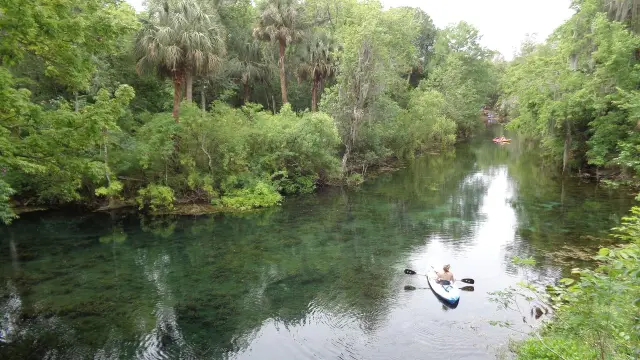
Manatees seek shelter in warm canals during cold weather, and the county asks people not to disturb them there and to be careful not to disturb a mother with a nursing calf (Miami-Dade County). Out on the bay, Biscayne National Park says manatees are regular visitors to park waters (Biscayne National Park).
What a Miami boater is looking for: adult manatees are typically 9 to 10 feet long and weigh around 1,000 pounds, they spend up to 8 hours a day eating seagrass, and they usually surface every three to five minutes to breathe (USFWS). They feed along seagrass bed margins with access to deep water channels, where they may flee when threatened (USFWS).
What boating speed zones protect manatees in Miami?
Miami-Dade has state manatee protection zones under Rule 68C-22.025, ranging from idle speed on the Miami River to winter no entry zones in some canals, set by FWC under the Manatee Sanctuary Act (FWC Miami-Dade zone maps).
FWC adopts the zones under the Manatee Sanctuary Act, section 379.2431(2), Florida Statutes, and the rules sit in Chapter 68C-22 of the Florida Administrative Code; in especially important areas they can prohibit or limit entry, and local governments can add their own zones by ordinance, which take effect only after FWC approval (FWC). The Miami-Dade maps use zone types from motorboats prohibited and no entry through idle speed, slow speed and 30 or 35 mph limits, some all year and some only from November 15 to April 30 (FWC Miami-Dade zone maps).
| Waterway | Rule | When |
|---|---|---|
| Miami River, SR 953 to the Intracoastal Waterway, with Palmer Lake, Seybold Canal and the South Fork | Idle speed | All year |
| SW 15th Road to the south edge of Cutler Drain Canal C-100 | 1,000 foot slow speed buffer | All year |
| Black Point to Turkey Point | 1,000 foot slow speed buffer | All year |
| Oleta River northwest of US 1 | Idle speed | All year |
| Tamiami Canal and Blue Lagoon Lakes, SR 959 to the Miami River | Slow speed | All year |
| Portions of Biscayne Canal, Little River and Coral Gables Canal | No entry | November 15 to April 30 |
| Portions of the Intracoastal Waterway in Dumfoundling Bay and Biscayne Bay between the Broad and Venetian Causeways, and portions of Meloy (East) Channel | Slow speed | November 15 to April 30 |
The rows above come from the FWC Miami-Dade maps (FWC Miami-Dade zone maps) and the FWC cold-weather list, which names the Miami-Dade changes for November 15 to April 30: no entry in portions of the Biscayne Canal, Little River and Coral Gables Canal, and slow speed in parts of Meloy Channel and the Intracoastal Waterway in Dumfoundling Bay and Biscayne Bay between the Broad Causeway and Venetian Causeway (FWC cold-weather zones). The maps warn that they show only FWC zones and that boaters must follow the signs posted on the water (FWC Miami-Dade zone maps).
Why are boats the biggest threat to Miami manatees?
Vessel collisions are the leading known cause of manatee deaths in Florida and have been the leading cause of death in Miami-Dade County over the past decade (Miami-Dade County).
Miami-Dade County notes that the U.S. Fish and Wildlife Service has found vessel impacts remain a continuing threat to manatee populations, which is the reason FWC restricts boat speed and operation where needed (Miami-Dade County). The federal list of threats is longer: watercraft collisions, loss of seagrass forage and warm water, entanglement in fishing gear and marine debris, crushing in locks and water control structures, and cold snaps (USFWS).
Feeding manatees from a Miami dock or seawall is also off limits. NOAA Fisheries says it is illegal to feed or harass wild marine mammals including manatees (NOAA Fisheries), and Miami-Dade County asks people to avoid disturbing manatees resting in warm canals during cold weather (Miami-Dade County).
What is the Miami-Dade County Manatee Protection Plan?
The Miami-Dade County Manatee Protection Plan, approved by county, state and federal authorities in 1995, is the county plan that must include guidelines for siting new or expanded marine facilities to reduce vessel traffic risk (Miami-Dade County).
The plan traces to October 1989, when the Florida Governor and Cabinet directed 13 key counties to write manatee protection plans, a directive Florida Statute made a requirement in 2002 (Miami-Dade County). Such plans must include siting rules for new or expanded marine facilities and also address other human-related causes of death, habitat protection, education and law enforcement (Miami-Dade County).
Miami-Dade has finished a multi-year update, the first revision of the 1995 plan, built on recommendations of its Manatee Protection Plan Review Committee and coordinated with FWC and the U.S. Fish and Wildlife Service (Miami-Dade County). The county posts it as a draft and takes public comments by email. Questions go to Miami-Dade Environmental Resources Management at 701 NW 1st Court, Miami, 305-372-6789 (Miami-Dade County).
Who should be called about an injured manatee in Miami?
A sick, injured, dead or tagged manatee anywhere in Miami-Dade is reported to the FWC Wildlife Alert line at 1-888-404-3922, or *FWC or #FWC from a cell phone (Miami-Dade County).
Miami-Dade County lists what the FWC dispatcher will ask: the exact location of the animal, whether it is alive or dead, how long it has been watched, its approximate size, the closest public boat ramp, and a callback number (Miami-Dade County).
For Miami-Dade boaters, the same FWC number, 888-404-FWCC, takes violation reports, and FWC says the Florida manatee is one of the state's keystone species, whose behavior can alert researchers to habitat changes (FWC).
What has changed for Miami manatees, and which official data is out of date?
The main change for Miami manatees is federal status: FWC says the Florida manatee population has grown to a minimum of 8,350 and the species was reclassified from endangered to threatened in May 2017 (FWC).
Readers checking the Miami-Dade zones should note the dates printed on the FWC maps. They cite Rule 68C-22.025 as last amended 12/25/1991 and say the configuration of state zones is accurate as of January 2015 (FWC Miami-Dade zone maps). The rules themselves were adopted for Miami-Dade in 1991 (Miami-Dade County), so a boater relying on an old chart or app should check posted signs.
The county plan is also mid-change. The county page lists the 1995 plan as the one approved by county, state and federal authorities and posts the update as a draft, with comments accepted by email (Miami-Dade County). Protection itself is old: Miami-Dade County notes that Florida first enacted manatee protections in 1893, and today they are covered by the Florida Manatee Sanctuary Act and the federal Marine Mammal Protection Act and Endangered Species Act (Miami-Dade County).
The bay around them is under study too. NOAA's Biscayne Bay Habitat Focus Area, designated in 2015, covers Biscayne Bay and its reef tract, all of Biscayne National Park and the northern extension of the Florida Keys National Marine Sanctuary beyond the US Highway 1 bridge at Manatee Bay, and its goals include better water quality, enough freshwater inflow and better habitat for protected resources; the page notes that specific NOAA funding ended in 2020 (NOAA Habitat Focus Area).
Frequently asked questions
Are there manatees in Miami all year?
Yes. Miami-Dade County says manatees live in the county year-round. In winter many move south or to springs and power plant discharges, and those that stay gather in Miami-Dade canals and rivers warmed by groundwater.
Where can manatees be seen in Miami?
In cold weather they shelter in warm Miami-Dade canals and rivers, and Biscayne National Park says manatees are regular visitors to park waters. Viewing should be from a distance: feeding or harassing manatees is illegal, and resting animals should not be disturbed.
What is the speed limit for manatee zones on the Miami River?
FWC maps show idle speed all year on the Miami River from SR 953 to the Intracoastal Waterway, including Palmer Lake, Seybold Canal and the South Fork east of NW 37th Avenue, under Rule 68C-22.025.
Who do I call about an injured manatee in Miami-Dade?
Call the FWC Wildlife Alert line at 1-888-404-3922, or *FWC or #FWC from a cell phone. Be ready to give the exact location, whether the manatee is alive, its size and the nearest public boat ramp.
Are manatees still endangered?
No. FWC says the Florida manatee was reclassified from endangered to threatened under the federal Endangered Species Act in May 2017, after the population grew to a minimum of 8,350. It remains protected by state and federal law.
Sources
- Miami-Dade County, Manatee Protection (Environmental Resources Management) https://miamidade.gov/environment/manatee-protection.asp Used for: year-round presence, winter movement, warm canals, 68 degrees, protections since 1893, 1991 state rules, vessel collisions leading cause in Miami-Dade, reporting questions, 1989 directive, 1995 plan, draft update, office contact
- FWC, Florida Manatee Program https://myfwc.com/wildlifehabitats/wildlife/manatee/ Used for: minimum 8,350, reclassified to threatened May 2017, 888-404-3922 hotline
- FWC, Manatee Protection Zones https://myfwc.com/wildlifehabitats/wildlife/manatee/protection-zones/ Used for: Manatee Sanctuary Act 379.2431(2), Chapter 68C-22, purpose of zones
- FWC, Miami-Dade County Manatee Protection Areas maps https://myfwc.com/media/7311/miamidadempz-maps.pdf Used for: zone types and seasons, Miami River idle zone, mainland shoreline buffer, Oleta River, Black Point to Turkey Point, rule last amended 12/25/1991, configuration as of January 2015
- FWC, Seasonal manatee speed zones, cold weather https://myfwc.com/media/7306/manateespeedzones-coldweather.pdf Used for: Miami-Dade November 15 to April 30 no entry and slow speed areas
- U.S. Fish and Wildlife Service, West Indian manatee https://www.fws.gov/species/west-indian-manatee-trichechus-manatus Used for: size and weight, 68 degree limit, warm water sites, seagrass feeding, threats
- National Park Service, Biscayne National Park, Animals https://www.nps.gov/bisc/learn/nature/animals.htm Used for: manatees are regular visitors to park waters
- NOAA Fisheries, Frequent Questions: Feeding or Harassing Marine Mammals in the Wild https://www.fisheries.noaa.gov/marine-life-distress/frequent-questions-feeding-or-harassing-marine-mammals-wild Used for: illegal to feed or harass marine mammals including manatees
- NOAA Fisheries, Biscayne Bay Habitat Focus Area https://www.fisheries.noaa.gov/southeast/habitat-conservation/biscayne-bay-habitat-focus-area Used for: Habitat Focus Area reaches the US Highway 1 bridge at Manatee Bay
How this page was made
Digital Towns uses AI assistance to research and write its guides, and every page is only as good as the sources it cites. Our goal is the most accurate, useful local information possible.
This page was fact-checked twice before publishing.
If you see an error, or anything you can show is false, tell us right away and we will take a third look.
Report an error
Thank you. We'll take a third look and correct the page if it's wrong.