Short answer: Yes. American crocodiles live in Miami-Dade County at the northern end of their range, in brackish mangrove ponds, coves and creeks, in Biscayne Bay and the Turkey Point cooling canals, Everglades National Park and Florida Bay. FWC says the Florida population has recovered from a few hundred to as many as 2,000 adults and is federally threatened. They are shy; feeding them is unlawful, and anyone concerned about a crocodile calls FWC at 866-392-4286.
Last verified: October 15, 2026, against the sources listed at the end of this page.
Are there American crocodiles in Miami?
Yes, American crocodiles live in Miami-Dade County, part of the historic core range of the species in the United States (USFWS final rule, 2007), and South Florida and the Keys are the northern end of a range that runs through the Caribbean (FWC).
Miami has the oldest crocodile record in the country. The first documented occurrence of a crocodile in the United States was a collection from the Miami River off Biscayne Bay in 1869, and the historic core range included Miami-Dade, Broward and Monroe Counties (USFWS final rule, 2007).
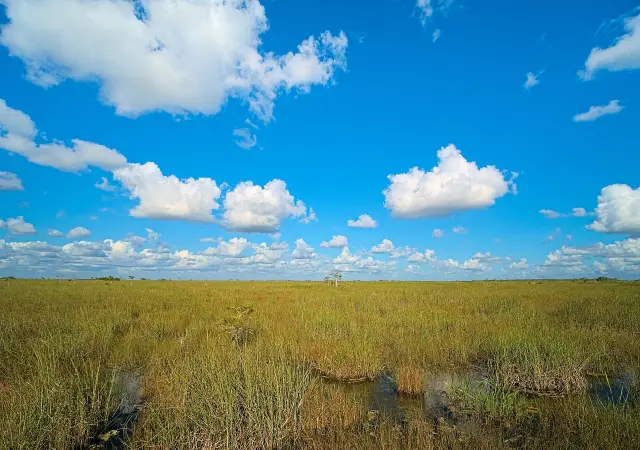
In Miami-Dade the animals belong to brackish and salt water. FWC says American crocodiles live in ponds, coves and creeks in mangrove swamps, and are occasionally encountered inland in freshwater areas of the southeast Florida coast as a result of the extensive canal system (FWC species profile). That canal link is why a crocodile can turn up well away from Biscayne Bay.
South Florida is also unusual for having two native crocodilians in the same water. Everglades National Park says only 2 of the world's 23 crocodilian species are native to the United States, and South Florida is the only place where both coexist (Everglades National Park). Around Miami that means a large reptile in a canal or lake is far more often an alligator than a crocodile.
Where do crocodiles live around Miami and Biscayne Bay?
Around Miami, crocodile habitat centers on Biscayne Bay, where the Turkey Point Power Plant cooling canals are a common nesting site, and on the mainland shore of Florida Bay in Everglades National Park (USFWS final rule).
The primary historic nesting area in Florida was the mainland shore of Florida and Biscayne Bays, including small nearshore islands, in what is today Everglades National Park (USFWS final rule). Nesting has extended back into Biscayne Bay and now commonly occurs at the Turkey Point Power Plant (USFWS final rule). The rule describes the plant, owned and operated by FPL, as an extensive network of cooling canals built in 1974 on a site of about 3,000 acres, the majority of it considered crocodile habitat (USFWS final rule).
Federal protection of that shoreline goes back to the 1970s. The 1975 proposal for crocodile critical habitat included portions of Biscayne Bay south of Turkey Point, northeast Florida Bay and the Keys, and the mainland as far west as Flamingo; the final rule designating critical habitat was published September 24, 1976 (USFWS final rule).
Biscayne National Park, the federal water park off the Miami-Dade mainland, lists the American crocodile among its reptiles (Biscayne National Park reptile list). Farther south, Crocodile Lake National Wildlife Refuge on North Key Largo was acquired in 1980 to provide over 5,000 acres of crocodile nesting and nursery habitat, and Everglades National Park set up a crocodile sanctuary in northeastern Florida Bay the same year (USFWS final rule).
How can a crocodile be told apart from an alligator in Miami?
In Miami-Dade a crocodile is grayish green with a narrow tapered snout and a lower fourth tooth showing when the mouth is closed, while an alligator is black with a broad rounded snout (FWC species profile).
| Feature | American crocodile | American alligator | Spectacled caiman |
|---|---|---|---|
| Color | Grayish green | Black | Similar to crocodile |
| Snout | Narrow, tapered | Broad, rounded | Shorter, more rounded |
| Teeth with mouth closed | Fourth lower tooth exposed | Only upper teeth exposed | Not stated |
| Usual water | Brackish or salt, mangroves | Mostly fresh | Freshwater canals and lakes |
| Size | Males rarely over 14 feet in the wild | Not covered here | Rarely over 5 feet |
The table draws on the FWC species profile for color, snout, teeth and the caiman, and on Everglades National Park for size and habitat (Everglades National Park). In the Miami canal network the third animal matters: the common or spectacled caiman, a nonnative species, looks more like the crocodile than the alligator, is found mainly in freshwater canals and lakes, and rarely exceeds 5 feet (FWC species profile).
Size helps too. Everglades National Park says male crocodiles can reach about 20 feet but rarely exceed 14 feet in the wild, breeding females are about 8 to 12 feet long, and crocodiles typically live to an age of 50 to 70 in the wild (Everglades National Park). Alligators are more numerous in Florida, darker, and typically found in freshwater, so a big reptile in a Miami-Dade freshwater lake is usually an alligator (Everglades National Park).
Are crocodiles in Miami dangerous, and who should be called?
American crocodiles are a shy and reclusive species, and anyone in Miami-Dade concerned about one should call the statewide FWC crocodile line at 866-392-4286 (866-FWC-GATOR) so a crocodile response agent can respond (FWC).
Two common sights around Biscayne Bay are often misread. A basking crocodile surprised by a person may enter the water quickly and noisily, which signals that the animal is frightened, and crocodiles that sun with their mouths open, called gaping, are regulating body temperature rather than acting aggressively (FWC). Everglades National Park adds that conflict with humans rarely occurs because of the shy nature of American crocodiles (Everglades National Park).
Feeding is where trouble starts. Florida Administrative Code Rule 68A-25.001, adopted by FWC, is titled Feeding or Enticement of Alligators or Crocodiles Unlawful (Florida Administrative Code). Biscayne National Park warns that feeding wildlife of any kind is illegal and that crocodiles fed by humans begin to associate humans with food and can become aggressive (Biscayne National Park).
On the water off Miami, Biscayne National Park notes that spearfishing and snorkeling can draw the attention of predators, and the scent of bait or fresh catches or the sound of splashing can entice sharks and crocodiles, especially near mangrove stands or sandy embankments (Biscayne National Park). A buddy and a look around before entering the water are the park's own advice.
Where can crocodiles be seen near Miami, and what does it cost?
FWC lists Everglades National Park, Biscayne National Park and Ding Darling National Wildlife Refuge as places to observe crocodiles (FWC), and the two closest to Miami both have entrances in Homestead (Everglades National Park fees; Biscayne National Park directions).
| Place | Entry cost | Hours | Address or entrance |
|---|---|---|---|
| Everglades National Park | $35.00 per private vehicle, 7 days; $20.00 per person age 16 and up on foot or bike; no cash | See park site | Homestead Entrance Station; 40001 State Road 9336, Homestead |
| Biscayne National Park, Dante Fascell Visitor Center | No entrance fee | 9 AM to 5 PM daily | 9700 SW 328th Street, Homestead |
| Biscayne National Park, Convoy Point grounds and kayak launch | No entrance fee | 7 AM to 5:30 PM daily | Same entrance, by Homestead Bayfront Marina |
| Boca Chita and Elliott Keys (by boat) | $25.00 day use docking, Friday to Monday and federal holidays | Boat access only | Biscayne National Park waters |
Everglades National Park sells a private vehicle pass for $35.00 good for 7 consecutive days at all park entrances, and the park does not accept cash; non-US residents 16 and over pay an additional $100 per person unless admitted with an annual or America the Beautiful pass (Everglades National Park fees). Its mailing address is 40001 State Road 9336, Homestead, and the park phone is 305 242-7700 (Everglades National Park).
Biscayne National Park has no entrance fees (Biscayne National Park fees). The Dante Fascell Visitor Center is open 7 days a week from 9 AM to 5 PM, and the canoe and kayak launch at Convoy Point is open from 7 AM to 5:30 PM (Biscayne National Park hours). The park sits at 9700 SW 328th Street, Homestead; from the Florida Turnpike, take exit 6 (Speedway Boulevard), go south to SW 328th Street and drive four miles to the end of the road (Biscayne National Park directions).
How did Miami-area crocodiles recover, and which official figures are out of date?
Florida's crocodiles, the population that nests in Biscayne Bay, recovered from a few hundred animals when they were listed as endangered in 1975 to as many as 2,000 adults today, and the Florida population is now classified as threatened (FWC).
Hide hunting between 1930 and 1960 did heavy damage, and FWC now names habitat destruction from development and illegal hunting as the main threats, with raccoons, birds and crabs taking nests (FWC species profile). The U.S. Fish and Wildlife Service moved the Florida population from endangered to threatened in a rule effective April 19, 2007, which counted 91 to 94 nests in South Florida in 2005 and said about 95 percent of nesting habitat in Florida was protected (USFWS final rule).
Readers comparing numbers should note their age. The federal estimate of 1,400 to 2,000 crocodiles not including hatchlings comes from 2005 expert estimates cited in that 2007 rule (USFWS final rule), the Everglades National Park species profile was last updated September 7, 2023 (Everglades National Park), and the U.S. Fish and Wildlife Service species page for the crocodile gives no newer count (USFWS). No agency source checked for this Miami page publishes a current Miami-Dade nest total.
The calendar is the practical tip for Biscayne Bay boaters and anglers. Males court females in late January and early February, nesting happens in late April and early May on soil nests above the high tide mark, and females lay 20 to 60 eggs that incubate for about 85 days (FWC species profile), so hatchlings appear in late July or early August (Everglades National Park). Nest temperature sets the sex: 88 to 91 degrees Fahrenheit yields mostly males, lower temperatures mostly females (Everglades National Park).
Frequently asked questions
Are there crocodiles in Miami?
Yes. FWC says American crocodiles reach the northern end of their range in South Florida, and the first U.S. crocodile on record came from the Miami River off Biscayne Bay in 1869. They live mainly in brackish mangrove water from southern Biscayne Bay to Florida Bay.
Who do I call about a crocodile in Miami-Dade?
FWC runs the crocodile response program. Anyone concerned about a crocodile in Miami-Dade County calls 866-392-4286 (866-FWC-GATOR), and one of the agency's crocodile response agents responds.
Is it illegal to feed crocodiles in Florida?
Yes. FWC Rule 68A-25.001 in the Florida Administrative Code makes feeding or enticing alligators or crocodiles unlawful, and Biscayne National Park warns that fed crocodiles learn to link people with food and can become aggressive.
Where can crocodiles be seen near Miami?
FWC lists Everglades National Park and Biscayne National Park among places to observe crocodiles, and both have entrances in Homestead. Everglades charges $35.00 per private vehicle for 7 days and takes no cash; Biscayne has no entrance fee and its Dante Fascell Visitor Center is open 9 AM to 5 PM daily.
Are American crocodiles endangered?
The Florida population is federally threatened. It was listed as endangered in 1975 and reclassified to threatened by the U.S. Fish and Wildlife Service in a rule effective April 19, 2007, after numbers and nesting increased.
Sources
- FWC, American Crocodiles https://myfwc.com/wildlifehabitats/wildlife/american-crocodile/ Used for: recovery from a few hundred to as many as 2,000 adults, threatened status, range, behavior, 866-392-4286 response line, where to observe
- FWC, American Crocodile species profile https://myfwc.com/wildlifehabitats/profiles/reptiles/american-crocodile/ Used for: crocodile vs alligator vs caiman identification, habitat, canals, courtship and nesting dates, threats, legal protection
- National Park Service, Everglades National Park, American Crocodile: Species Profile https://www.nps.gov/ever/learn/nature/crocodile.htm Used for: only place both crocodilians coexist, size, nesting, temperature and sex, lifespan, threats, park address and phone
- U.S. Fish and Wildlife Service, Reclassification of the American Crocodile Distinct Population Segment in Florida From Endangered to Threatened, 72 FR 13027 (March 20, 2007) https://www.federalregister.gov/documents/2007/03/20/E7-5037/endangered-and-threatened-wildlife-and-plants-reclassification-of-the-american-crocodile-distinct Used for: Miami River 1869 record, historic range, Turkey Point nesting, critical habitat, population and nest counts, Crocodile Lake NWR, effective date
- National Park Service, Biscayne National Park, Animals https://www.nps.gov/bisc/learn/nature/animals.htm Used for: crocodile safety, feeding illegal, spearfishing caution
- National Park Service, Biscayne National Park, Reptiles https://www.nps.gov/bisc/learn/nature/reptiles.htm Used for: American crocodile on the park species list
- National Park Service, Everglades National Park, Fees and Passes https://www.nps.gov/ever/planyourvisit/fees.htm Used for: private vehicle $35 for 7 days, per person $20, cashless
- National Park Service, Biscayne National Park, Operating Hours and Seasons https://www.nps.gov/bisc/planyourvisit/hours.htm Used for: Dante Fascell Visitor Center and Convoy Point hours
- National Park Service, Biscayne National Park, Fees and Passes https://www.nps.gov/bisc/planyourvisit/fees.htm Used for: no entrance fees, docking fees
- National Park Service, Biscayne National Park, Directions https://www.nps.gov/bisc/planyourvisit/directions.htm Used for: park address 9700 SW 328th Street, Homestead; route from the Turnpike
- U.S. Fish and Wildlife Service, American Crocodile species page https://www.fws.gov/species/american-crocodile-crocodylus-acutus Used for: species description; page carries no current population count
- Florida Administrative Code, Rule 68A-25.001 (Florida Department of State) https://flrules.org/gateway/RuleNo.asp?id=68A-25.001 Used for: rule title: feeding or enticement of alligators or crocodiles unlawful
How this page was made
Digital Towns uses AI assistance to research and write its guides, and every page is only as good as the sources it cites. Our goal is the most accurate, useful local information possible.
This page was fact-checked twice before publishing.
If you see an error, or anything you can show is false, tell us right away and we will take a third look.
Report an error
Thank you. We'll take a third look and correct the page if it's wrong.