Short answer: Coastal hammock in Miami can be seen on Virginia Key, where the City of Miami counts about sixteen acres of maritime hammock at Virginia Key Beach North Point Park, 3801 Rickenbacker Causeway, entry $8.00 per car. A second site is the Bear Cut Preserve in Crandon Park on Key Biscayne, run by Miami-Dade County with naturalist-guided hammock hikes. Clearing plants in a designated Natural Forest Community needs a county removal permit.
Last verified: October 18, 2026, against the sources listed at the end of this page.
Where does coastal hammock still grow in Miami?
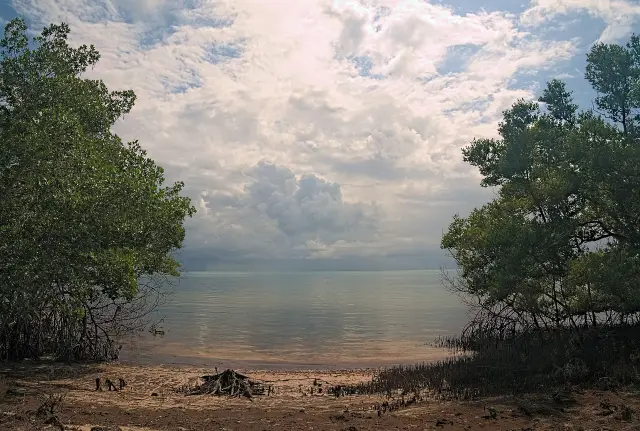
On Virginia Key, the City of Miami counts approximately sixteen acres of maritime hammock, which its park page lists among the island's communities as a coastal maritime hammock, at Virginia Key Beach North Point Park (City of Miami).
The city uses the name maritime hammock for this forest and calls it one of the rarest and most endangered plant communities in Miami-Dade County, and the reason it gives is coastal development (City of Miami). Virginia Key itself is a 1,000-acre barrier island in Biscayne Bay, set midway between the eastern shore of the City of Miami and the Village of Key Biscayne and reached by the Rickenbacker Causeway (City of Miami Virginia Key Master Plan).
The hammock is a small piece of a larger mosaic. On the same island the city lists seagrass beds, intertidal sand and mud flats, mangrove and herbaceous wetlands and beach dune communities, with more than 300 acres in mangroves and 18 acres in beach and dune, so the hammock is small next to the mangroves (Virginia Key Beach North Point Park). Ownership is split: the city page says the City of Miami and Miami-Dade County own the island jointly.
The mainland hammock parks are covered in the Miami native plants guide; the Virginia Key stand grows on a barrier island bordered by the Atlantic Ocean to the east and Biscayne Bay to the west (City of Miami). The city park page tags North Point as a Natural Forest Community, the label Miami-Dade County gives to the rare upland plant communities it protects (Miami-Dade County).
Which plants grow around the Virginia Key maritime hammock?
On the northern and eastern North Point, the City of Miami lists sea oats, inkberry, railroad vine and burrowing four o'clock as typical dune vegetation in the beach dune communities of the island (City of Miami).
Burrowing four o'clock is the one to know by name. The city notes it is listed as a state endangered species by the Florida Department of Agriculture and Consumer Services under Chapter 5B-40, F.A.C. (Virginia Key Beach North Point Park). The city also says the North Point beach and dune community holds several threatened and endangered plant species and makes up a significant share of that community type in Miami-Dade County.
Why is the dune strip so thin on Virginia Key? The city describes the North Point dunes as small to non-existent and the beach as relatively narrow, and it gives two causes: human disturbance and low surf energy. A sandbar that runs from Fisher Island across Norris Cut and Bear Cut to Key Biscayne absorbs ocean surf and acts as a natural wave break for the island (City of Miami). The same page records significant beach erosion on the eastern portion of North Point.
Offshore of North Point, the city describes dense seagrass beds made up mainly of turtle grass, manatee grass and shoal grass, and the northern beach supports a significant amount of sea turtle nesting (City of Miami). Across Bear Cut on Key Biscayne, Miami-Dade County names beach peanut, Biscayne prickly ash and coontie among the rare plants of Crandon Park (Miami-Dade County Parks).
How can the Virginia Key hammock be visited, and what does it cost?
Virginia Key Beach North Point Park, at 3801 Rickenbacker Causeway in Miami, opens at 7 a.m. year round and charges $8.00 per automobile, with no re-entry and no refunds (City of Miami).
Closing time changes with the season. From November to March the park closes at 5:30 p.m., the main gate shuts 30 minutes earlier, and visitors are asked to leave by 5:00 p.m.; from April to October it closes at 7:00 p.m., with the gate shutting 60 minutes before (City of Miami). Buses pay $25.00 and an annual pass costs $150.00. The city sells annual passes at the toll booth Monday to Friday and asks buyers to bring a driver's license and registration. No overnight parking is allowed on North Point.
A practical point for anyone who plans a hammock walk on Virginia Key: only service animals are allowed inside the park, and all animals must be leashed (City of Miami Parks). The North Point Trails add over 10 miles of mountain bike trails, developed since 2010 with City of Miami resources and Virginia Key Bicycle Club volunteers to International Mountain Biking Association standards, Questions go to City of Miami Parks Administration at 305-416-1300.
| Detail | Virginia Key Beach North Point Park | Crandon Park, Bear Cut Preserve |
|---|---|---|
| Run by | City of Miami Parks and Recreation | Miami-Dade County Parks |
| Address | 3801 Rickenbacker Causeway, Miami 33149 | Visitor and Nature Center, 6767 Crandon Boulevard, Key Biscayne |
| Hours | November to March 7 a.m. to 5:30 p.m.; April to October 7 a.m. to 7 p.m. | Nature Center 9 a.m. to 4 p.m. daily; preserve 8 a.m. to sunset per the birding trail listing |
| Entry or parking | $8.00 per automobile, $25.00 per bus, $150.00 annual pass | $7 plus tax Monday to Thursday, $10 plus tax Friday to Sunday |
| Phone | Parks Administration 305-416-1300 | 305-361-6767 |
| Pets | Service animals only | Prohibited except service animals |
| Hammock size | About 16 acres of maritime hammock | Preserve listed at 125 acres |
Where else near Miami can a coastal hammock walk be taken?
Across Bear Cut from Virginia Key, the Bear Cut Preserve in Crandon Park on Key Biscayne offers a public coastal hammock walk, with naturalist-guided hammock hikes run by Miami-Dade County Parks (Miami-Dade County Parks).
The county calls the Bear Cut Preserve a designated natural Environment Study Area, and its naturalists lead visitors through the hammock, ocean and beach communities of Key Biscayne (Crandon Park). The Crandon Park Visitor and Nature Center at 6767 Crandon Boulevard is open 9 a.m. to 4 p.m., Monday through Sunday, and takes calls at 305-361-6767. Parking at Crandon Park is $7 plus tax Monday through Thursday and $10 plus tax Friday through Sunday, and pets are prohibited except service animals.
The state wildlife trail listing adds the numbers. The Great Florida Birding and Wildlife Trail gives the Bear Cut Preserve a size of 125 acres, lists Miami-Dade County as manager, and shows hours of 8 a.m. to sunset daily (Florida Birding Trail). It places the preserve at the northeast end of Crandon Park, behind the Crandon Visitors and Nature Center, and notes White-crowned Pigeons and migrants such as Cape May Warblers on the coastal hammock trails.
Two official hour listings apply here and they do not match: the county gives the Nature Center 9 a.m. to 4 p.m., and the birding trail gives the preserve 8 a.m. to sunset. For a Key Biscayne hammock walk, the Nature Center line at 305-361-6767 is where the day's hours can be confirmed before the drive over the Rickenbacker Causeway (Miami-Dade County).
Who is restoring coastal hammock on Virginia Key and Key Biscayne?
Volunteer planting led by the Frost Museum of Science and a National Fish and Wildlife Foundation grant support coastal habitat restoration at Virginia Key North Point and the Crandon Park dunes on Key Biscayne (Frost Science MUVE, NFWF grant profile).
The museum reports its own program results. The museum says thousands of volunteers in its Museum Volunteers for the Environment program, known as MUVE, have helped restore native environments across Miami-Dade County since 2007, and on Virginia Key the museum says volunteers planted nearly 35,000 plants on the beach, including dune-stabilizing sea oats, and later over 3,000 native trees in the adjacent hardwood hammock (Frost Science MUVE). Those are the museum's figures for its own work, not a county inventory.
The NFWF grant record gives the money. NFWF project 1301.21.071392, titled Restoring, Enhancing, and Maintaining Coastal Habitats in South Florida's Coastal Watershed, lists the Phillip and Patricia Frost Museum of Science as the organization, the Five Star and Nature Restoration Trust as the program, an award of $34,195.91, and three locations: Virginia Key North Point, Crandon Park dunes and Haulover Park beach dunes (National Fish and Wildlife Foundation). The grant profile page shows no project dates, so the year of the work cannot be confirmed from it.
What is changing on the ground is the shoreline. The City of Miami still describes significant beach erosion along the eastern portion of North Point as of October 18, 2026 (City of Miami). The city's Virginia Key master plan sets policies for protecting and enhancing the island's natural resources (Virginia Key Master Plan).
What rules protect coastal hammock plants in Miami-Dade?
Clearing or damaging plants inside a designated Natural Forest Community takes a Miami-Dade County NFC removal permit, and the city's listing for Virginia Key Beach North Point Park carries the Natural Forest Community tag (Miami-Dade Environmental Resources Management, City of Miami).
Trees, shrubs and groundcover plants all fall under the rule, and the county states that the permits exist so impacts to these forests are minimized and the remaining areas are preserved and managed (Miami-Dade County). For a North Point or other NFC question, the county's Environmental Resources Management department lists 701 NW 1st Court, Miami, and 305-372-6789.
State listing adds a second layer on the Virginia Key dunes, where burrowing four o'clock is state endangered under Chapter 5B-40, F.A.C. (City of Miami). Last verified: October 18, 2026, against the Virginia Key Beach North Point Park and Virginia Key Master Plan pages of the City of Miami, the Crandon Park and Natural Forest Communities pages of Miami-Dade County, the Great Florida Birding and Wildlife Trail listing, the Frost Science MUVE page and the NFWF grant library.
Frequently asked questions
Is there coastal hammock in the City of Miami?
Yes, on Virginia Key. The City of Miami counts approximately sixteen acres of maritime hammock there at Virginia Key Beach North Point Park, 3801 Rickenbacker Causeway, and calls it one of the rarest and most endangered plant communities in Miami-Dade County because of coastal development.
How much does it cost to enter Virginia Key Beach North Point Park?
The City of Miami charges $8.00 per automobile, $25.00 per bus and $150.00 for an annual pass, with no re-entry and no refunds. The park opens at 7 a.m. and closes at 5:30 p.m. from November to March and 7 p.m. from April to October.
Can dogs go on the Virginia Key hammock trails?
No. The City of Miami allows only service animals inside Virginia Key Beach North Point Park, and all animals must be on leashes. Crandon Park on Key Biscayne also prohibits pets except service animals, according to Miami-Dade County Parks.
What is the Bear Cut Preserve?
The Bear Cut Preserve is a designated natural Environment Study Area in Crandon Park on Key Biscayne, where Miami-Dade County naturalists lead hammock hikes. The Great Florida Birding and Wildlife Trail lists it at 125 acres, open daily 8 a.m. to sunset.
Is a permit needed to clear plants in a Miami-Dade Natural Forest Community?
Yes. Removing or damaging a tree, shrub or groundcover plant inside a designated Natural Forest Community takes a Miami-Dade County NFC removal permit. The county's Environmental Resources Management department, 701 NW 1st Court, Miami, lists 305-372-6789.
Sources
- Virginia Key Beach North Point Park, City of Miami Parks and Recreation https://www.miami.gov/Parks-Public-Places/Parks-Directory/Virginia-Key-Beach-North-Point-Park Used for: 1,000-acre barrier island, joint City of Miami and Miami-Dade County ownership, about 16 acres of maritime hammock, 18 acres of beach and dune, more than 300 acres of mangroves, dune plants, burrowing four o'clock state listing, sea turtle nesting, erosion, sandbar, hours, fees, address, phone, animals rule, bike trails
- Virginia Key Master Plan, City of Miami Planning Department https://www.miami.gov/My-Government/Departments/Planning/Virginia-Key-Master-Plan Used for: location of Virginia Key between the City of Miami and Key Biscayne, access by the Rickenbacker Causeway, master plan purpose for natural resources
- Crandon Park, Miami-Dade County Parks, Recreation and Open Spaces https://miamidade.gov/parks/crandon-beach.asp Used for: Visitor and Nature Center address, hours and phone, coastal hammock and rare plants on Key Biscayne, Bear Cut Preserve as a natural Environment Study Area, naturalist-guided hammock hike, parking fees, pet rule
- Crandon Park: Bear Cut Preserve, Great Florida Birding and Wildlife Trail (FWC program) https://floridabirdingtrail.com/site/crandon-park-bear-cut-preserve/ Used for: Bear Cut Preserve size, hours, county management, coastal hammock trail birds, address
- Forests (Natural Forest Communities), Miami-Dade County Environmental Resources Management https://www.miamidade.gov/global/environment/ecosystems/forests.page Used for: NFC removal permit rule and DERM contact
- Habitat Restoration, Museum Volunteers for the Environment (MUVE), Phillip and Patricia Frost Museum of Science https://www.frostscience.org/museum-volunteers-for-the-environment/initiatives/habitat-restoration/ Used for: MUVE's own reported planting totals at Virginia Key and its program start year (the museum's own program facts only)
- NFWF grant profile 1301.21.071392, Restoring, Enhancing, and Maintaining Coastal Habitats in South Florida's Coastal Watershed https://nfwf.org/grants/grants-library/profile?egid=71392 Used for: grant award amount, grantee and project locations at Virginia Key North Point and Crandon Park dunes
How this page was made
Digital Towns uses AI assistance to research and write its guides, and every page is only as good as the sources it cites. Our goal is the most accurate, useful local information possible.
This page was fact-checked twice before publishing.
If you see an error, or anything you can show is false, tell us right away and we will take a third look.
Report an error
Thank you. We'll take a third look and correct the page if it's wrong.