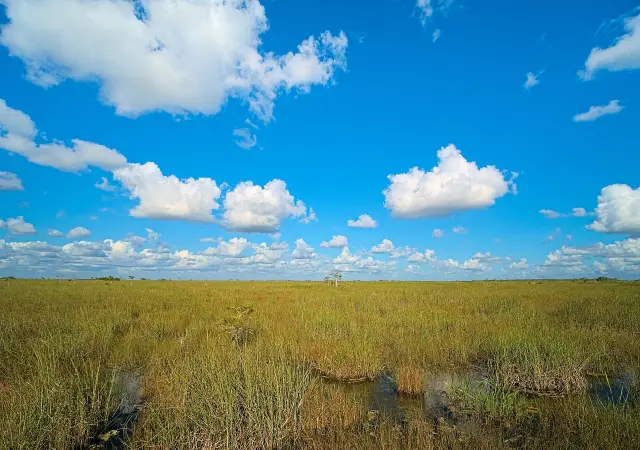
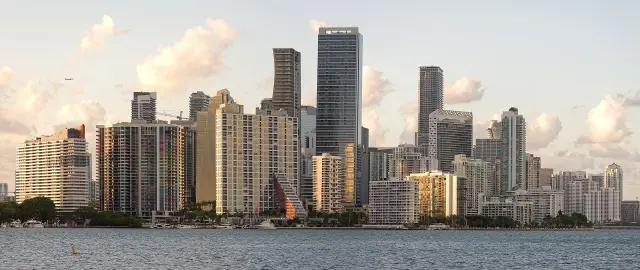
Short answer: Pine rockland near Miami survives as fragments along the Miami Rock Ridge, the limestone ridge that once carried an almost continuous slash pine forest from North Miami Beach to Long Pine Key. The largest piece outside Everglades National Park is the Richmond Tract at Zoo Miami, next to Larry and Penny Thompson Park. Miami-Dade County protects it through permits, land purchases and prescribed burns, and the public can join EEL volunteer workdays.
Last verified: October 18, 2026, against the sources listed at the end of this page.
Where did pine rockland grow in Miami, and where does it survive now?
Pine rockland once ran almost unbroken along the Miami Rock Ridge, and today it survives as scattered fragments, the largest outside the national park on the Richmond Tract at Zoo Miami (Zoo Miami).
Miami-Dade County Environmental Resources Management (DERM) says an essentially continuous pine rockland forest historically occurred on the coastal Miami Rock Ridge, a limestone outcrop that extends south and west from North Miami Beach to Long Pine Key in Everglades National Park (Miami-Dade DERM).
People lived among these pines long before the city did. DERM writes that for over two millennia before Miami's development boom, pine rocklands were inhabited by the Indigenous Tequesta, living side by side with the native plants and animals (Miami-Dade DERM).
The habitat is narrow in range as well as small in area. DERM says pine rocklands are unique to Miami-Dade, Monroe and Collier Counties within Florida, and that beyond South Florida and the Florida Keys they grow only on some islands of the Bahamas and the Turks and Caicos (Miami-Dade DERM). Seen from the air, DERM writes, the Miami-Dade pinelands look less like a forest and more like geometric islands of trees in a sea of urbanization, spread across agricultural, residential and industrial land.
How much Miami-Dade pine rockland is left, by each official count?
Every Miami-Dade agency that publishes a figure says only a small share survives, but the numbers do not match, because each one measures a different thing over a different area (Miami-Dade DERM).
| Source | What it measures | Figure |
|---|---|---|
| Miami-Dade DERM | Pinelands with hammocks, original cover of Miami-Dade County | 185,000 acres; 2% left outside Everglades National Park by 1996 |
| Miami-Dade DERM | Natural Forest Community acreage today | About 4,000 acres, of which 3,000 acres is pine rockland |
| Miami-Dade Parks Natural Areas Management | Original Miami-Dade forest | Less than 1% of 185,000 acres remains |
The 2% figure is pinned to a date: DERM says that by the time the city of Miami celebrated its 100th anniversary in 1996, only 2% of the pine forest remained outside Everglades National Park within the urbanized areas of the county (Miami-Dade DERM). Miami-Dade Parks gives the lower share, less than 1% of the county's original 185,000 acres of forest (Miami-Dade Parks). The two county pages do not explain the gap, so neither share should be quoted as the single Miami figure. The Miami native plants guide covers the other native habitats of the county.
What grows and lives in a Miami pine rockland?
A Miami-Dade pine rockland is an open, savanna-like forest of South Florida slash pine over a dense layer of small plants, and DERM counts over 400 plant species in its flora, many of them found only in Florida (Miami-Dade DERM).
Under the pines DERM lists saw palmettos, silver palms, beauty berries, locust berries, broom grasses and coontie. The plants worth learning in a Miami-Dade pineland are the low ones: DERM names the ant-pollinated deltoid spurge, the purple flowered milk pea and the tiny yellow-green Small's milkwort as plants found nowhere else in the world (Miami-Dade DERM). Across all county preserves, Miami-Dade Parks says more than 60 species are found nowhere else in the world (Miami-Dade Parks). In the Everglades pinelands the National Park Service describes a canopy of almost entirely slash pine, Pinus elliottii var. densa, over numerous endemic species (Everglades National Park).
The animal list on the Miami-Dade DERM page runs from the tiny to the rare. It names Miami tiger beetles the size of a grain of rice, Poey's furrow bees, dainty sulphur butterflies, and atala butterflies, once considered extinct in Florida, which lay their eggs on coontie, Florida's only native cycad (Miami-Dade DERM). Bartram's scrub hairstreak and Florida duskywing butterflies are described as dwindled but recovering. Gopher tortoises burrow in pockets of deeper sand, the rim-rock crowned snake hides in limestone crevices, Mexican free-tailed and Florida bonneted bats hunt insects at night, and the Florida panther uses the pineland understory in Everglades National Park.
Where can pine rockland be seen near Miami?
The easiest public places to see Miami-Dade pine rockland are Zoo Miami, the neighboring Larry and Penny Thompson Park and the Everglades National Park pinelands, with a smaller stand at a fourth county park (Zoo Miami).
| Place | Run by | Pine rockland | Visitor details |
|---|---|---|---|
| Zoo Miami, 12400 SW 152 St., Miami 33177 | Zoo Miami, on land the county received in the 1974 federal transfer (Miami-Dade Parks) | Part of the Richmond Tract (Zoo Miami) | Opens 10 a.m.; 305-251-0400 (Zoo Miami) |
| Larry and Penny Thompson Park | Miami-Dade Parks | Rock pinelands in 270 acres of woodland | Campground office 9 a.m. to 5 p.m. daily (Miami-Dade Parks) |
| A.D. Barnes Park | Miami-Dade Parks | 10 acres of pineland and hardwoods around the Leisure Access Camp | Camp rented to groups only (Miami-Dade Parks) |
| Everglades National Park pinelands | National Park Service | Long Pine Key end of the Miami Rock Ridge (Miami-Dade DERM) | $35.00 per private vehicle, 7 days (NPS) |
Larry and Penny Thompson Park sits next to Zoo Miami, and Miami-Dade Parks describes it as one of the last portions of wilderness in Miami-Dade County, with wildflowers, palmettos and rock pinelands among bike trails and hiking paths (Miami-Dade Parks). Its land was once part of the Richmond Naval Station and came to the county in December 1974 in a 1,010-acre federal transfer that also included the Zoo Miami property. Campsites with hookups cost $80 plus tax a day from November 1 to March 31 and $60 plus tax a day from April 1 to October 31, and tent sites are $25 plus tax a day.
A practical tip for a Zoo Miami trip without a car: Miami-Dade Transit route 152 runs into the zoo only on weekends and six major holidays, hourly from about 9 am to 6 pm, and on weekdays the closest stop is at SW 124 Avenue and 152 Street, 2 miles from the main entrance (Zoo Miami). The zoo offers a complimentary ride from that stop when called at 305-251-0400, ext. 0, between 10 a.m. and 4 p.m. By car it is off Florida's Turnpike Exit 18. At A.D. Barnes Park the Miami EcoAdventures program uses a 15-acre bird and wild animal sanctuary with native plants and trees, with guided tours by advance registration (Miami-Dade Parks).
Why do Miami-Dade crews set fire to pine rockland?
Miami-Dade crews burn pine rockland on purpose because the habitat depends on fire, and DERM says prescribed fires should be set on a three-to-five-year cycle by forest managers (Miami-Dade DERM).
DERM explains the mechanics: natural fires in the Miami Rock Ridge pinelands occur early in the wet season and are fed by fine fuels such as pine needles and grasses; fire aids seed germination, cuts back hardwood trees and invasive plants, and returns nutrients in the ash (Miami-Dade DERM). DERM adds that community education and support for prescribed burning is needed where pine rocklands sit near developed areas and residential neighborhoods. On the Richmond Tract, Zoo Miami staff, the Environmentally Endangered Lands program and Miami-Dade County Natural Areas Management work together to conduct regular prescribed burns (Zoo Miami).
Invasive plants are the other daily fight. Miami-Dade Parks names Australian pine, Brazilian pepper, melaleuca and air potato vine among the invasive species able to completely displace native habitat in county preserves (Miami-Dade Parks), and Zoo Miami says disturbed areas on its Richmond Tract act as seed banks for invasives and must be replanted with native pine rockland plants (Zoo Miami).
How does Miami-Dade County protect pine rockland?
Miami-Dade protects pine rockland through three DERM programs adopted between 1979 and 1990: a property tax covenant, the Natural Forest Community permit rules and the Environmentally Endangered Lands land purchases (Miami-Dade DERM).
The timeline on the DERM page: in December 1979 the Miami-Dade County Board of Commissioners adopted the EEL Tax Exemption Covenant Ordinance, which lowers property tax on qualifying forest and wetland sites under Chapter 25B-11 of the county code. On May 1, 1984 the board approved Ordinance 84.34, creating Natural Forest Communities and requiring a permit for all work inside one, even removing exotic plants, with the unpermitted remainder placed in a preservation covenant that runs with the land (Miami-Dade DERM). In 1990 voters approved a two-year property tax increase to buy endangered lands, collected between 1990 and 1992 (Miami-Dade EEL Program).
The results are counted in acres. Since the EEL Program began, more than 1,500 acres of Miami-Dade pineland have become EEL preserves (Miami-Dade DERM), and the EEL page counts more than 20,700 acres of environmentally endangered lands moved into public ownership with partners since 1990, plus 2,800 acres of natural land it manages inside county parks (Miami-Dade EEL Program). One purchase shows how a small plant can decide a land use: on the 39-acre Rockdale Pineland on US-1, the endangered deltoid spurge ruled out a busway through the middle of the site, the busway moved to the edge, and EEL bought the land with 50% matching funds from the state Preservation 2000 program (Miami-Dade EEL acquired lands).
How can Miami residents help restore pine rockland?
Miami residents can join EEL Program volunteer workdays in Miami-Dade preserves, which mostly run from 9 a.m. to noon, and information is at 305-372-6611 (Miami-Dade EEL volunteer workdays).
The EEL workday rules are short: registration starts 15 minutes before the workday, closed-toe shoes are required, long sleeves and long pants are recommended, pets stay home, and children 15 or under must be accompanied by an adult; community hours are available (Miami-Dade EEL). Zoo Miami turns many of its Richmond Tract plantings into public awareness and volunteer events (Zoo Miami). DERM's offices are in the Overtown Transit Village North building at 701 NW 1st Court, Miami (305-372-6789), and the department says its programs seek partners and property owners to expand the Miami-Dade pine rockland footprint by clearing invasive plants, scraping fallow farm fields back to the original substrate, and planting threatened and endangered species (Miami-Dade DERM).
Last verified: October 18, 2026, against the Miami-Dade DERM pine rockland and EEL pages, the Miami-Dade Parks pages for Natural Areas Management, Larry and Penny Thompson Park and A.D. Barnes Park, Zoo Miami, and Everglades National Park.
Frequently asked questions
Is there pine rockland in the City of Miami?
None of the official pages checked names a pine rockland preserve inside the city limits. The largest fragment outside Everglades National Park is the Richmond Tract on the Zoo Miami grounds in southern Miami-Dade, according to Zoo Miami.
What is the Miami Rock Ridge?
It is the limestone outcrop that carried an essentially continuous pine rockland forest, according to Miami-Dade DERM. The ridge extends south and west from North Miami Beach to Long Pine Key in Everglades National Park. DERM adds that the pines grow on elevated ridges of exposed limestone bedrock with sparse soils.
Why is pine rockland burned on purpose?
The habitat depends on fire. Miami-Dade DERM says prescribed fires should be set every three to five years, because fire helps seeds germinate, cuts back hardwoods and invasive plants, and returns nutrients. Zoo Miami, the EEL program and county Natural Areas Management burn the Richmond Tract together.
Can a Miami-Dade property owner clear pine rockland on a lot?
Not freely if the land is mapped as a Natural Forest Community. Under Ordinance 84.34, approved May 1, 1984, all work inside one needs a Miami-Dade permit, even removing exotic plants, and the part not approved for removal goes into a preservation covenant that runs with the land.
How can a volunteer help restore pine rockland near Miami?
The Miami-Dade EEL Program runs volunteer workdays in county preserves, most from 9 a.m. to noon. Closed-toe shoes are required, pets are not allowed, and children 15 or under need an adult. Details are at 305-372-6611; Zoo Miami also holds public planting events on its Richmond Tract.
Sources
- Pine Rocklands, Miami-Dade County Environmental Resources Management https://www.miamidade.gov/global/environment/ecosystems/pine-rocklands.page Used for: Miami Rock Ridge extent, counties, 185,000 acres, 2% by 1996, plants and animals, fire cycle, EEL 1979, NFC 1984, 1990 tax vote, NFC acreage, 1,500 acres pineland preserves, restoration, DERM address and phone
- Environmentally Endangered Lands Program, Miami-Dade County https://www.miamidade.gov/environment/endangered-lands.asp Used for: tax collected 1990 to 1992, 20,700 acres, 2,800 acres, 23,500 acres, phone
- Acquired Environmentally Endangered Lands, Miami-Dade County https://www.miamidade.gov/global/environment/ecosystems/endangered-lands-acquired.page Used for: Rockdale Pineland 39 acres, deltoid spurge, busway, Preservation 2000
- EEL Volunteer Workdays, Miami-Dade County https://www.miamidade.gov/global/environment/ecosystems/endangered-lands-volunteer.page Used for: workday hours and rules
- Natural Areas Management, Miami-Dade Parks https://www.miamidade.gov/parks/natural-areas-management.asp Used for: 1991, partners, 26,000 acres, 125 sites, less than 1% of 185,000 acres, 60 endemic species, invasive plants
- Pine Rockland Restoration Program, Zoo Miami https://www.zoomiami.org/pine-rockland-restoration-program Used for: Richmond Tract, city built on pine rockland, under 5% left, joint burns and plantings
- Know Before You Visit, Zoo Miami https://www.zoomiami.org/know-before-you-visit Used for: address, phone, 10 a.m. opening, Turnpike exit, bus route 152
- Larry and Penny Thompson Park, Miami-Dade Parks https://www.miamidade.gov/parks/larry-penny.asp Used for: rock pinelands, 270 acres, Richmond Naval Station, 1974 transfer, campground rates and office hours
- A.D. Barnes Park, Miami-Dade Parks https://www.miamidade.gov/parks/ad-barnes.asp Used for: 10 acres of pineland at Leisure Access Camp, EcoAdventures 15-acre sanctuary
- Pinelands, Everglades National Park https://www.nps.gov/ever/learn/nature/pinelands.htm Used for: slash pine canopy, endemic understory, prescribed burns
- Fees and Passes, Everglades National Park https://www.nps.gov/ever/planyourvisit/fees.htm Used for: $35 private vehicle pass, 7 days
How this page was made
Digital Towns uses AI assistance to research and write its guides, and every page is only as good as the sources it cites. Our goal is the most accurate, useful local information possible.
This page was fact-checked twice before publishing.
If you see an error, or anything you can show is false, tell us right away and we will take a third look.
Report an error
Thank you. We'll take a third look and correct the page if it's wrong.